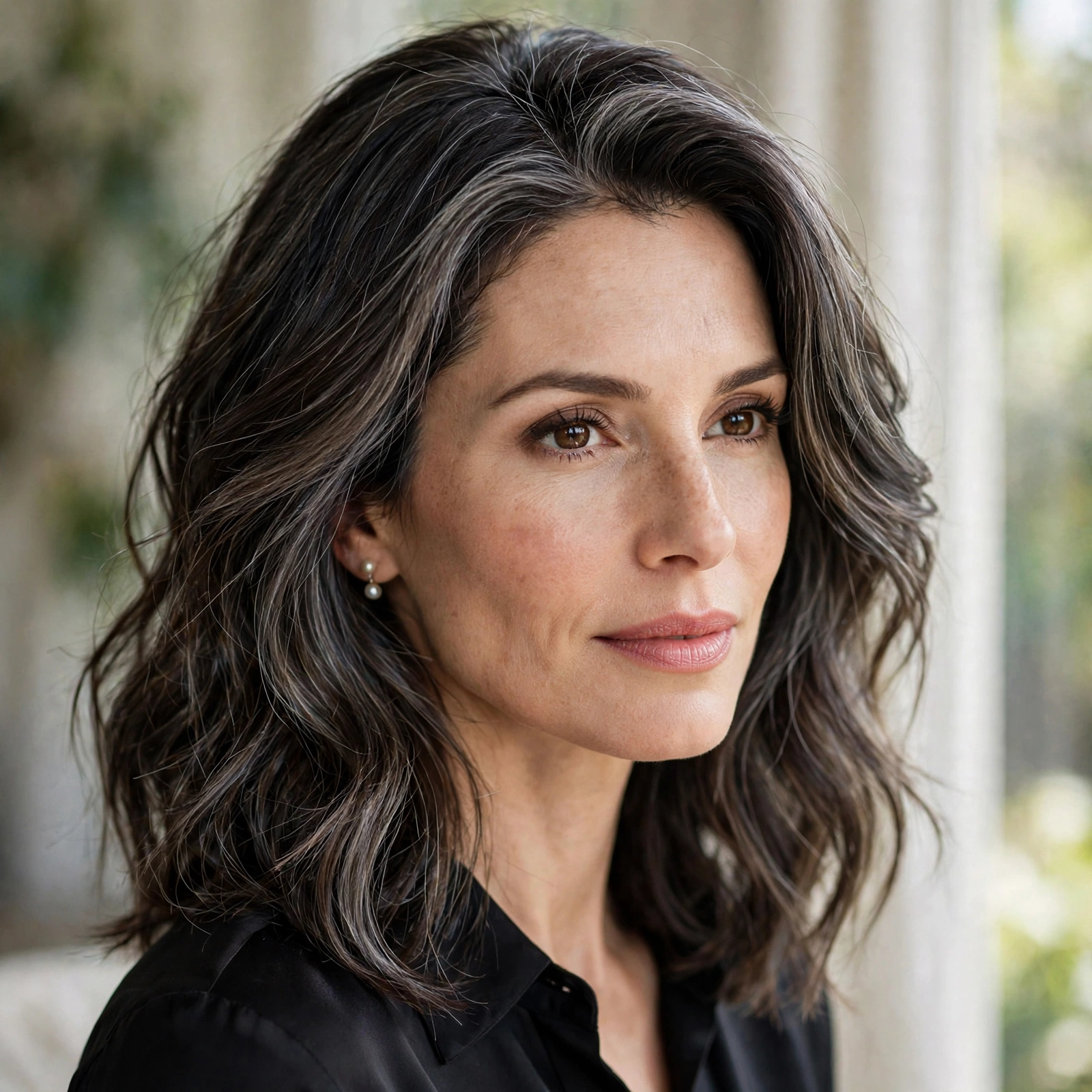
For decades, women have been conditioned to see their first grey hairs as a problem to be fixed—a reason to book an immediate salon appointment for full-coverage colour. But times have changed. The modern approach to greying hair isn’t about hiding it; it’s about working with it. Enter grey blending, the sophisticated technique that’s taking the hair world by storm .
Grey blending is fundamentally different from simply covering your greys. As colourist Anita Rice explains, it “works with the natural dimensions of grey hair rather than slathering on a permanent opaque hair dye to cover the white pigment completely” . Think of it as the difference between a sheer lip gloss and a full-coverage lipstick—translucent and dimensional rather than opaque and flat .
For brunettes in particular, grey blending offers a uniquely elegant solution. Unlike blondes who can sometimes camouflage greys more easily, brunettes face a higher contrast between their natural dark base and emerging silver strands. This is precisely why strategic blending techniques are so valuable—they soften that stark transition, making the grow-out seamless and the overall look intentional.
Whether you have a few scattered greys, a salt-and-pepper pattern, or are ready to transition fully to silver, grey blending can be tailored to your needs. The goal isn’t to erase your greys but to integrate them beautifully, creating dimension, movement, and a polished finish that celebrates the natural evolution of your hair .
What Exactly Is Grey Blending?
Grey blending is a colouring technique that doesn’t fully cover grey hairs but instead integrates them with lighter highlights, lowlights, or tonal glazes. The objective is to create a harmonious mix between your natural brunette base and your silver strands, making regrowth look intentional and stylish rather than stark or unkempt .
This approach is ideal for brunette women who:
- Have 20% to 80% grey coverage and want a low-maintenance option
- Dislike frequent root touch-ups every 3–4 weeks
- Want to transition gracefully into fully grey or silver hair
- Prefer a softer, more dimensional look than solid colour
The Celebrity Inspiration
The grey blending trend has been embraced by some of Hollywood’s most stylish women, proving that silver can be spectacular.
Jennifer Garner has championed what’s been dubbed the “quiet silver brunette” technique. Her colourist, Tracey Cunningham, uses a “rich brunette base layered with soft, golden highlights that add warmth, movement, and that effortless glow” . The result is a low-contrast but dimensional look that blends natural greys seamlessly.
Jennifer Aniston has been artfully grey blending her famous haircut for years, using subtle balayage around the hairline to soften the transition . Sarah Jessica Parker and Julianne Moore have also embraced the trend, demonstrating that grey blending works across different hair colours and textures .
Perhaps most striking is Prue Leith, whose “graphite silver” look has been celebrated as the most modern way to go grey. Celebrity hairstylist Zoe Irwin describes this technique as “turning grey into a statement and creating contrast” by adding tonal depth with “midnight grey” and “charcoal shades” that give grey strength and dimension .
13 Stunning Grey Blending Ideas for Brunettes
1. Classic Salt-and-Pepper Babylights
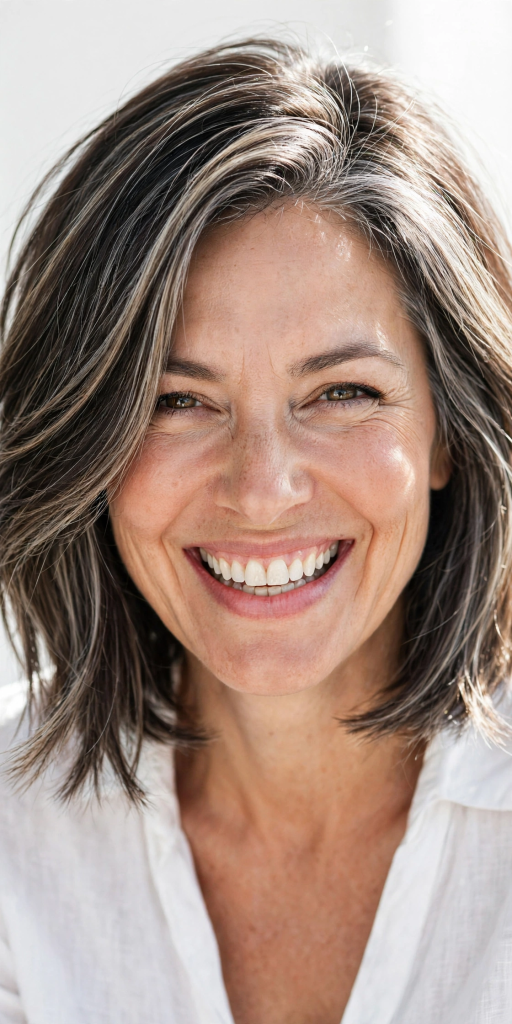
Ultra-fine baby highlights in cool ash and silver tones mimic natural grey growth for a subtle, blended effect that’s barely detectable but highly effective . These delicate highlights are woven throughout your hair in tiny sections, creating a look that mimics the natural way hair lightens in the sun .
Best for: Those with 20–40% grey coverage who want a subtle transition.
2. Cool Ash Balayage
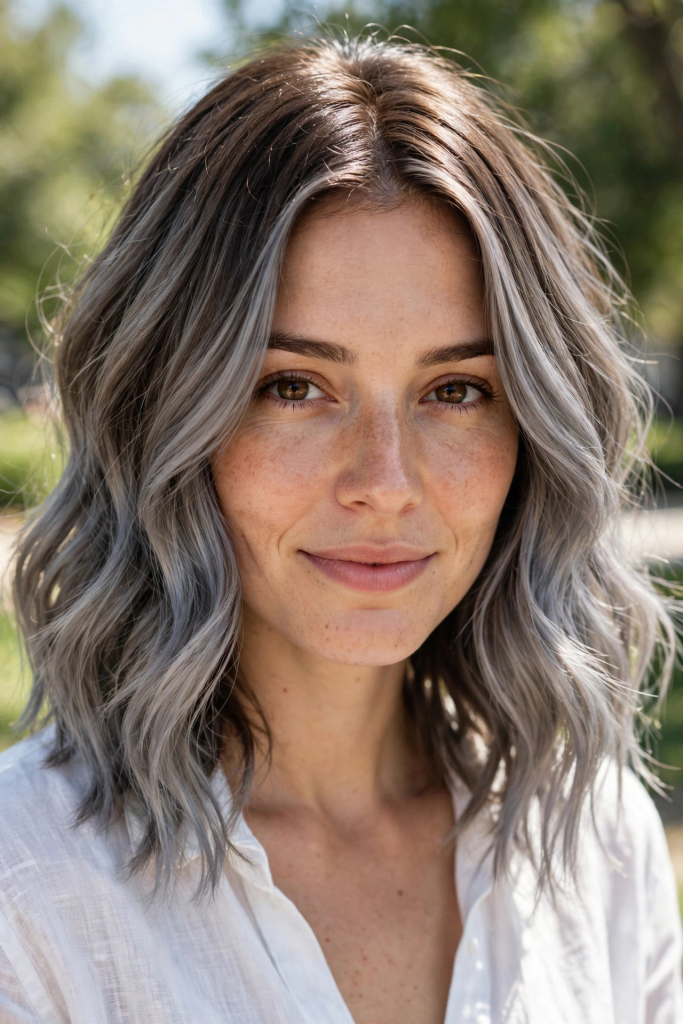
A sweeping ash-toned balayage lightens the lower half of brunette hair, melting grey roots into a chic, icy finish . The ash undertone is crucial because it neutralises warmth that could clash with silvery greys .
Best for: Medium to dark brown hair with scattered greys throughout.
3. Caramel Balayage with Warmth
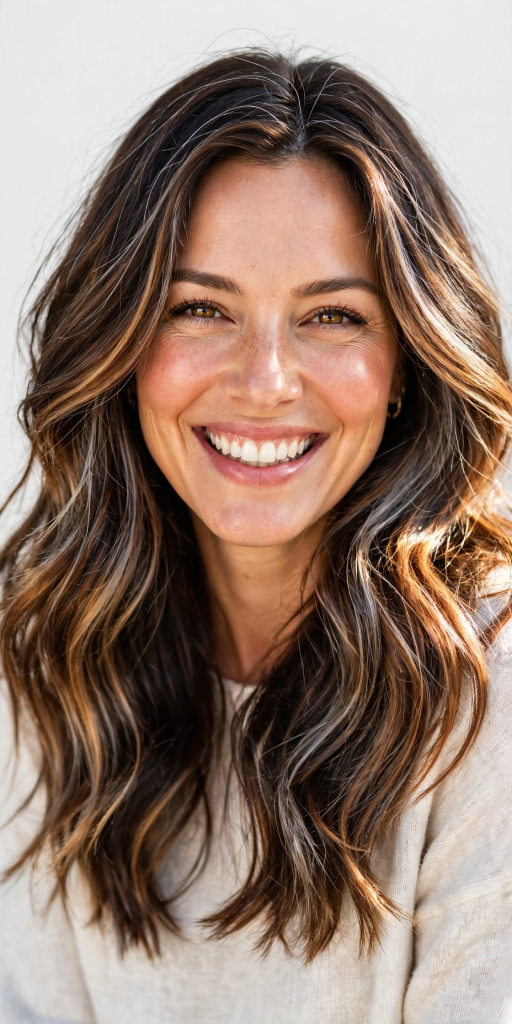
Warmth is your friend when you want a softer approach to grey blending. Caramel balayage adds depth to a brunette base while masking current and incoming greys. The caramel tones soften the contrast between natural grey and darker brown, creating a more gradual, sun-kissed transition .
Best for: Those who want to keep warmth in their hair while blending greys.
4. Icy Silver Foilyage
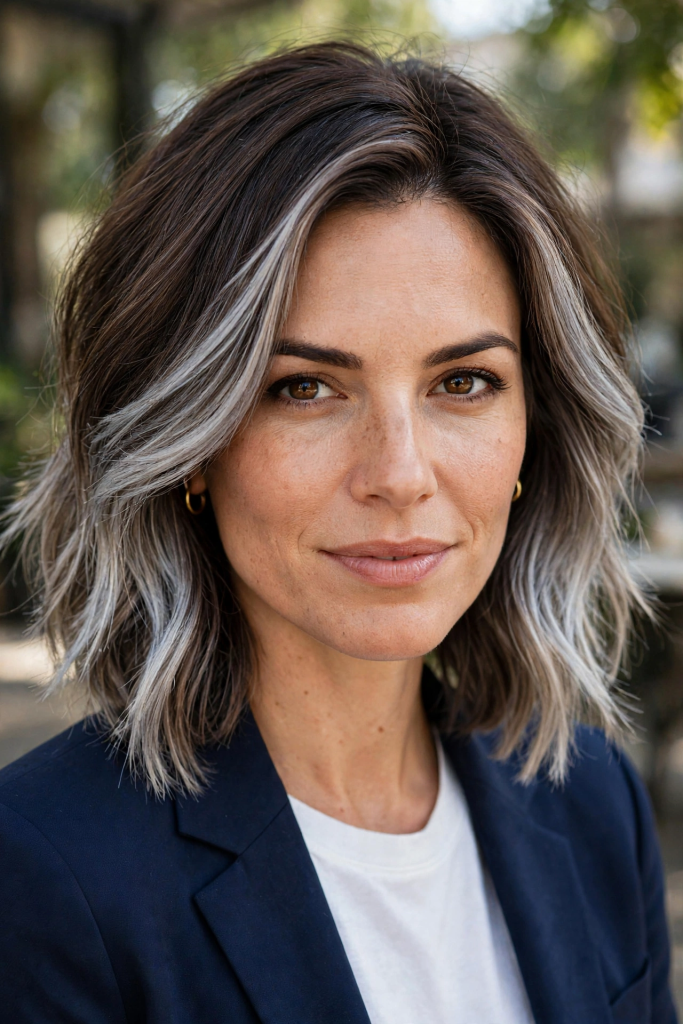
Hand-painted silver pieces woven through mid-lengths and ends create a soft, dimensional grey blend without harsh lines . This technique uses foils to achieve a more pronounced lift than balayage alone.
Best for: Women ready to make a bolder statement with their silver transition.
5. Face-Framing Charcoal Highlights

Concentrated grey and charcoal highlights around the face brighten your complexion while blending early silver strands that often appear first at the hairline . This targeted approach keeps maintenance low while drawing attention to your best features .
Best for: First-time grey blenders and those who want maximum impact with minimum change.
6. Mushroom Brown Melt
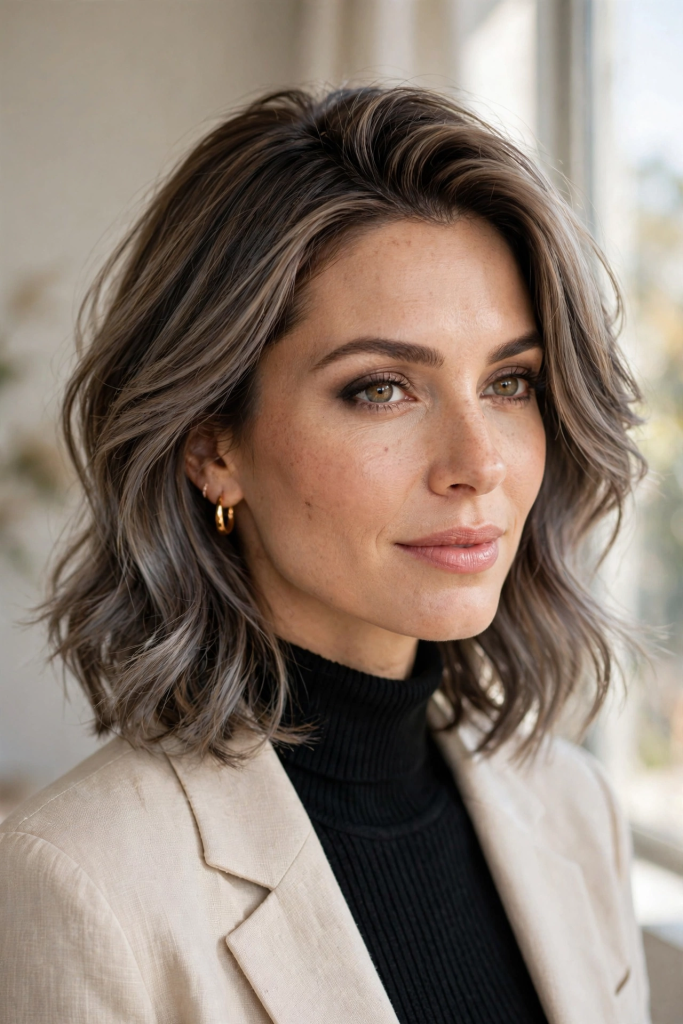
This smoky, taupe-meets-brown shade combines cool grey undertones with a dark root shadow for effortless grey blending . The beauty of mushroom blonde highlights is that they make grey hair look intentional—like you chose this chic, muted palette on purpose .
Best for: Light to medium brown hair seeking a sophisticated, modern look.
7. Honey and Ash Combo
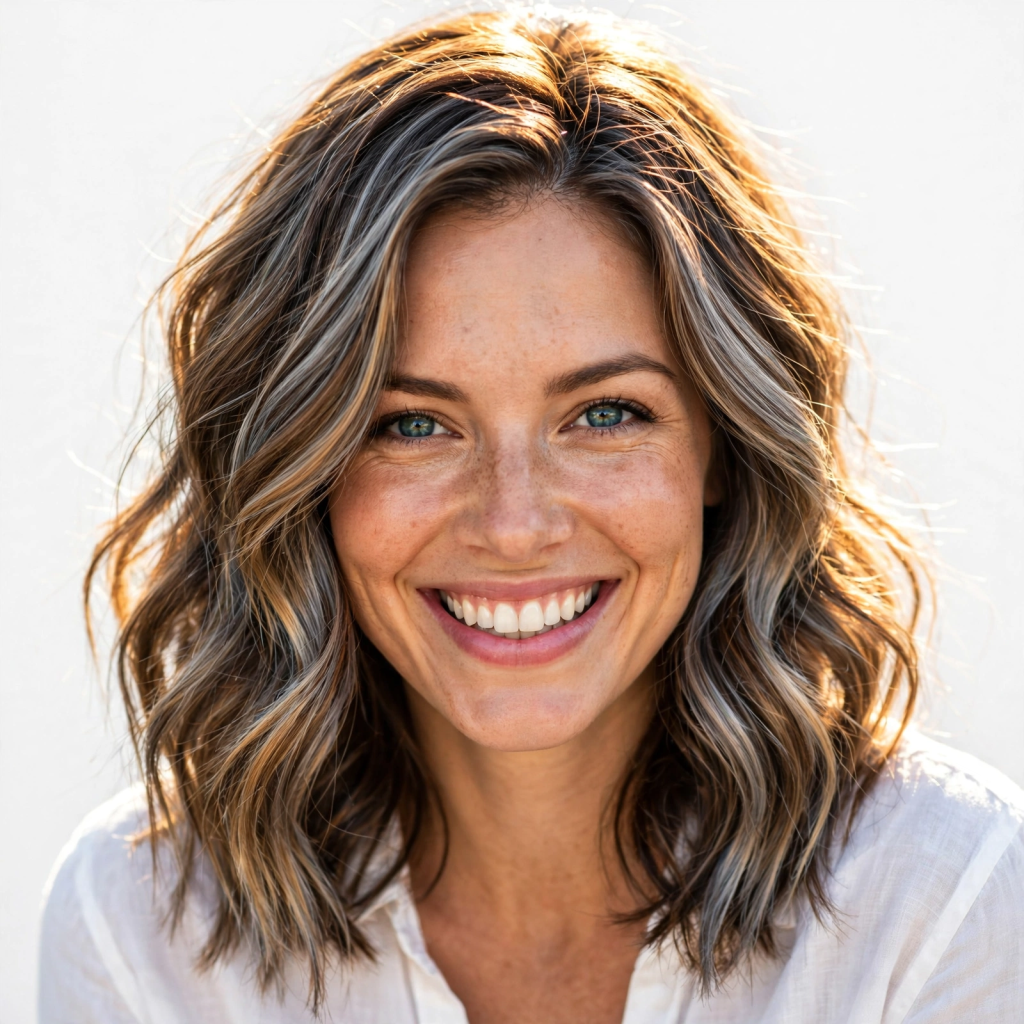
Warm honey highlights paired with cool ash pieces create a multi-tonal blend that softens grey contrast on medium brunette shades . This combination offers the best of both worlds—warmth and cool dimension working together.
Best for: Those with neutral or warm skin tones who want dimension without going fully cool.
8. Silver-Tipped Ombré
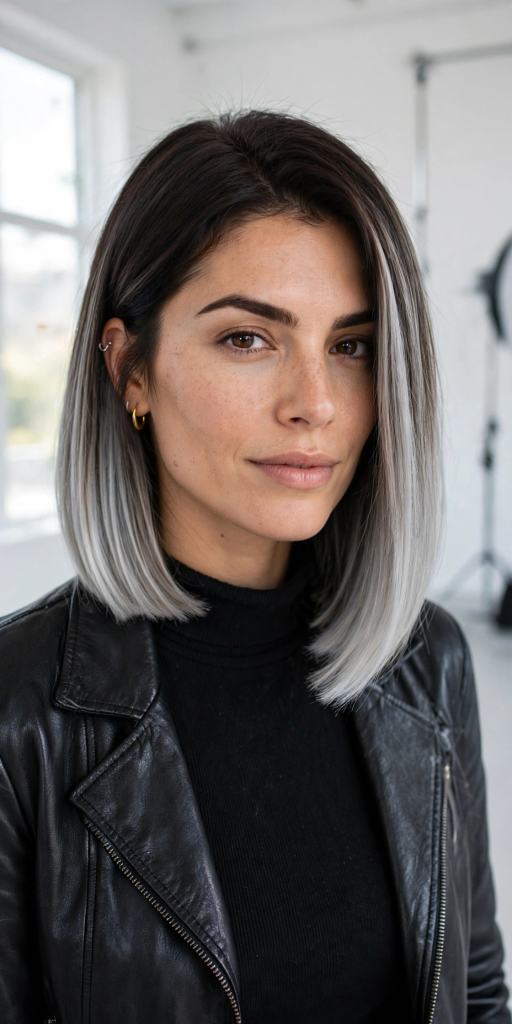
Keep roots dark brown and transition into silver-white ends—a dramatic yet natural-looking way to honour greying patterns . The gradient effect makes regrowth virtually undetectable.
Best for: Women with 40–60% grey who want a stylish, low-maintenance transition.
9. Pearl-Grey Lowlights with Shadow Roots
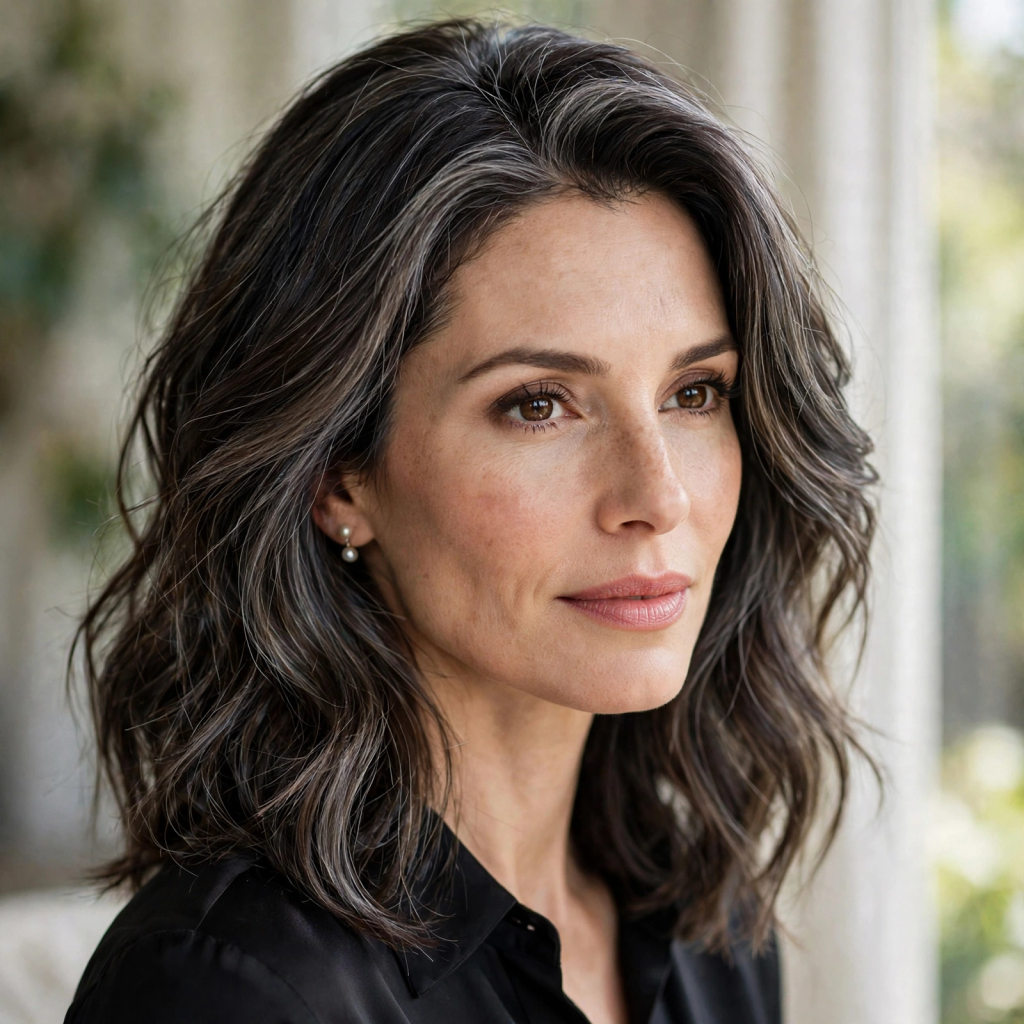
Instead of adding light pieces, weave pearl-grey lowlights through dark hair to mirror natural silver regrowth softly . Combined with a shadow root technique, this extends the life of your colour significantly—up to twelve to fourteen weeks between appointments .
Best for: Dark brunettes who want depth and dimension without going lighter overall.
10. Graphite Silver with Bold Contrast
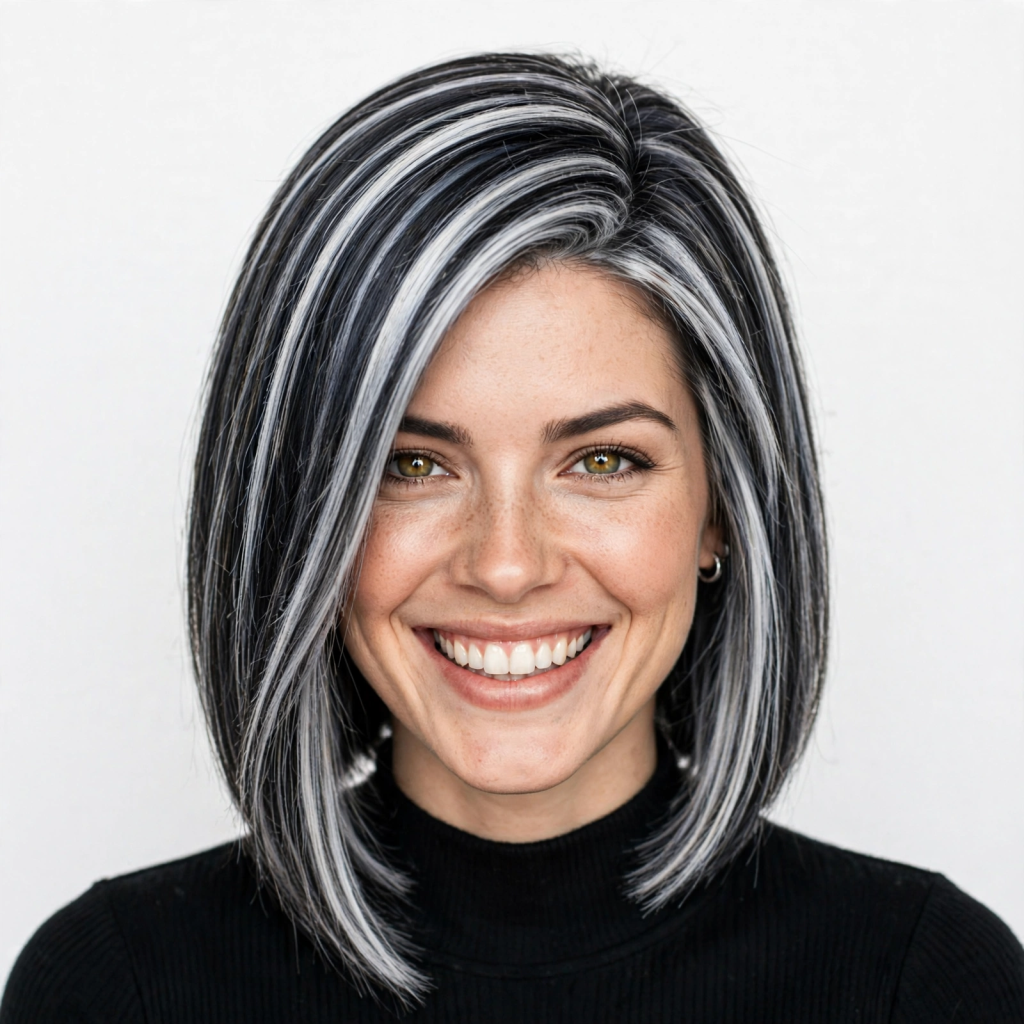
Drawing inspiration from Prue Leith, this look uses deep charcoal and midnight grey tones alongside brighter silver pieces for maximum impact . The use of contrast makes the style especially flattering for brunettes transitioning to grey, preventing the washed-out look that can occur when moving too quickly into very silvery tones .
Best for: Confident women ready to make grey a statement rather than a secret.
11. Herringbone Grey Highlights
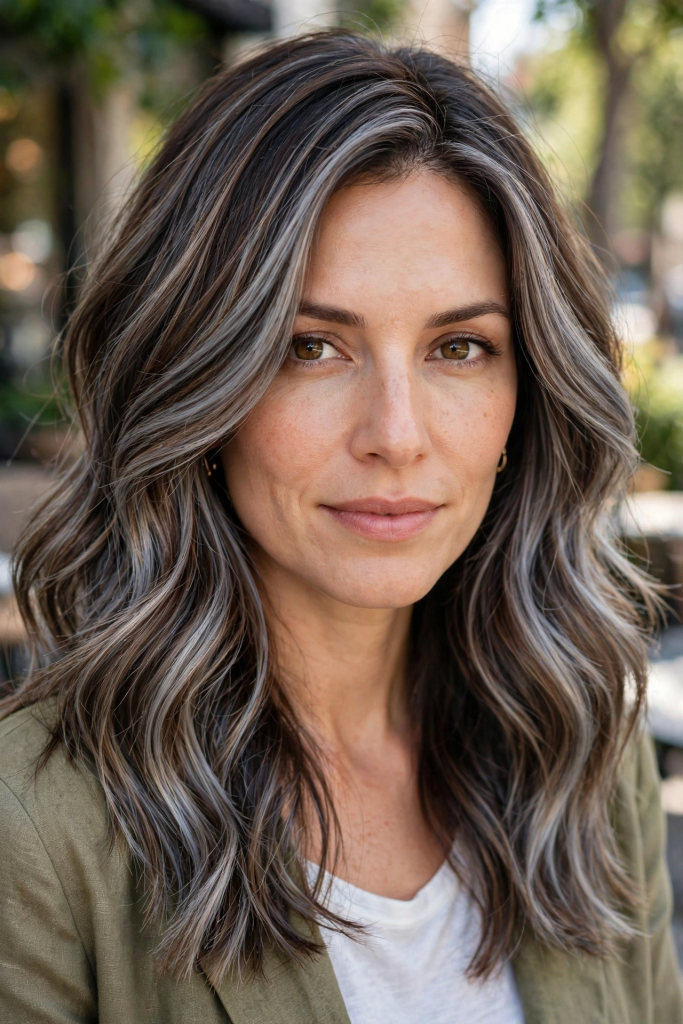
Silvery greys and soft browns are interwoven through the hair using a herringbone pattern, creating a fluid gradient of colour that moves effortlessly from dark to light . The result is rich, multi-dimensional, and never flat.
Best for: Those wanting a sophisticated, salon-quality blend.
12. Golden Blonde and Ash Grey Highlights on Dark Base
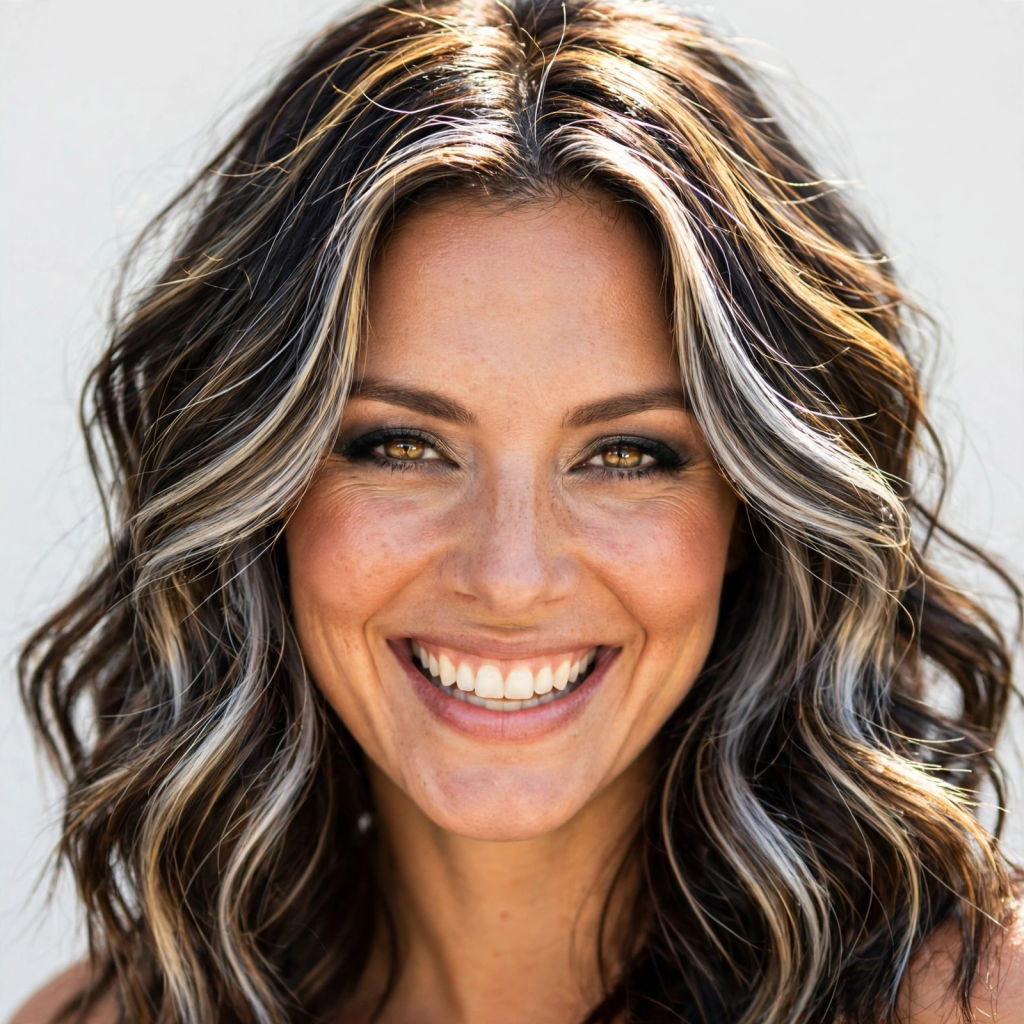
Golden blonde, ash grey, and white highlights are carefully placed to soften the contrast between existing colour and natural grey, with deeper graphite tones providing a rich foundation . This technique creates a smooth, natural grow-out.
Best for: Brunettes with darker bases who want brightness without losing depth.
13. Silver Ribbon Highlights with Brown Lowlights
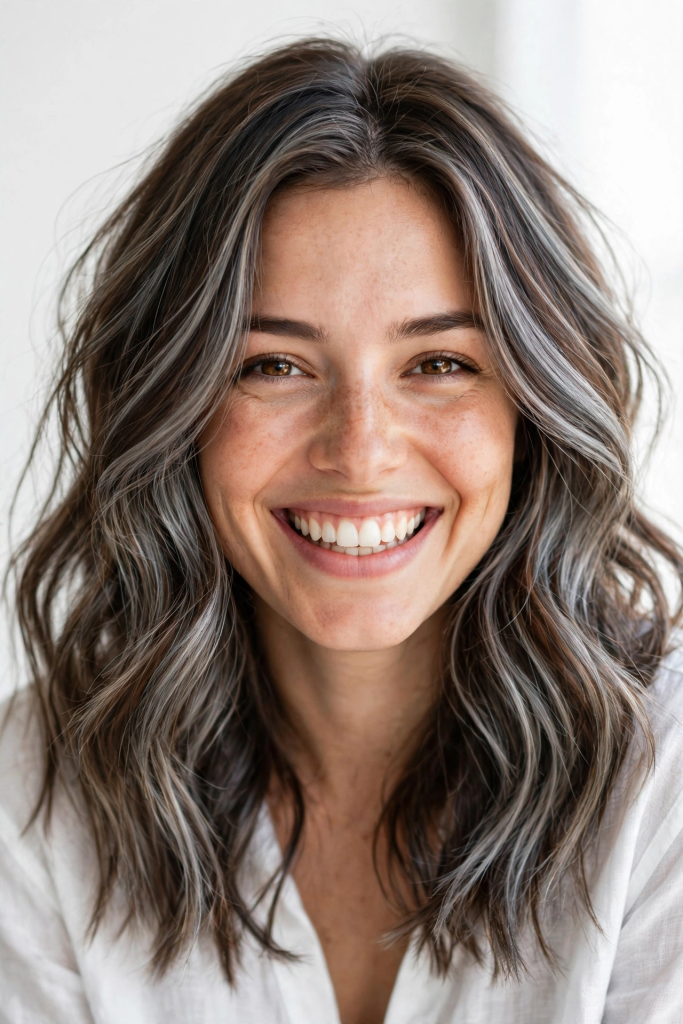
Combining silver and brown highlights and lowlights creates ribbons of colour that naturally blend with existing grey, ensuring grey grows out seamlessly without harsh lines . This alternating approach keeps the look dimensional and long-lasting.
Best for: Women with 30–60% grey who want a balanced, multi-tonal finish.
The Key Techniques
Balayage
This hand-painted technique is ideal for grey blending because it doesn’t have a harsh line—the strands of grey melt from the root and are hidden seamlessly . Colourist Damian Gray explains: “This subtle balayage technique lightens the natural shade of hair to a soft blonde while allowing the original colour to serve as a natural lowlight. This creates a beautifully balanced blend, with endless variations in tone and brightness” .
Babylights
Ultra-fine highlights that mimic the natural way children’s hair lightens in the sun. For grey blending, babylights are typically done in cool blonde or ash tones that harmonise with silver strands .
Root Smudge/Shadow Root
This technique applies a slightly darker toner at the roots to create a soft, gradient effect that blurs the line between your natural brown and highlighted sections, making incoming grey strands much less noticeable .
Gloss Treatments
A tinted gloss can take the edge off greys without full coverage. Julianne Moore is a great example—”She has a gloss all over her hair which means you can see where there are a few greys, but because of the tinted gloss, they just look like a slightly lighter red tone which adds a beautiful dimension” .
Expert Tips for Grey Blending Success
Work With Your Natural Texture
Grey hair is typically coarser in structure with tighter cuticles, making it harder for colour to penetrate . This is why professional application is crucial—a colourist will use specially formulated dyes and techniques to achieve the best result.
Choose the Right Tones
As colourist Zoe Irwin warns, “One of the most common mistakes with grey blending is losing that strength. The hair can quickly become flat and lack impact” . The key is maintaining contrast and dimension rather than going all-over silver.
Embrace Low Maintenance
The beauty of grey blending is that it grows out gracefully. Colourist Damian Gray describes it as “the hair’s equivalent of a sheer lip gloss rather than a full-coverage lipstick” . This approach means you can stretch salon visits to eight to twelve weeks rather than every four.
Use Professional Products
Grey hair can feel drier, so using sulfate-free shampoos, purple toning shampoos to prevent brassiness, and regular conditioning treatments is essential .
Frequently Asked Questions
Q: Can I use grey blending if I have very dark hair?
A: Absolutely. Techniques like root shadowing, mushroom brown melts, and strategic lowlights work beautifully on dark bases. The key is working with a colourist who understands how to create dimension without harsh contrast .
Q: How often will I need salon visits?
A: One of the biggest advantages of grey blending is its low-maintenance nature. Most women can go 8–12 weeks between appointments, depending on their grey percentage and chosen technique .
Q: Is grey blending different from covering greys?
A: Yes. Grey blending works with your natural grey strands, integrating them into the overall colour rather than covering them completely. The result is a softer grow-out and a more effortless look .
Q: Can I transition from full coverage dye to grey blending?
A: Absolutely. Many colourists recommend a gradual approach, using highlights and lowlights over several sessions to achieve a natural blend. The “reverse ombre” technique—lighter silver at the roots blending into natural greys at the ends—is particularly effective for transitions .
Q: How do I maintain the cool tones at home?
A: Purple shampoo is your best friend for keeping grey and silver tones fresh and avoiding brassiness. Regular deep conditioning is also crucial since grey hair can feel drier .
Conclusion
Grey blending for brunette hair represents a paradigm shift in how we approach the natural ageing process. Rather than fighting an endless battle against silver strands, this technique invites you to collaborate with them—to use them as a design element that adds dimension, depth, and character to your hair.
What makes grey blending truly revolutionary is its flexibility. Whether you’re just beginning to notice a few greys at your temples or are ready to embrace a full silver mane, there’s a technique that works for you. From subtle face-framing highlights to bold graphite silver statements, the options are as varied as the women who wear them .
The celebrities embracing this trend—Garner, Aniston, Parker, Moore, and Leith—send a powerful message: grey hair isn’t something to be hidden. When approached with artistry and intention, it becomes a sophisticated, modern statement .
As you consider your own grey blending journey, remember the words of colourist Damian Gray: “Modern grey blending moves away from heavy, opaque tinting and instead embraces the use of semi-permanent, translucent colours. Think of it as the hair’s equivalent of a sheer lip gloss rather than a full-coverage lipstick” .
Your greys aren’t a problem to be solved—they’re an opportunity to create something beautiful. And with the right approach, the result is hair that’s not just coloured but truly luminous.

Leave a Reply