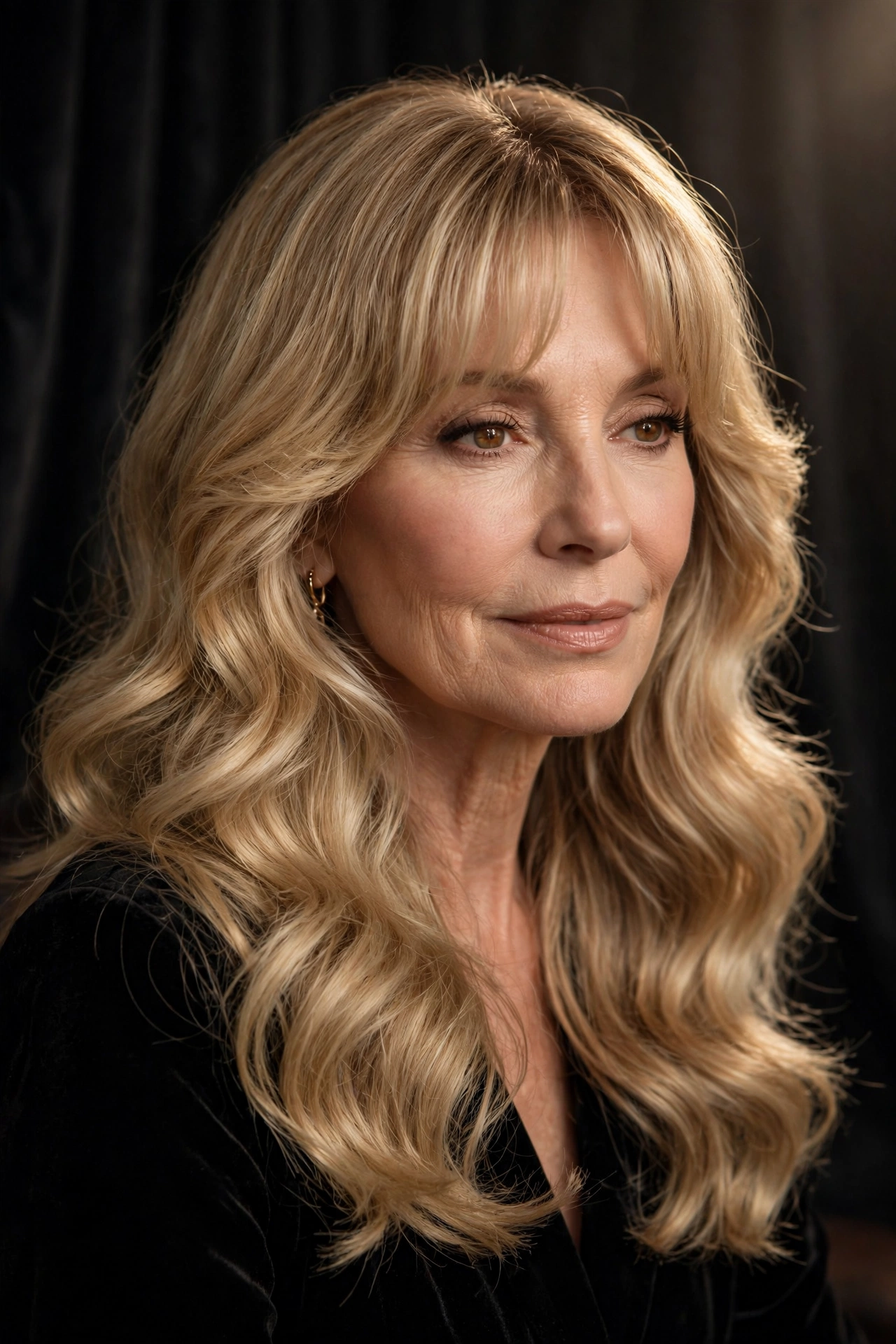
Turning 50 is a milestone of confidence, wisdom, and freedom. However, it often comes with a common and frustrating change: thinning hair. As we age, hormonal shifts can lead to a decrease in hair density, making it feel limp, flat, and difficult to style.
But let’s be clear—thin hair does not mean boring hair. In fact, the right haircut can be the secret weapon to creating the illusion of volume, fullness, and movement. The days of hiding thinning strands under heavy layers or outdated perms are over. Today, it’s all about strategic cuts, texturizing techniques, and embracing styles that work with your hair’s natural texture rather than fighting against it.
Whether you prefer a chic pixie, a sophisticated bob, or longer, face-framing layers, the goal remains the same: to add height at the crown, create texture, and keep the weight off the ends. In this guide, we will explore 20 of the best hairstyles for women over 50 with thin hair, broken down into easy-to-navigate categories, along with expert tips on how to style them and what to ask your stylist.
20 Well-Structured Hairstyle Ideas (Categorized):
Category 1: Short & Sassy (The Pixies and Crops)
1. The Classic Pixie Cut
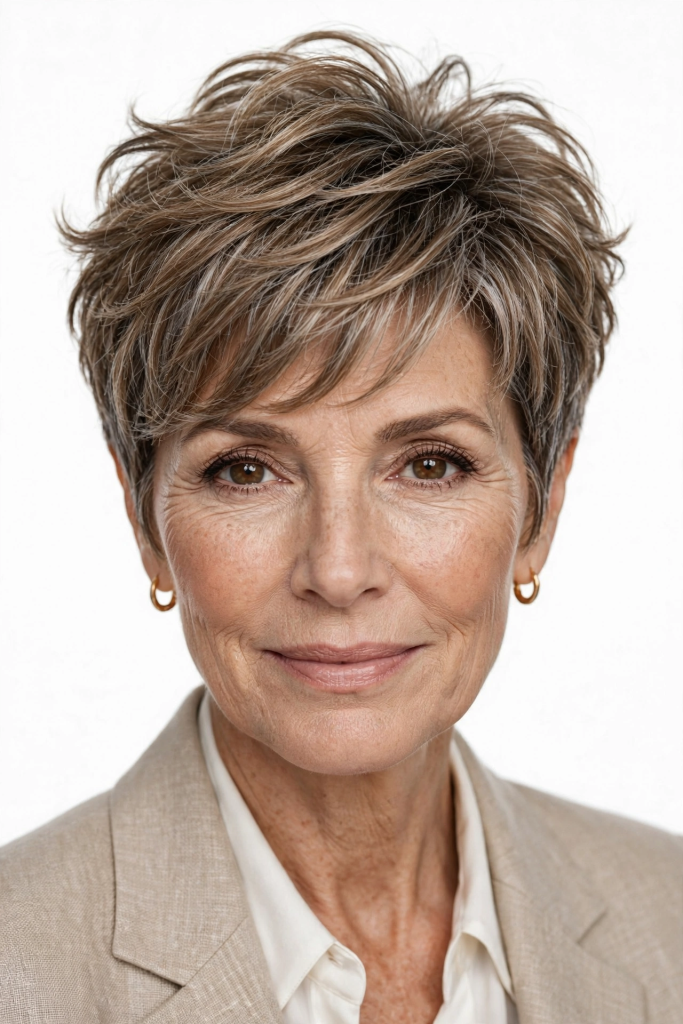
This timeless style adds instant volume. By keeping the hair short and close to the head, the hair stands up straighter, creating a lift at the crown.
- Best for: Oval and heart-shaped faces.
- Styling Tip: Use a volumizing mousse on damp hair and blow-dry forward with a round brush.
2. The Textured Pixie
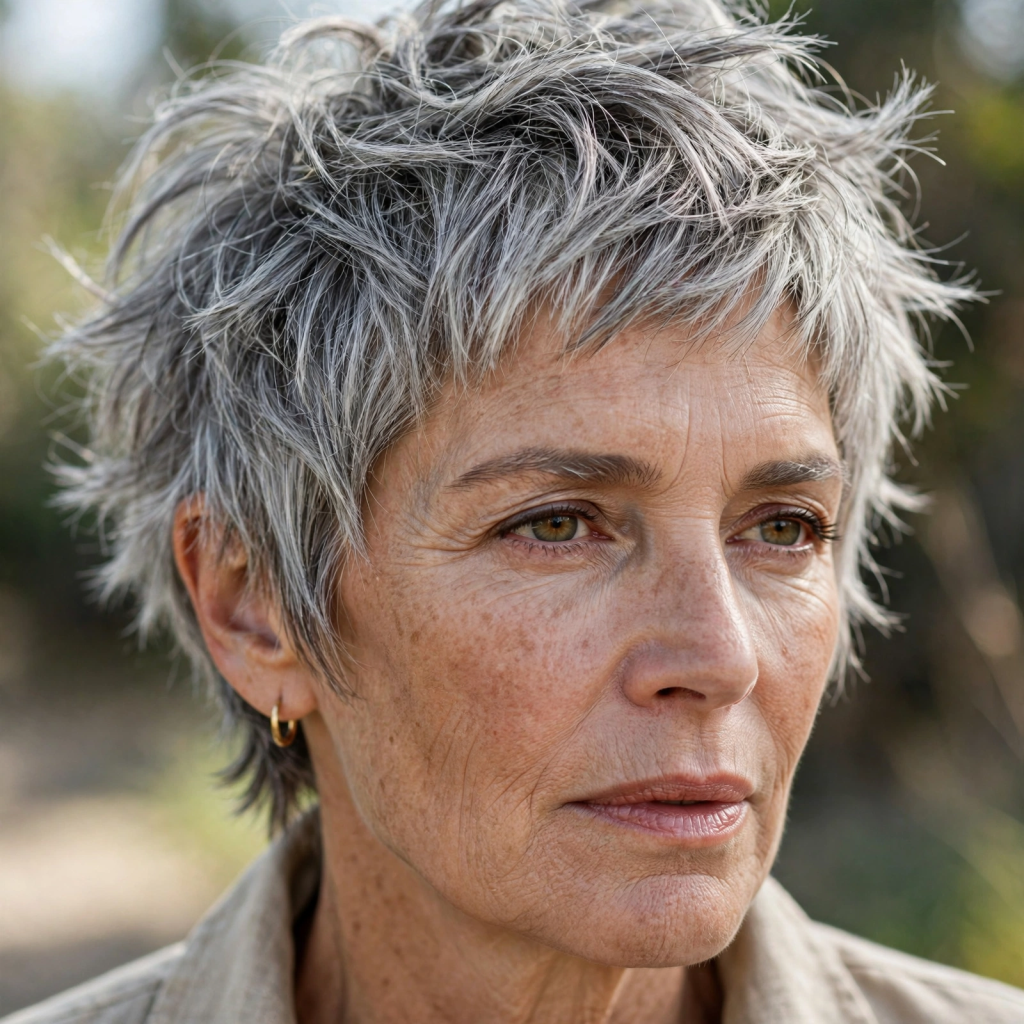
Ask your stylist for point-cutting to create jagged edges. This texturizing removes bulk (weight) that pulls hair down, allowing fine strands to “fluff up” for a messy, modern look.
- Styling Tip: Work a pea-sized amount of texturizing paste through the ends to define the pieces.
3. The Long Pixie
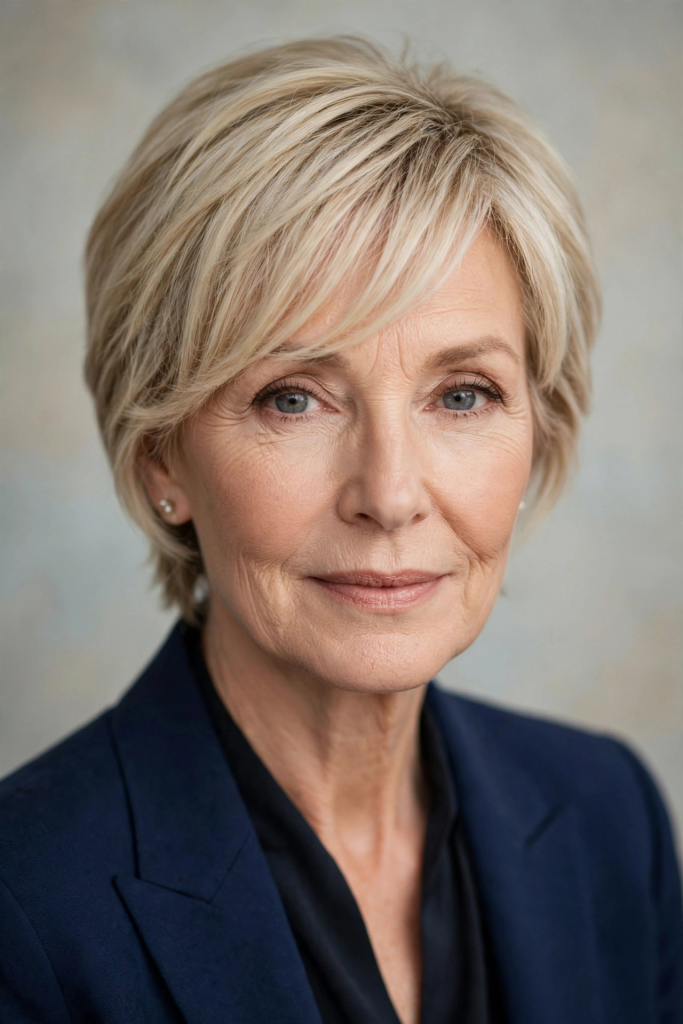
This style features slightly longer bangs and side-swept layers. It softens facial features and offers more versatility than a traditional short crop.
- Styling Tip: Sweep the bangs to the side to create a diagonal line across the forehead, which breaks up the roundness of the face.
4. The Buzz Cut
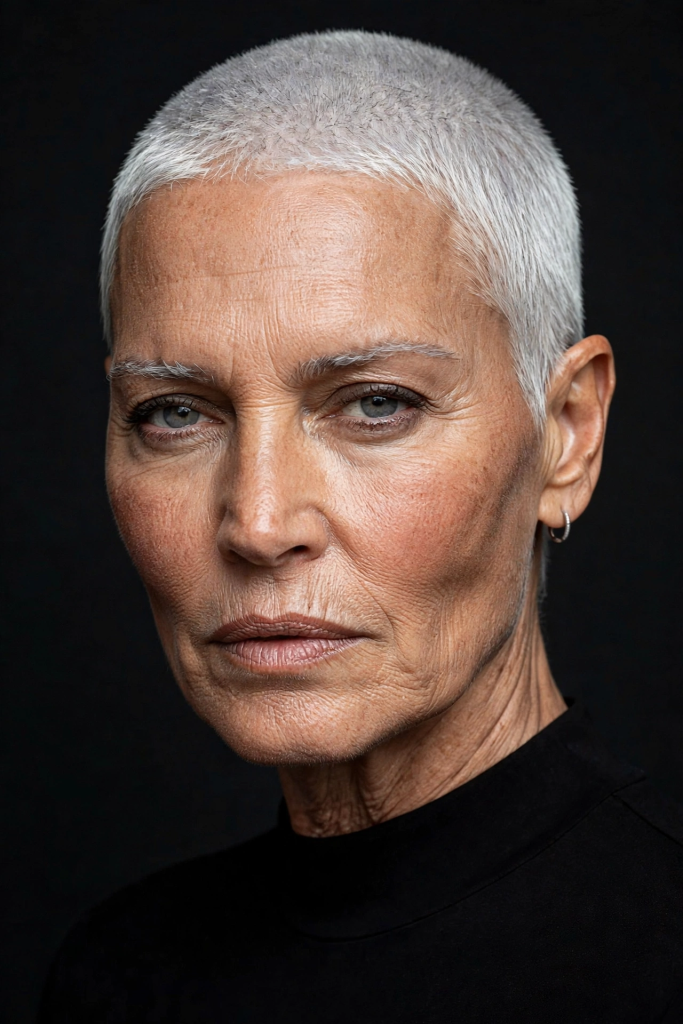
For the bold and confident woman, a super-short buzz or crop is incredibly liberating. It eliminates the issue of thin hair entirely and highlights your facial features, eyes, and bone structure.
- Styling Tip: Minimal product needed; just keep the scalp moisturized.
5. The Tapered Crop
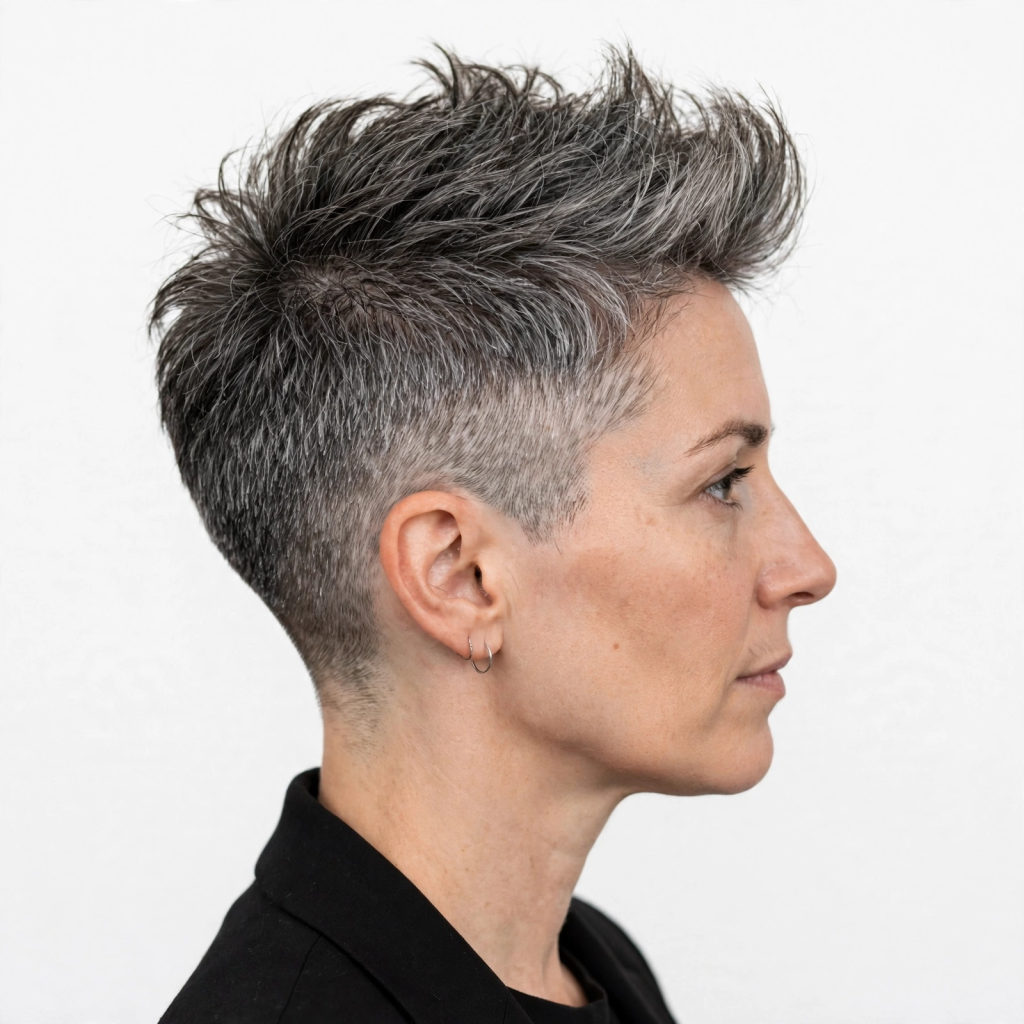
Shorter at the nape of the neck and longer on top, the tapered crop provides a dramatic lift. The contrast in length makes the top section look much denser.
- Styling Tip: Blow-dry the top section upward and back for maximum volume.
Category 2: The Classic Bob (Chin to Shoulder Length)
6. The Inverted Bob
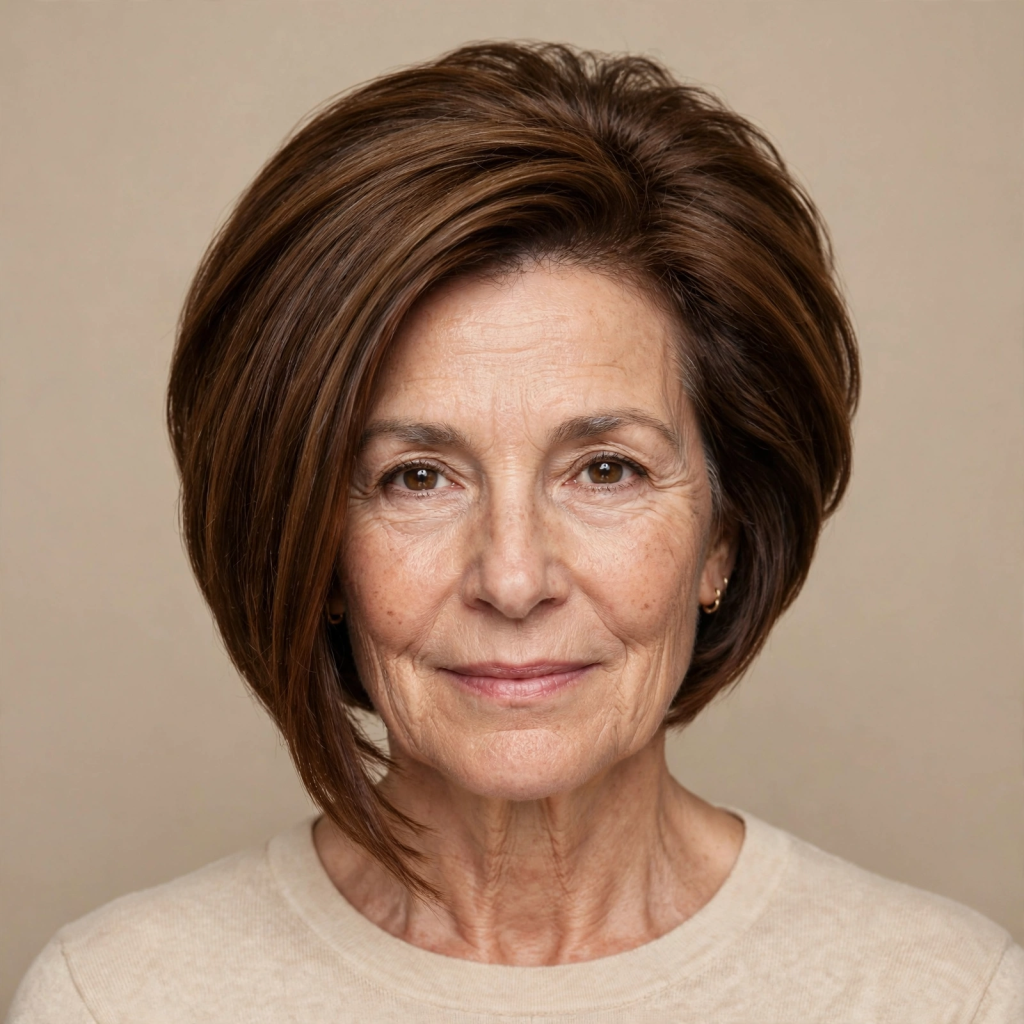
This is arguably the best haircut for thin hair. It is stacked and shorter in the back, gradually getting longer toward the front. The angle creates an internal “wedge” that forces the hair to stack up, creating natural volume.
- Styling Tip: Blow-dry with a large round brush, tucking the ends under slightly.
7. The Blunt Bob
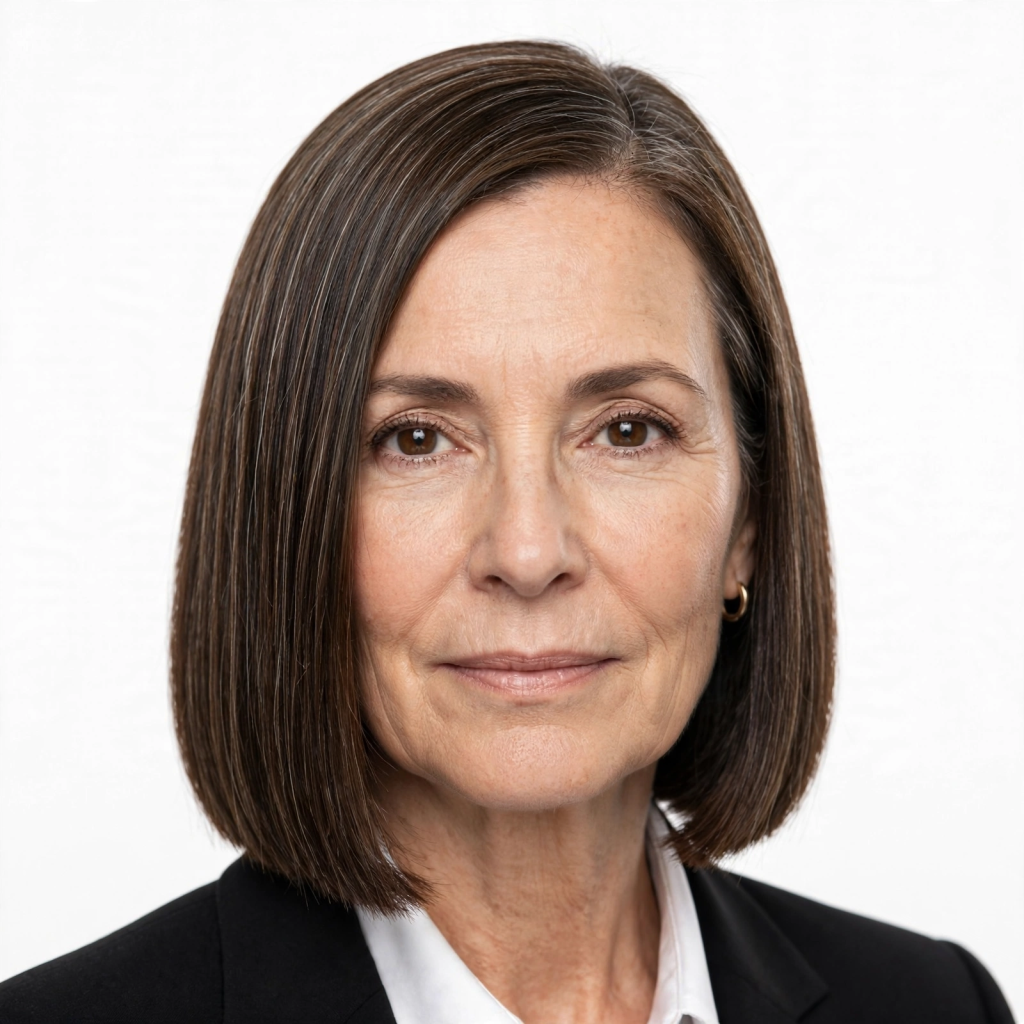
While thinning hair often lacks weight, a blunt, one-length cut adds a solid line that makes the ends look thicker. Keep the length at the jawline or chin to maintain the illusion of density.
- Styling Tip: Use a shine serum to reflect light off the blunt ends, making them appear thicker.
8. The French Bob
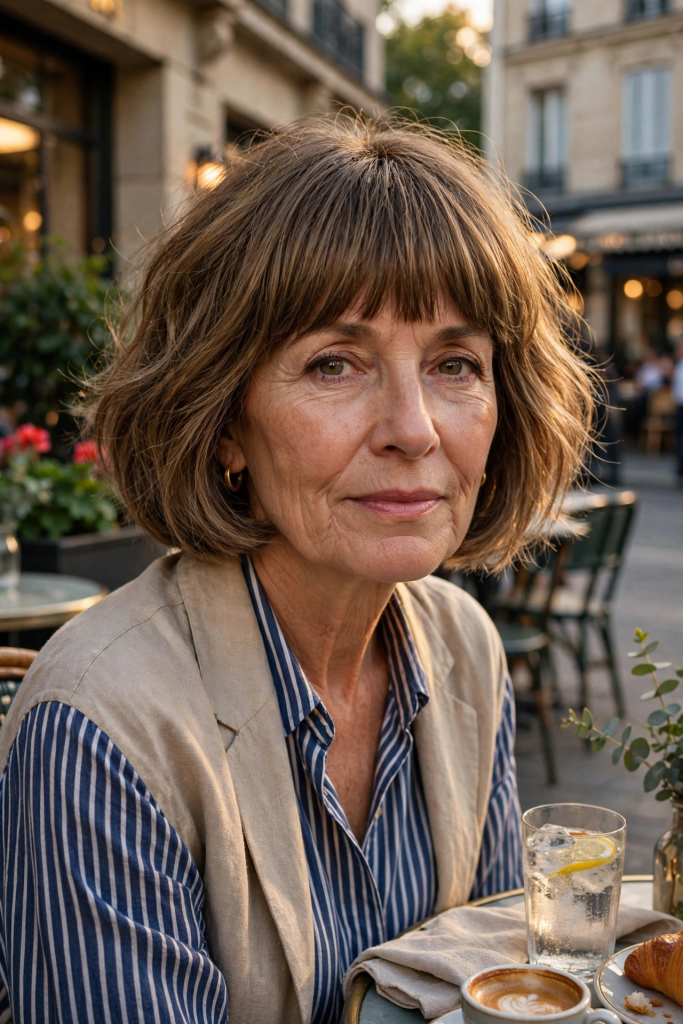
A chin-grazing bob with full, heavy bangs. The fringe creates a focal point that diverts attention from crown thinning, while the short length keeps the hair from falling flat.
- Styling Tip: Allow the bangs to dry naturally or with a slight curve to soften the forehead.
9. The Asymmetrical Bob
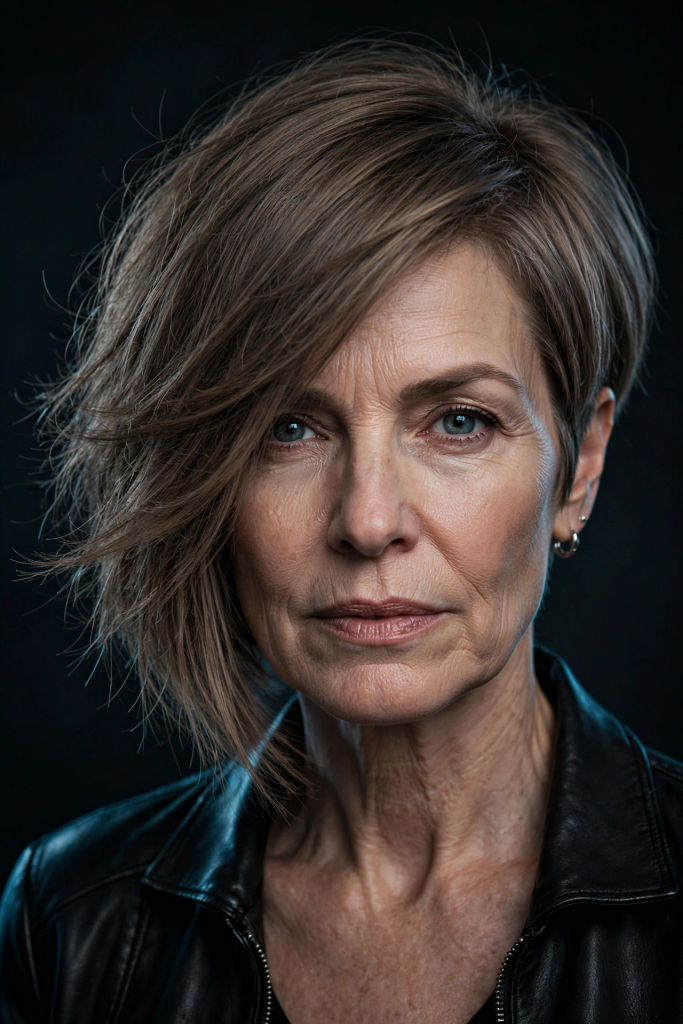
A longer front on one side and a shorter side on the other creates asymmetry that draws the eye away from thin spots and adds modern interest.
- Styling Tip: Flat iron the longer side straight and bend the shorter side under slightly.
10. Layered Bob with Fringe
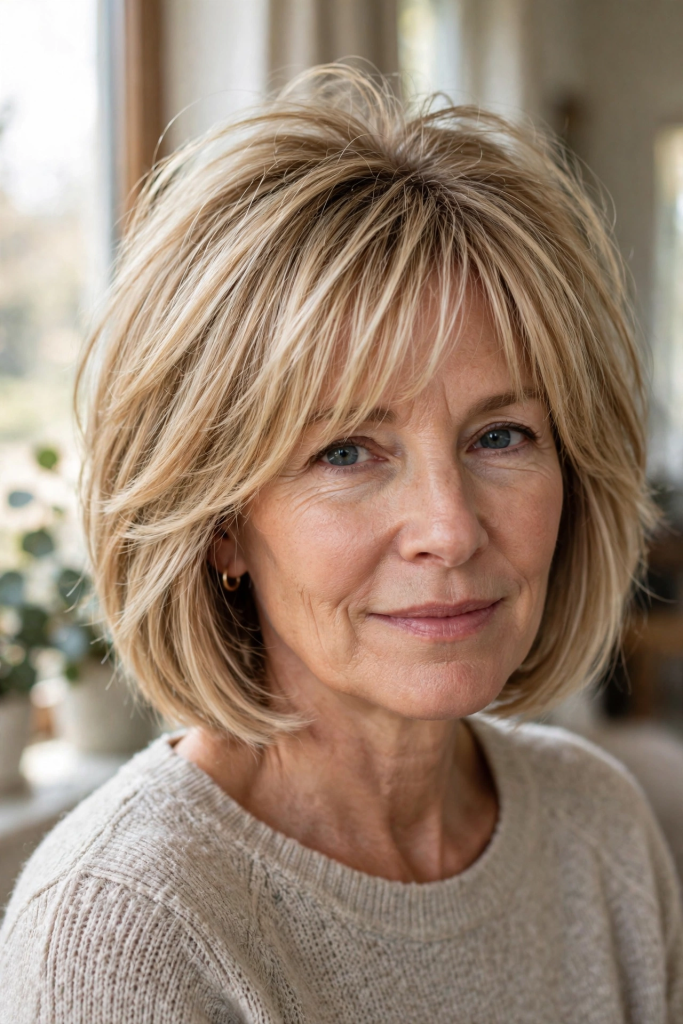
Adding light layers and wispy fringe removes excess weight, allowing the hair to bounce. The layers should be “long” layers (layers cut at a steep angle) to prevent the hair from looking choppy.
- Styling Tip: Use a root-lifting spray before blow-drying to maximize the bounce.
Category 3: Medium to Longer Lengths
11. The Shag Haircut
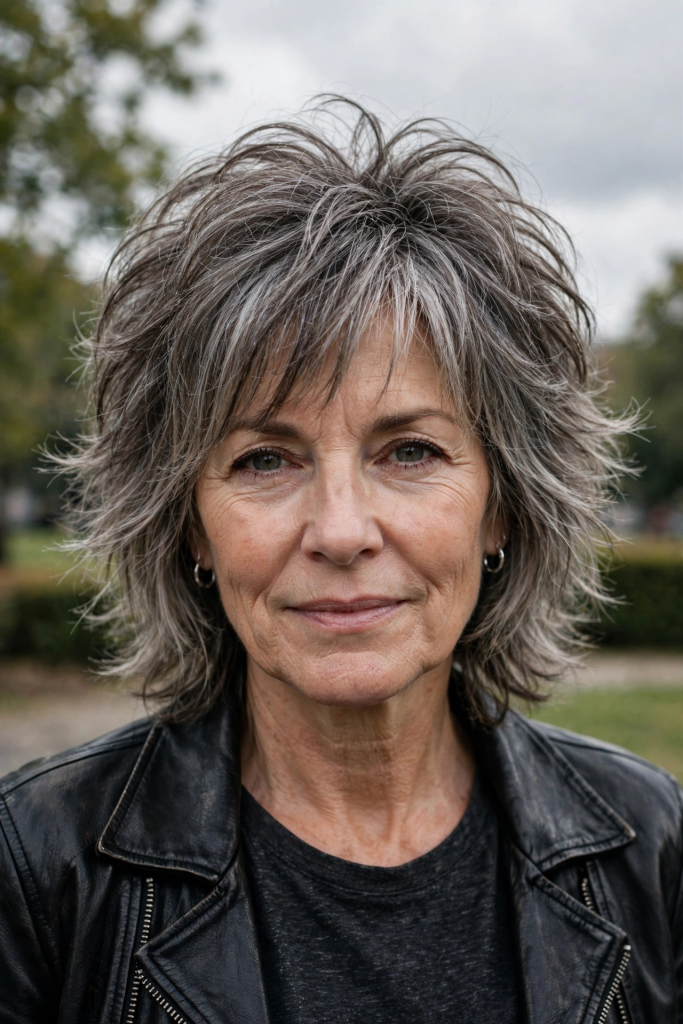
The modern shag has plenty of texture, soft layers, and wispy ends. It gives thin hair a rock-and-roll vibe and makes it look effortlessly full. It works best for wavy or straight fine hair.
- Styling Tip: Use a sea salt spray on damp hair and scrunch it to enhance natural wave and texture.
12. Long Layers with Bangs
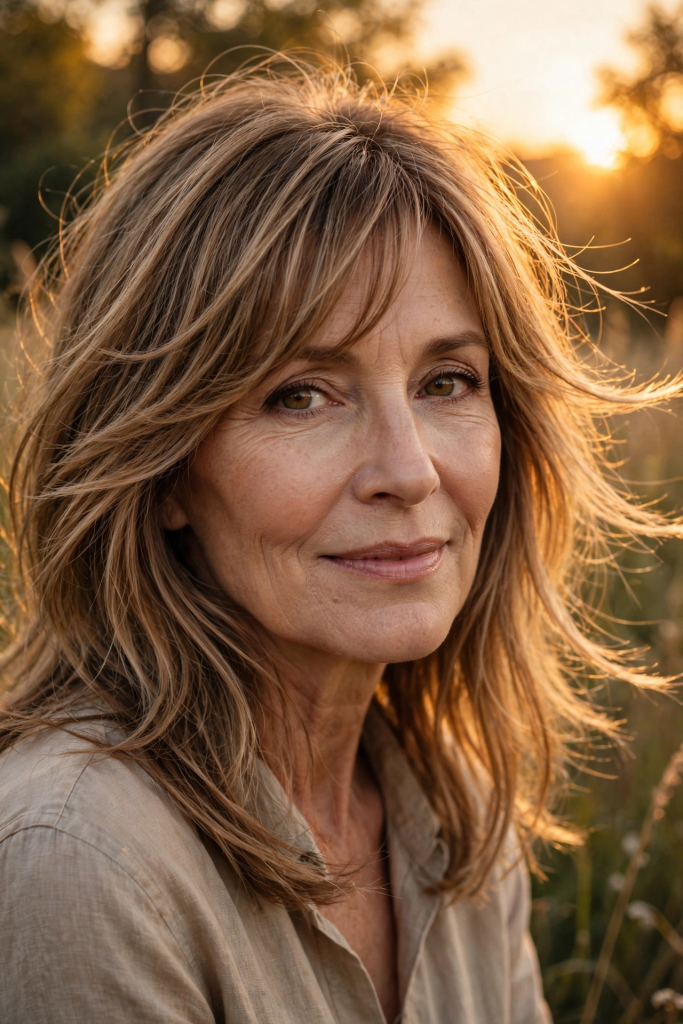
Instead of heavy, one-length hair that drags the look down, long, blended layers add movement. Adding wispy side-swept bangs helps to create a softer silhouette.
- Styling Tip: Blow-dry the bangs to the side to hide any temple thinning.
13. The One-Length Lob (Long Bob)
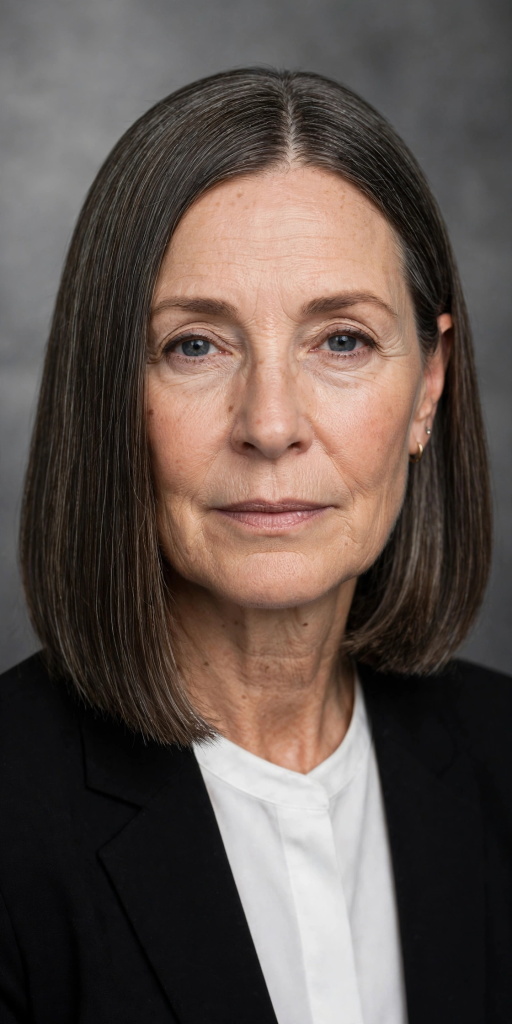
Cut to just above the shoulders, this style is heavy enough to avoid looking scraggly but short enough to maintain some volume. Keeping it a blunt cut at the perimeter adds weight to the bottom.
- Styling Tip: Blow-dry in large sections to create a smooth, glass-like finish.
14. The “Wolf” Cut
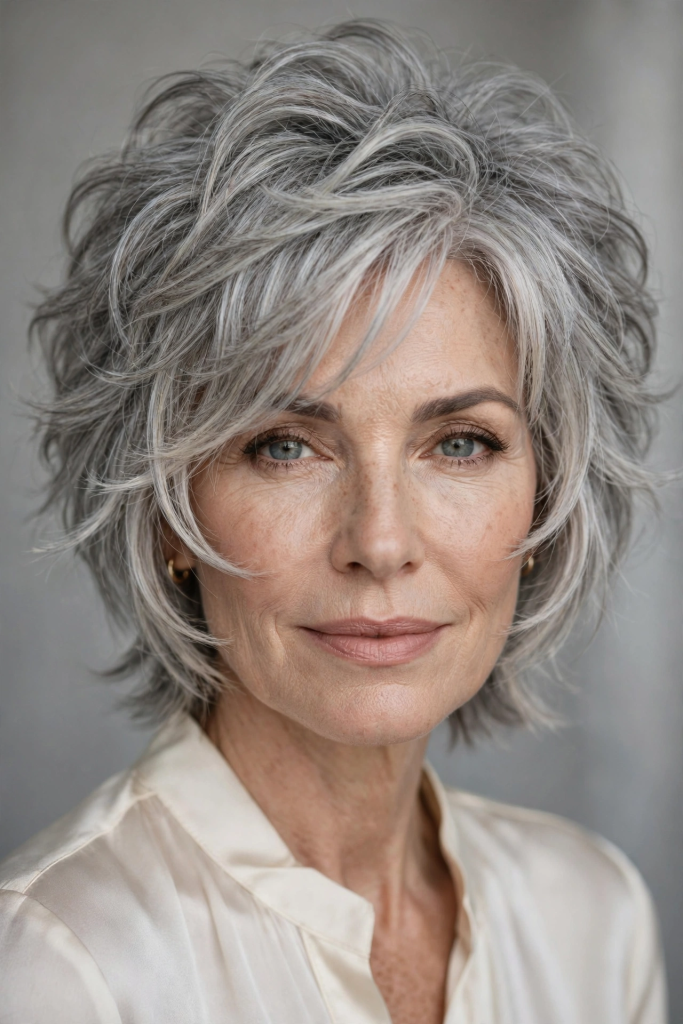
A softer take on the shag, the wolf cut is heavily textured with a lot of volume at the crown. The “choppy” appearance masks thinness by creating a deliberately messy, full look.
- Styling Tip: Apply a volumizing powder to the roots and mess it up with your fingers.
15. Curtain Bangs with Waves
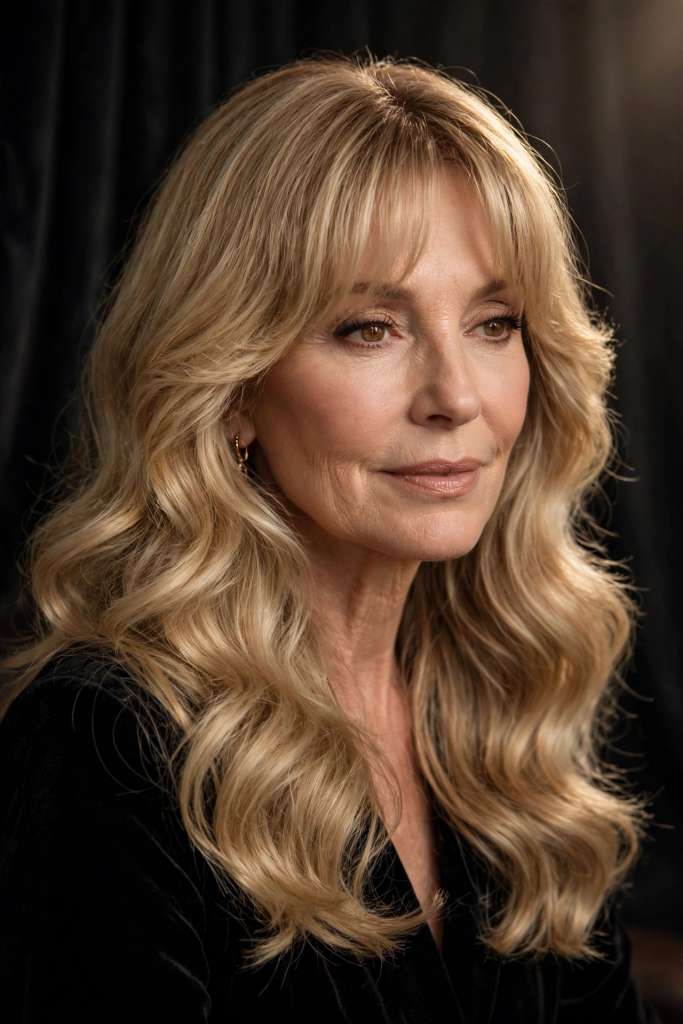
Curtain bangs (long, parted down the middle) frame the face beautifully and add width to the sides of the head. Pair this with loose waves to add the appearance of double the hair density.
- Styling Tip: Use a curling wand to create waves away from the face.
Category 4: Specialized & Specific Needs
16. The “Faux Hawk” (Edgy Updo)
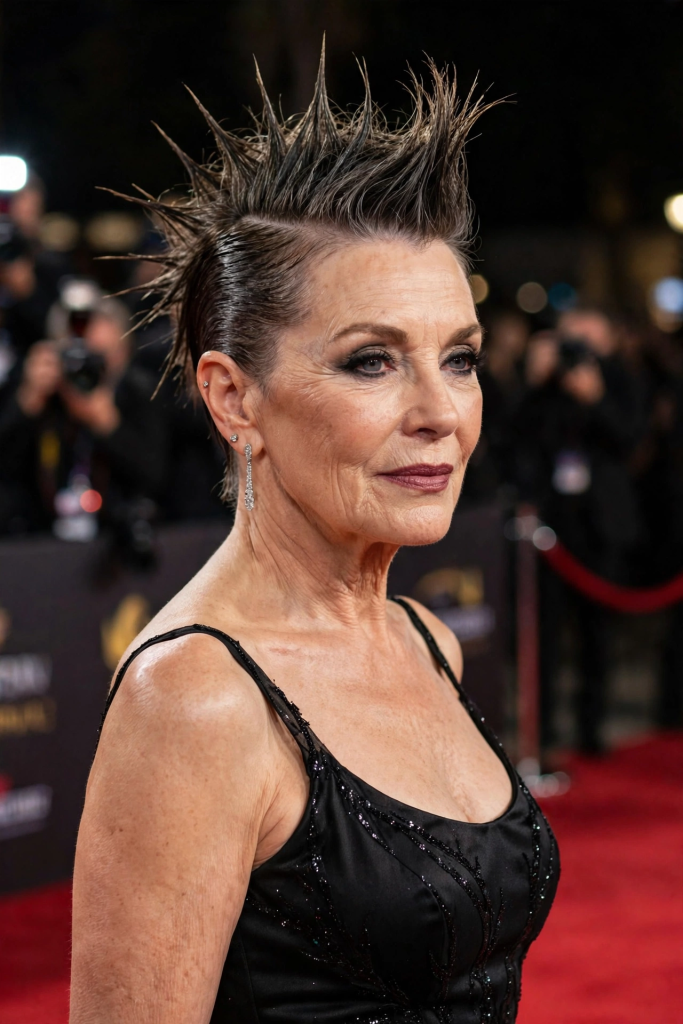
For nights out, a faux hawk gathers the sides tight and spikes the middle. This creates a dramatic center row of hair that looks extremely thick and adds height.
- Styling Tip: Use a strong-hold hairspray to keep the center ridge in place.
17. The Deep Side Part
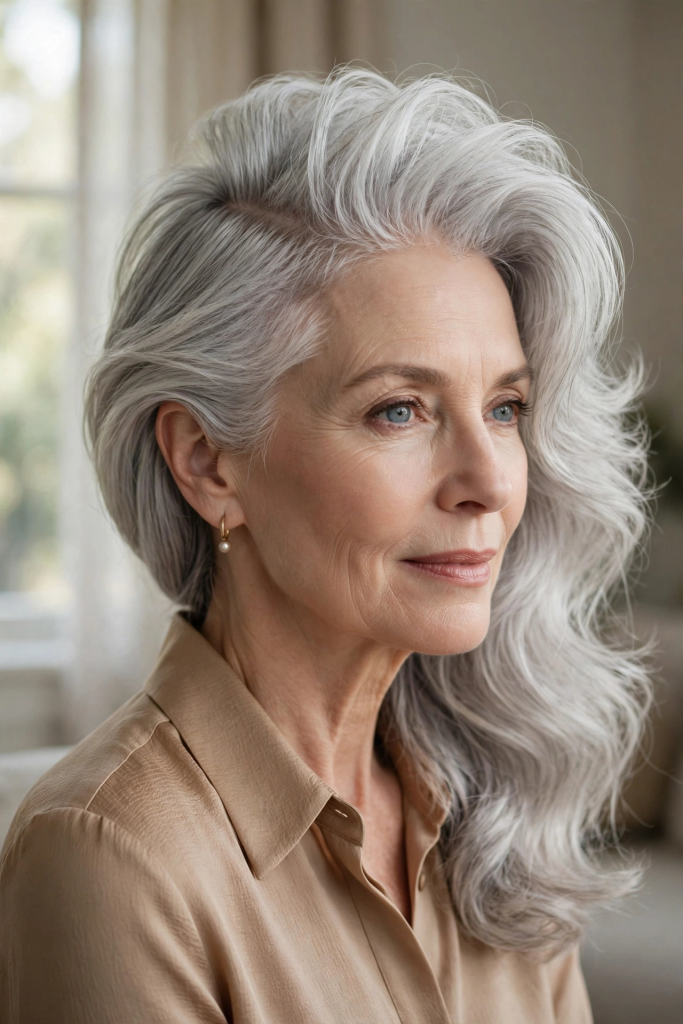
A drastic change to your part is a quick fix for thin hair. A deep side part creates an immediate arch of volume at the root as the hair falls over to the other side, covering a larger area of the scalp.
- Styling Tip: Blow-dry the hair against the direction of the part to maximize root lift, then sweep it back over.
18. Volumized Layers (Feathering)
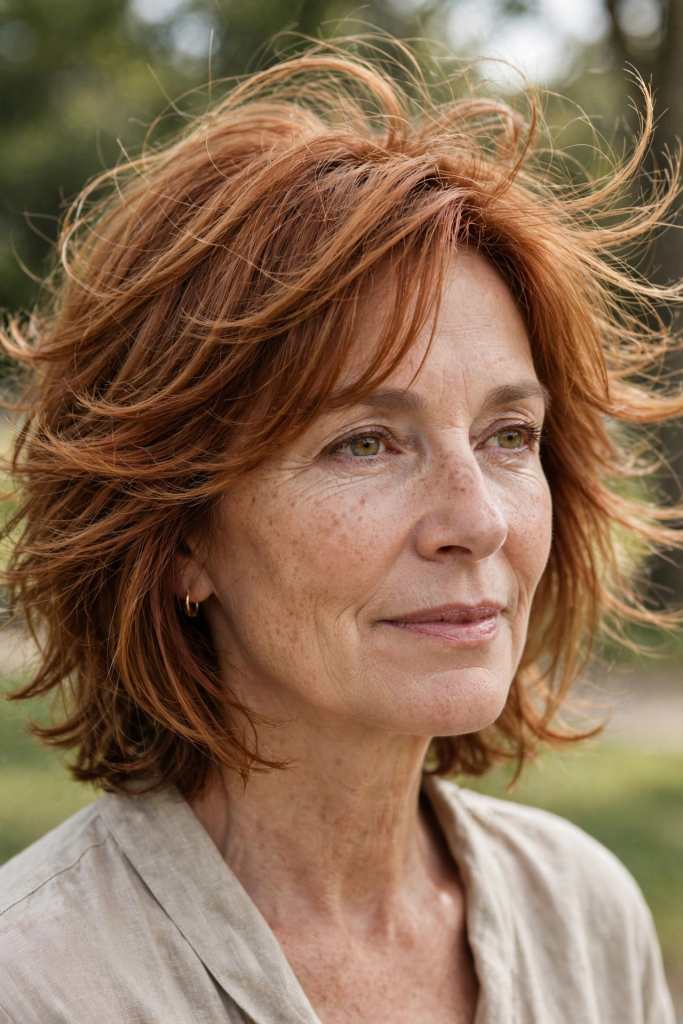
Feathering is a specific cutting technique where the ends are sliced into. This removes the blunt edge that can sometimes be too heavy. It is a way to keep length while reducing weight that causes the hair to fall flat.
- Styling Tip: Use a lightweight mousse to hold the feathered ends.
19. Root-Volume Bob
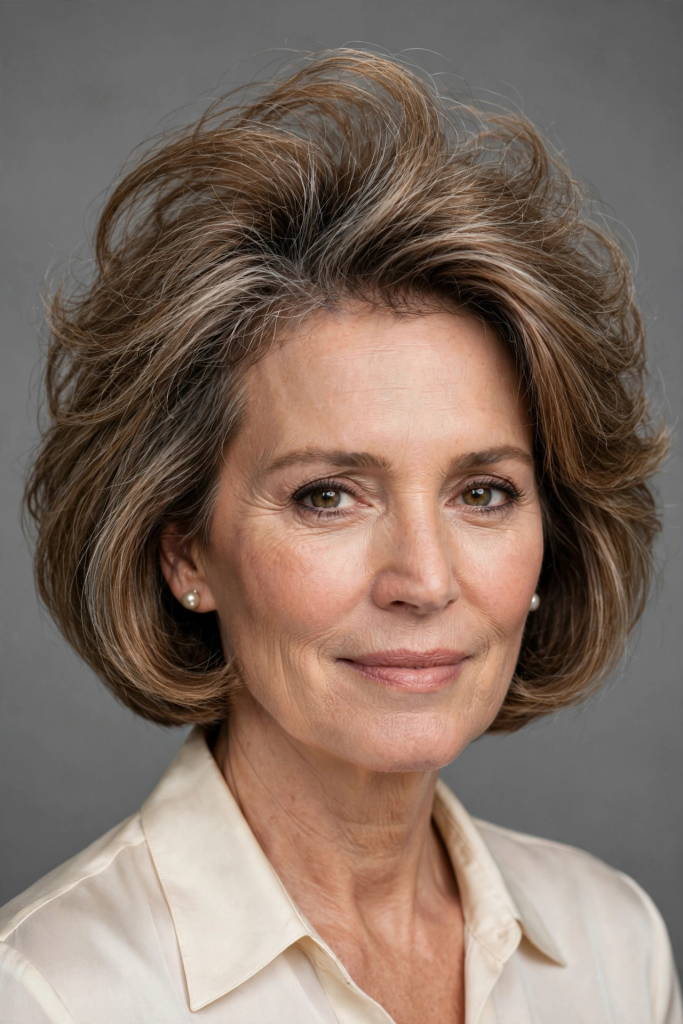
A specific cut that is “over-directed.” This means the hair is cut while being lifted at a 90-degree angle, ensuring that when it falls, it creates a natural “bump” or volume at the root.
- Styling Tip: Blow-dry with a small round brush focusing specifically on the root area.
20. The Textured Crop with Highlights
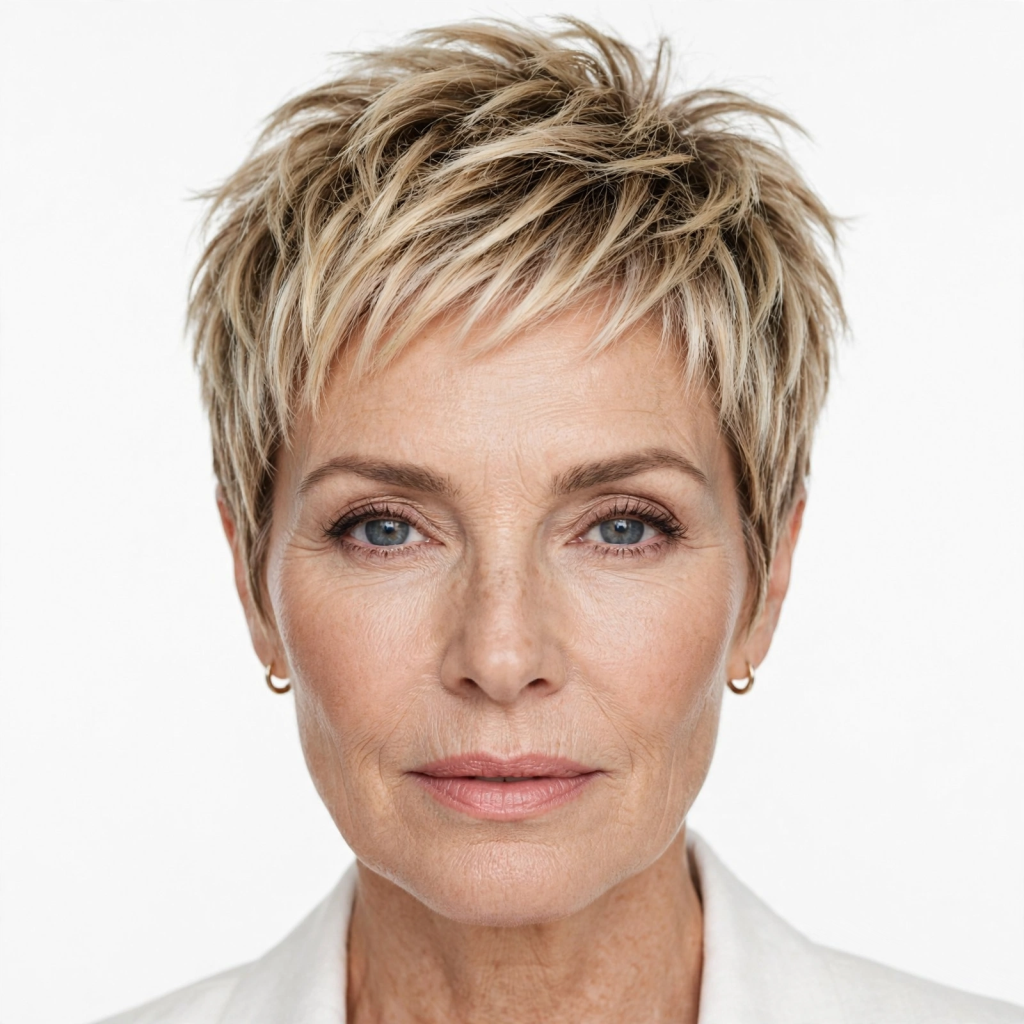
While not a cut, adding highlights to a textured crop creates dimension. Light colors reflect light, and multiple shades create the optical illusion of thicker, more multi-dimensional hair.
- Styling Tip: Ask for “baby lights” or “foilyage” to add brightness without damaging the fine strands.
What to Ask Your Stylist (Crucial Section)
Before sitting in the chair, here is the key vocabulary to use. Thin hair requires a specific technique to look full. Avoid saying “layer it” (which can mean removing too much bulk). Instead, ask for:
- “Point Cutting” : This softens the ends so they don’t look sparse.
- “Remove weight, not length” : This ensures they take out the heavy bulk from the inside of the cut, not the perimeter.
- “Texture on the top, blunt on the bottom” : This gives you volume up top and density at the ends.
- “Over-direction” : This technique cuts the hair while it is pulled up, ensuring it falls with bounce.
Essential Styling Tips for Thin Hair
- The Root-Lifting Trick: Use a volumizing root spray or mousse on damp roots. Blow-dry the hair in the opposite direction of where it sits. Once cool, flip it back. This is the magic trick for lasting volume.
- Shampoo Smarter: Avoid heavy “moisturizing” shampoos that weigh hair down. Look for “volumizing” or “thickening” formulas.
- Blow-Dry Upside Down: For a quick volume boost, flip your head upside down while blow-drying. The heat sets the hair as it stands away from the scalp.
- Texturizing Spray is Your Best Friend: Dry texturizing sprays or powders act like “hair makeup,” expanding the diameter of each individual hair.
- Heat Protectant: Always use a heat protectant; broken hair looks thinner.
Products to Avoid
- Heavy Oils: Coconut oil and castor oil are too heavy and will flatten thin hair.
- Pomades: Unless you are doing a sleek updo, they can make fine hair look greasy and stringy.
- Over-Washing: Washing too often strips natural oils. Dry shampoo is great for extending styles and adding grit for volume.
Conclusion
Reaching your 50s and beyond is a celebration of life, and your hairstyle should reflect that vitality. While thinning hair can be a frustrating change, it is an opportunity to experiment with cuts you might never have tried before.
The key takeaway is this: thin hair thrives on structure and texture. Whether you choose a sassy pixie, a stacked bob, or soft, face-framing layers, the perfect hairstyle is out there waiting for you. Don’t be afraid to chop off the dead ends—embracing a shorter length is often the secret to unlocking a fuller, more youthful appearance.
Book that appointment, bring these ideas to your stylist, and get ready to fall in love with your hair all over again. Your best hair decade is just beginning.

Leave a Reply