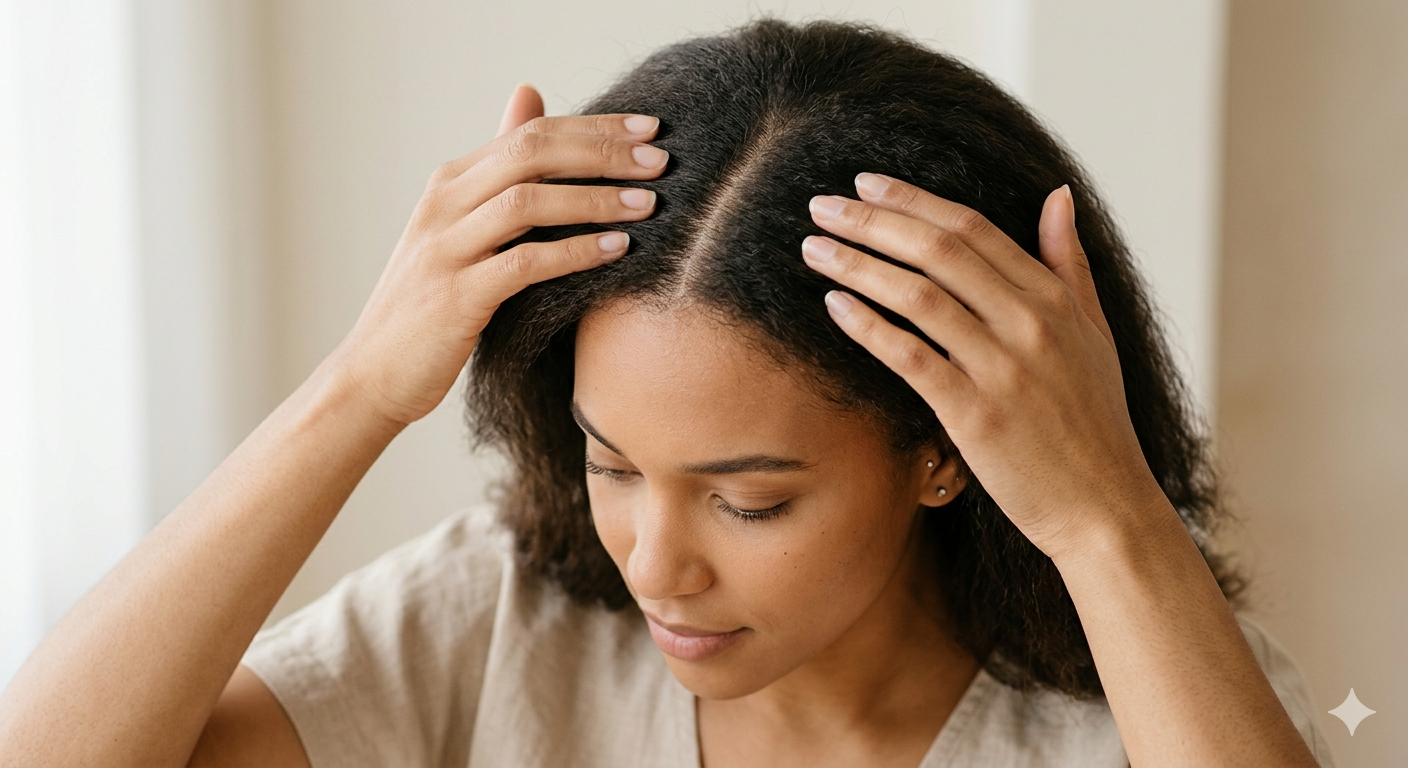
A healthy scalp is the foundation of strong, beautiful hair. While many people focus on hair length, shine, or styling products, the condition of your scalp plays a much bigger role than most realize. When the scalp is balanced and well cared for, hair is more likely to look vibrant, feel soft, and behave better overall.
This healthy scalp guide explains how to recognize common scalp problems, what causes them, and how to build a simple routine that supports long-term scalp health. Instead of relying on complicated treatments, the goal is to understand your scalp and care for it consistently.
What Is a Healthy Scalp?
A healthy scalp is balanced, comfortable, and free from ongoing irritation. It should not feel excessively dry or overly oily, and it should not show signs of buildup or persistent flaking.
Signs of a healthy scalp:
- Feels clean and comfortable between washes
- Has little to no itchiness
- Shows no visible buildup or heavy residue
- Maintains a natural oil balance
When your scalp is in this condition, it creates the right environment for healthy-looking hair.
look out; Stressed Skin Tips That Actually Help (Simple Ways to Support Skin Recovery)
Why a Healthy Scalp Matters
Hair grows from follicles located in the scalp. This means the condition of your scalp directly affects how your hair looks and feels.
When the scalp is not balanced:
- Dryness can make hair feel rough or brittle
- Excess oil can make hair look greasy and flat
- Buildup can weigh hair down and reduce volume
A healthy scalp does not guarantee faster hair growth, but it supports better overall hair quality and manageability.
Common Signs of an Unhealthy Scalp
Understanding early warning signs can help you adjust your routine before problems become more noticeable.
Dryness and Tightness
A scalp that feels tight or uncomfortable, especially after washing, is often lacking moisture.
Common signs:
- Small, dry flakes
- Tight feeling after cleansing
- Increased sensitivity
Possible causes:
- Harsh shampoos
- Washing too frequently
- Lack of hydration
Excess Oiliness
An oily scalp produces more oil than necessary, often leading to greasy roots soon after washing.
Common signs:
- Hair looks oily within a short time
- Flat or heavy appearance
- Frequent need to wash
Possible causes:
- Overwashing
- Heavy products
- Imbalance in oil production
Itchiness and Irritation
Itchiness is a common sign that your scalp is not balanced.
Common signs:
- Frequent urge to scratch
- Mild discomfort or sensitivity
Possible causes:
- Dryness
- Product irritation
- Buildup
Flaking
Flakes can come from either dryness or dandruff, and identifying the cause is important.
Common signs:
- White or slightly yellow flakes
- Itchiness
Possible causes:
- Lack of moisture
- Oil imbalance
Buildup
Scalp buildup occurs when products, oils, and sweat accumulate over time.
Common signs:
- Greasy or coated feeling
- Dull-looking hair
- Reduced volume
Possible causes:
- Overuse of products
- Infrequent cleansing
What Causes Scalp Imbalance?
A healthy scalp depends on balance. Most scalp concerns develop when this balance is disrupted.
Overwashing or Underwashing
Washing too often can strip natural oils, while washing too little can allow buildup to accumulate.
Harsh Products
Strong cleansers and heavily fragranced products can irritate the scalp.
Product Overload
Using too many oils, creams, or styling products can clog the scalp and interfere with balance.
Environmental Factors
Weather conditions such as heat, humidity, or dryness can affect how your scalp behaves.
Inconsistent Routine
Switching products too often or not following a routine can prevent your scalp from stabilizing.
How to Build a Healthy Scalp Routine
A healthy scalp routine does not need to be complicated. Simple, consistent habits are often the most effective.
Step 1: Cleanse Gently
Choose a shampoo that matches your scalp type.
- Oily scalp: use lightweight, balancing cleansers
- Dry scalp: choose hydrating, gentle formulas
- Sensitive scalp: use mild, minimal-ingredient products
Focus on cleansing the scalp without aggressive scrubbing.
Step 2: Avoid Product Overload
Apply heavy products mainly to the hair lengths rather than directly to the scalp unless necessary.
Keeping the scalp clear helps maintain balance.
Step 3: Maintain a Consistent Routine
Find a washing schedule that works for your scalp and stick to it.
- Oily scalp may need more frequent washing
- Dry scalp may benefit from less frequent washing
Consistency helps your scalp regulate itself over time.
Step 4: Keep the Scalp Balanced
A healthy scalp is not too dry and not too oily.
If your scalp feels stripped, reduce harsh products.
If it feels greasy, simplify your routine and cleanse properly.
Step 5: Reset When Needed
If buildup occurs, a gentle deep cleanse can help restore balance.
This does not need to be done often, only when necessary.
Common Mistakes That Affect a Healthy Scalp
Avoiding these habits can make a significant difference in scalp health.
Overwashing
Frequent washing can strip natural oils and lead to imbalance.
Using Too Many Products
Excess products can cause buildup and irritation.
Scratching Aggressively
Scratching can damage the scalp and increase sensitivity.
Ignoring Early Signs
Mild itchiness or dryness can develop into more noticeable issues if ignored.
How Long It Takes to Improve Scalp Health
Improving scalp health takes time and consistency.
- Minor issues may improve within a few washes
- More persistent concerns may take a few weeks
The key is maintaining a simple routine and avoiding constant changes.
Keeping Scalp Care Simple
Many people believe that achieving a healthy scalp requires multiple products and treatments. In reality, a simple approach is often more effective.
Focus on:
- Gentle cleansing
- Balanced care
- Consistent habits
Avoid relying on:
- Overly complicated routines
- Frequent product changes
- Aggressive treatments
Conclusion
A healthy scalp is the starting point for healthy-looking hair. When your scalp is clean, balanced, and comfortable, your hair is better supported and easier to manage.
This healthy scalp guide shows that the best results come from understanding your scalp and caring for it consistently. By focusing on balance rather than extremes, you can create a routine that supports both your scalp and your hair over time.

Leave a Reply