12 Game‑Changing Cuts for Your Luscious Mane
For those blessed with thick hair, the struggle is real. You have volume for days, but also weight that can give you a tension headache by noon. Long hair can turn into a heavy, shapeless curtain, while short crops often require aggressive thinning that ruins your natural texture. And let’s be honest – thick hair takes forever to dry, eats up product like a sponge, and has a mind of its own in humidity.
Enter the Goldilocks zone: medium length.
Ranging from the chin to a few inches past the shoulders, medium length is the perfect compromise. It’s long enough to weigh down the puffiness, but short enough to prevent the dreaded “pyramid head” triangle effect. It’s the sweet spot where thick hair finally becomes an asset, not a burden.
If you are ready to tame the mane without sacrificing the drama, here are 12 of the best medium‑length hairstyles for thick hair – each one explained with why it works, how to ask your stylist for it, and exactly how to style it at home.
The Cuts
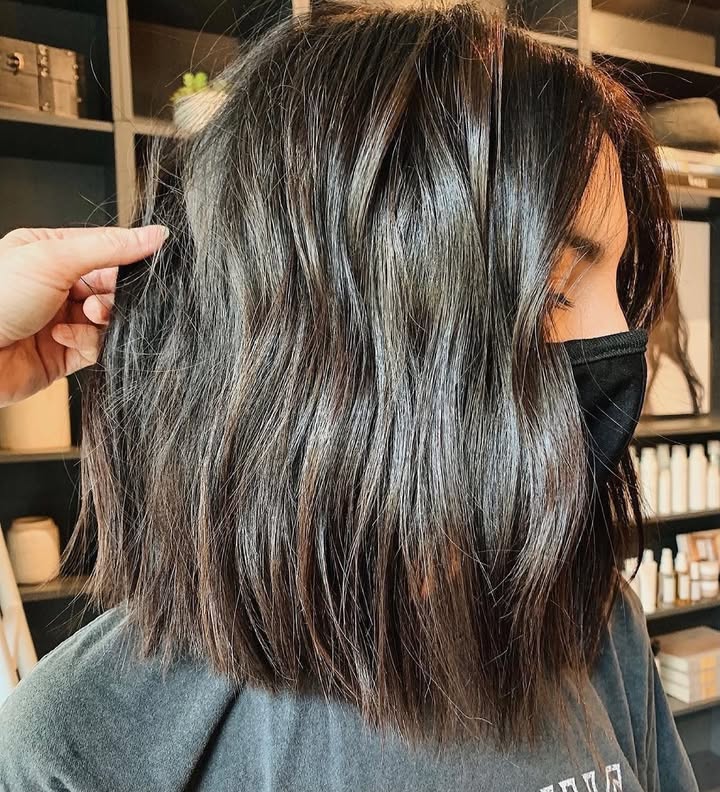
1. The Textured “Lob” (Long Bob)
The lob is the undisputed champion for thick‑haired individuals. By ending the cut at the collarbone – not the armpit, not the chin – you remove the heaviness that drags your face down while keeping enough length to pull it back.
- Why it works: It removes the “brick‑like” weight from your ends, allowing your natural wave or curl to bounce up slightly. The lob also visually lifts the jawline, making it a favorite for round or square faces.
- The Ask: Request internal layers (layers hidden inside the cut) and point‑cutting at the ends. Avoid blunt, shelf‑like ends at all costs. Ask your stylist to “chip into the ends vertically.”
- Styling: A middle part with a little sea salt spray gives you that effortless “French girl” texture. For a sleeker look, use a paddle brush and blow‑dry straight, then tuck one side behind your ear.
learn more on; Effortless Elegance: Medium Hairstyles for Busy Women in 2016.
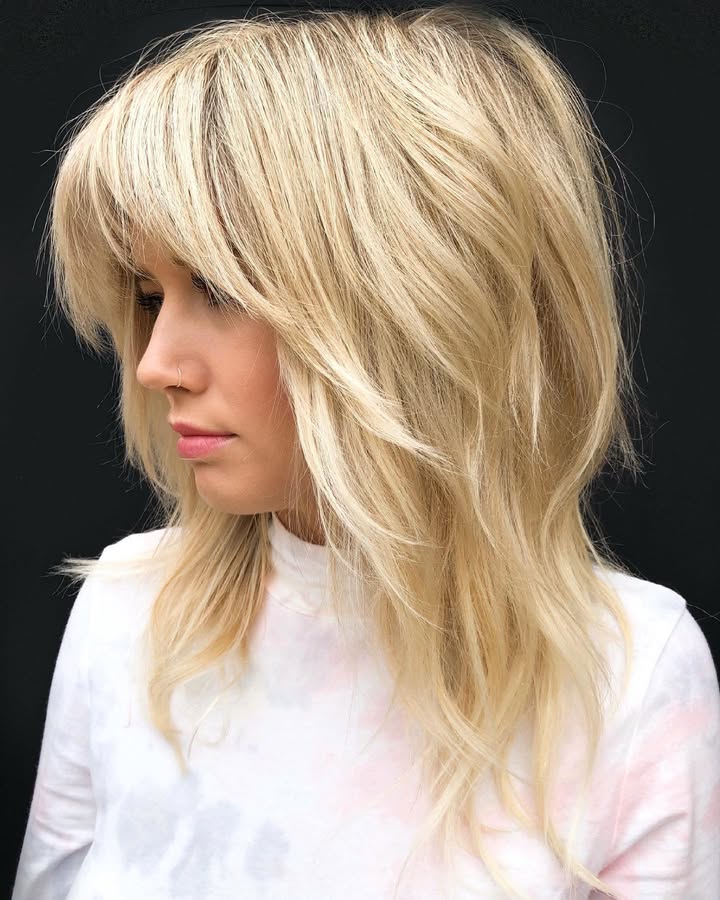
2. The Modern Shag with Curtain Bangs
The shag is a rebellion against slick, flat hair – which means it is a love letter to thick hair. This 70s revival has been updated for the 2020s with softer edges and more intentional disconnection.
- Why it works: Thick hair holds the choppy, disconnected layers of a shag perfectly without falling flat. The layers remove bulk from the interior of the hair, making it lighter, airier, and full of rock‑and‑roll attitude.
- The Ask: Look for a stylist who specializes in “razor cutting.” A razor removes weight better than shears, especially on dense hair. Pair it with curtain bangs that sweep to the side – they should hit just below your brow bone.
- Styling: Rough dry your hair upside down. Use a texture spray or a dry pomade to piece out the ends. The messier, the better. For second‑day hair, sprinkle a little dry shampoo at the roots and shake it out.
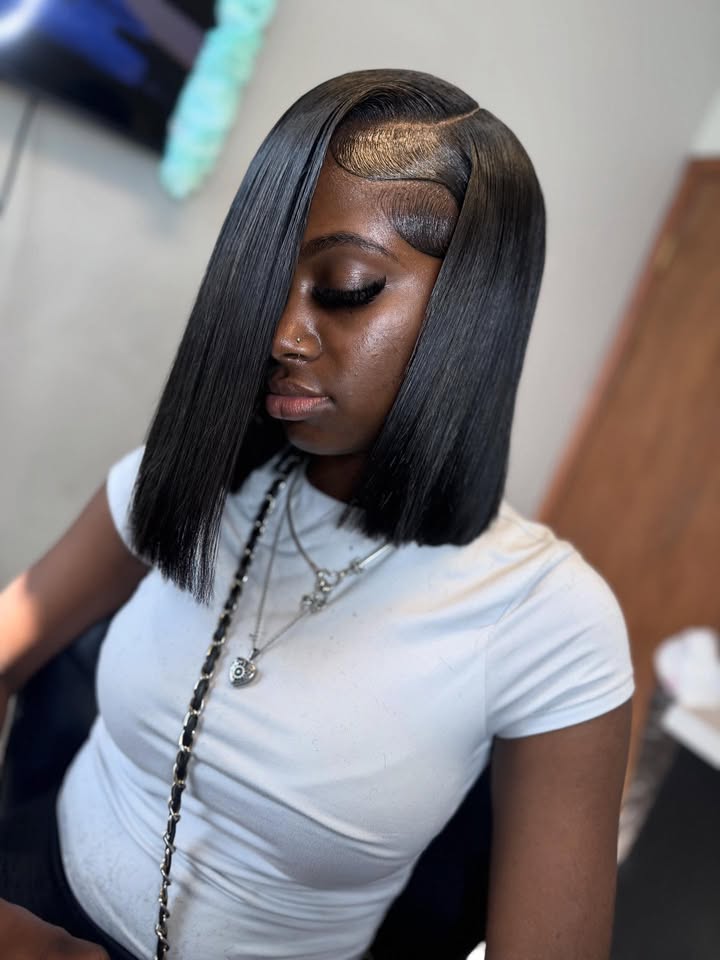
3. The Blunt Cut (With a Secret Weight‑Removal Trick)
Wait – blunt cuts usually make thick hair look like a helmet, right? Not if you hide the layers. This is the ultimate “expensive” look for those who want polish without the pyramid.
- Why it works: A blunt perimeter gives you that chic, glossy, “Rich Mom” vibe, but you need “invisible under‑cutting” or “weight removal” on the interior. The outline stays sharp while the inside breathes.
- The Ask: Tell your stylist: “I want the outline to look solid and blunt, but please remove the bulk from the underneath sections so it doesn’t poof out.” This is often done with slide‑cutting or a special thinning shear that removes weight only from the mid‑lengths.
- Styling: This cut was made for air‑drying. Apply a smoothing cream (Oribe, Bumble & Bumble, or even a drop of argan oil) and let it dry naturally. The blunt ends will keep it looking polished even if the interior has a little wave.
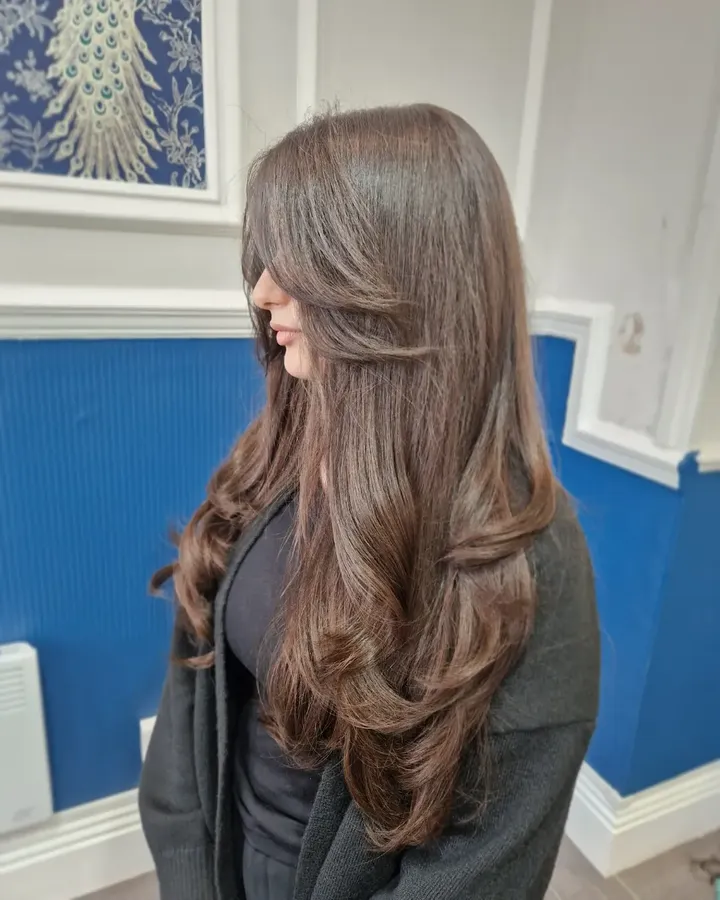
4. The Butterfly Cut (Viral TikTok Sensation)
Viral on TikTok for a reason, this cut mimics the wings of a butterfly – shorter, face‑framing layers on top, longer layers in the back. When you move your head, the layers “flutter.”
- Why it works: It creates “swing” and movement. Thick hair usually stays static when you turn your head; the butterfly cut changes that completely. It also adds incredible volume at the crown without extra product.
- The Ask: This requires a “round layer” technique where the top layers (around your ears) are significantly shorter than the bottom (which stays around the collarbone). Ask for “long layers with a lot of lift at the crown.”
- Styling: Use a round brush to blow out the ends away from your face. You will get massive volume at the crown but light, bouncy ends. Finish with a flexible hold hairspray.
5. The Deep Side‑Part with Voluminous Waves
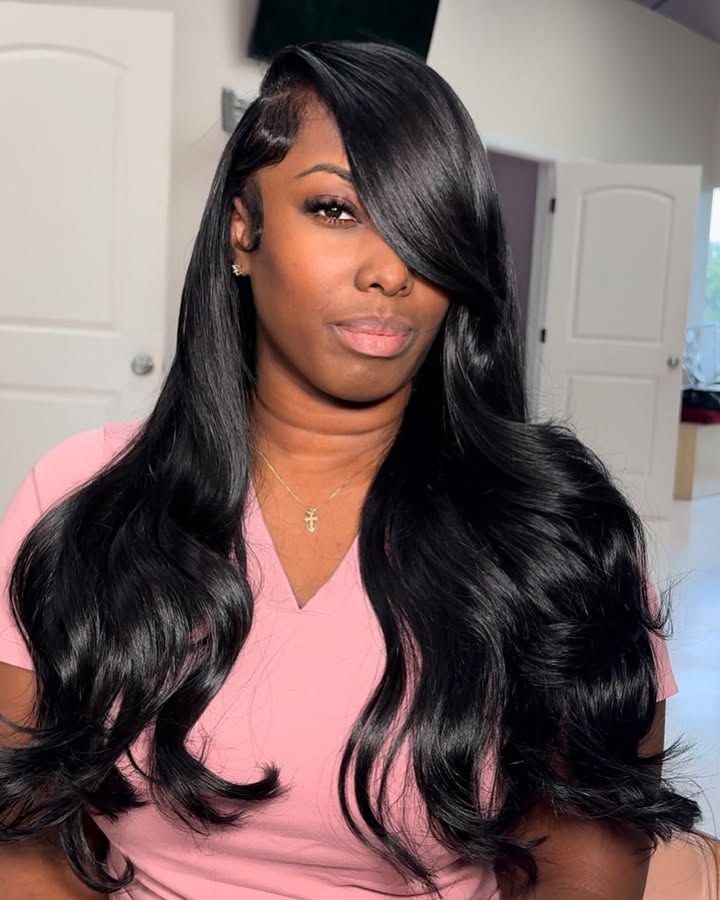
While middle parts are trendy, thick hair often looks heaviest when split down the middle. A deep side‑part is a styling trick, not a cut, but it transforms medium hair instantly.
- Why it works: It breaks up symmetry. The hair falls across the forehead and to one side, creating an S‑curve that visually slims the face and removes bulk from the temples. It also hides any unevenness in your natural part.
- The Ask: Keep your length at “shoulder grazing.” Ask for slight tapering around the ears to prevent the hair from flaring out like a mushroom. No need to change the overall shape; the part does the work.
- Styling: Blow‑dry the hair across your head (to the opposite side of your intended part), then flip it back. This creates “lift” at the root that lasts for days. Add large, loose waves with a 1.5‑inch curling iron.
6. The Italian “Mamma” Bob (Curtain of Volume)
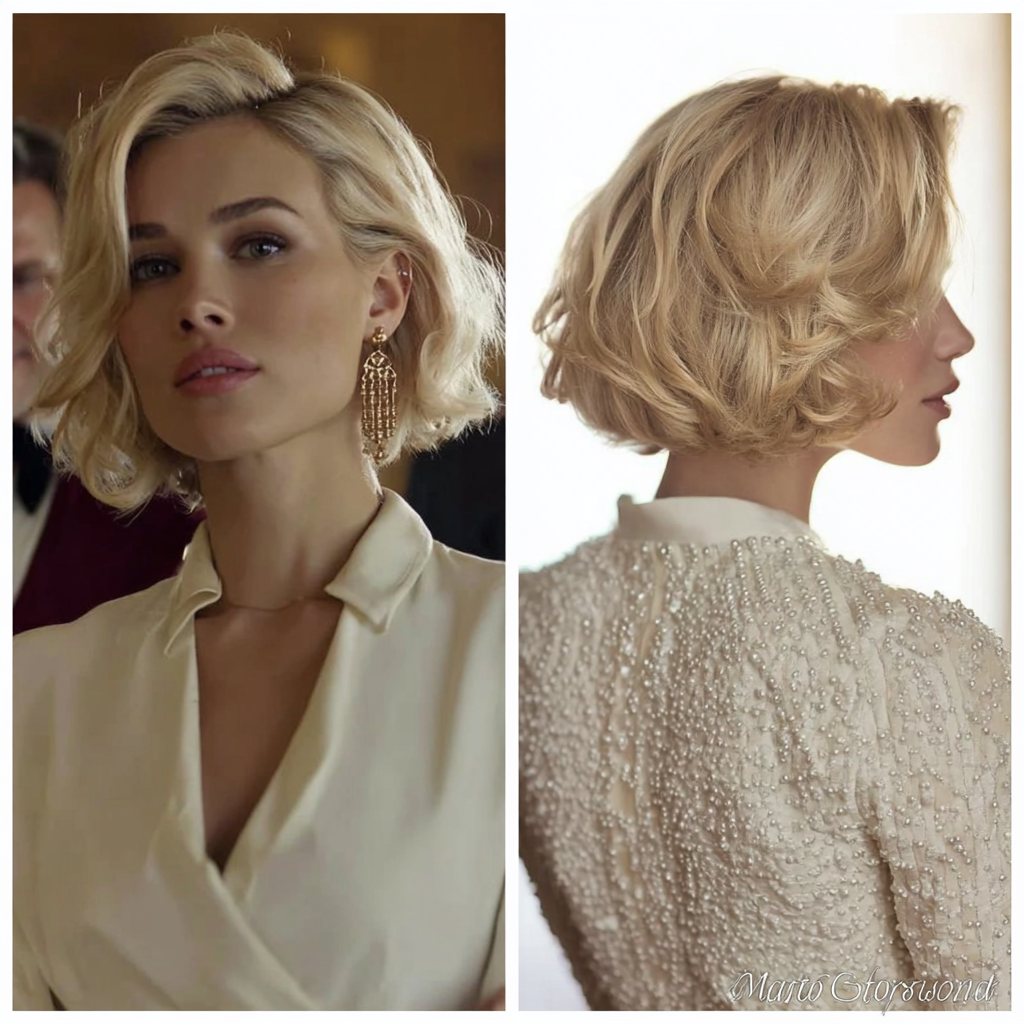
This style is beloved in Rome and Milan – a chin‑to‑shoulder bob with a soft, rounded silhouette that looks like a velvet curtain framing the face. It’s sophisticated and dramatic.
- Why it works: Thick hair is the only hair that can truly hold this shape. The cut is slightly shorter in the back (a “stacked” nape) and longer in the front, creating a gentle slope that showcases your density.
- The Ask: Request a “reverse graduated bob” – shorter at the nape, longer at the chin. Do not let your stylist use thinning shears on the top layer; keep the ends full and heavy.
- Styling: Blow‑dry with a large round brush, rolling the ends under. The result is a shiny, bouncy curtain that moves as one unit. Use a heat protectant spray and a few drops of glossing serum.
7. The Layered “Hush Cut”
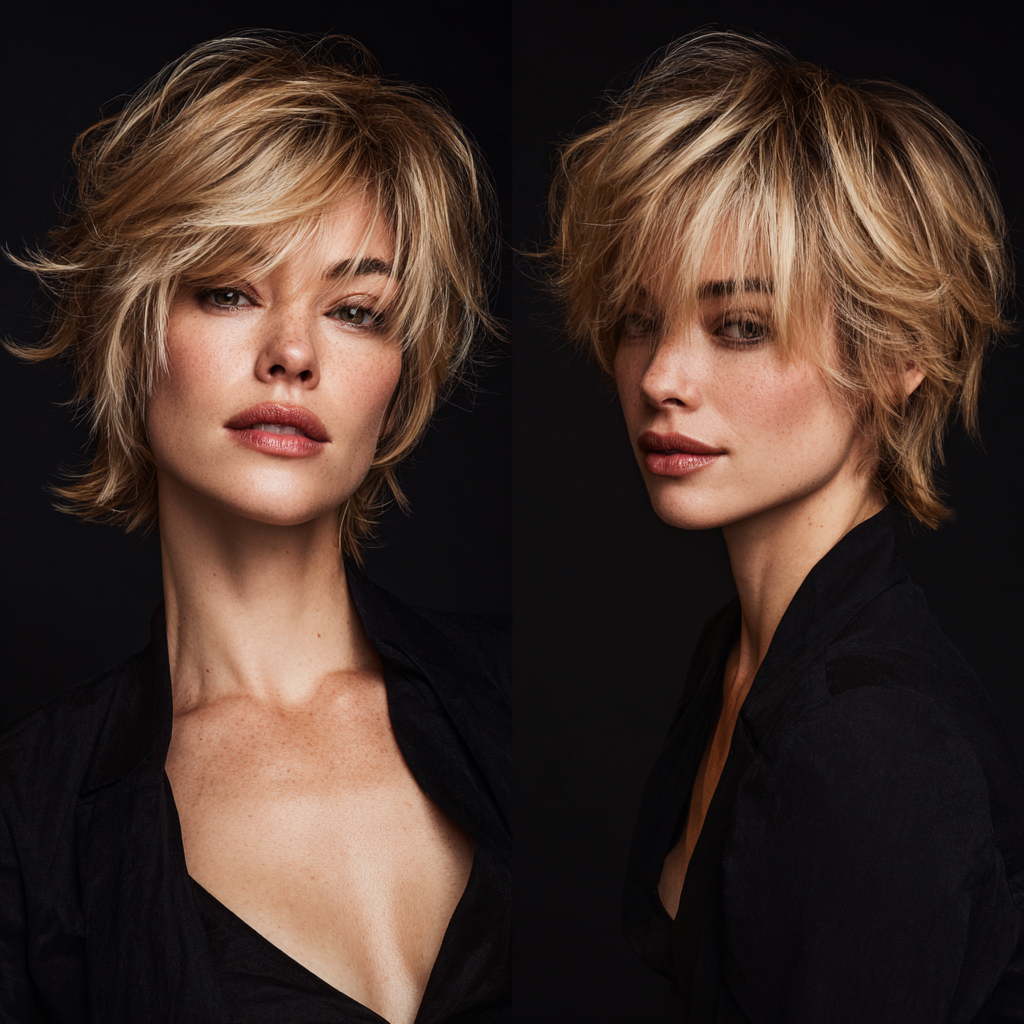
A relative of the shag, the hush cut is all about soft, whisper‑thin layers that remove weight without creating obvious step‑cuts. It’s the quiet, elegant sister of the rocker shag.
- Why it works: On thick hair, traditional layering can leave “shelves” or holes. The hush cut uses a technique called “weaving” – taking very fine slices of hair and cutting them at a 45‑degree angle. The result is invisible movement.
- The Ask: Say to your stylist: “I want a hush cut – soft, blended layers that take out the bulk but don’t look layered.” This works best on hair that is at least shoulder length.
- Styling: Air‑dry with a lightweight mousse (look for “volume” or “flexible hold”). The hidden layers will create natural bends. You can also rough‑dry with your fingers for a just‑rolled‑out‑of‑bed look.
8. The Curly or Wavy Medium “Deva” Cut
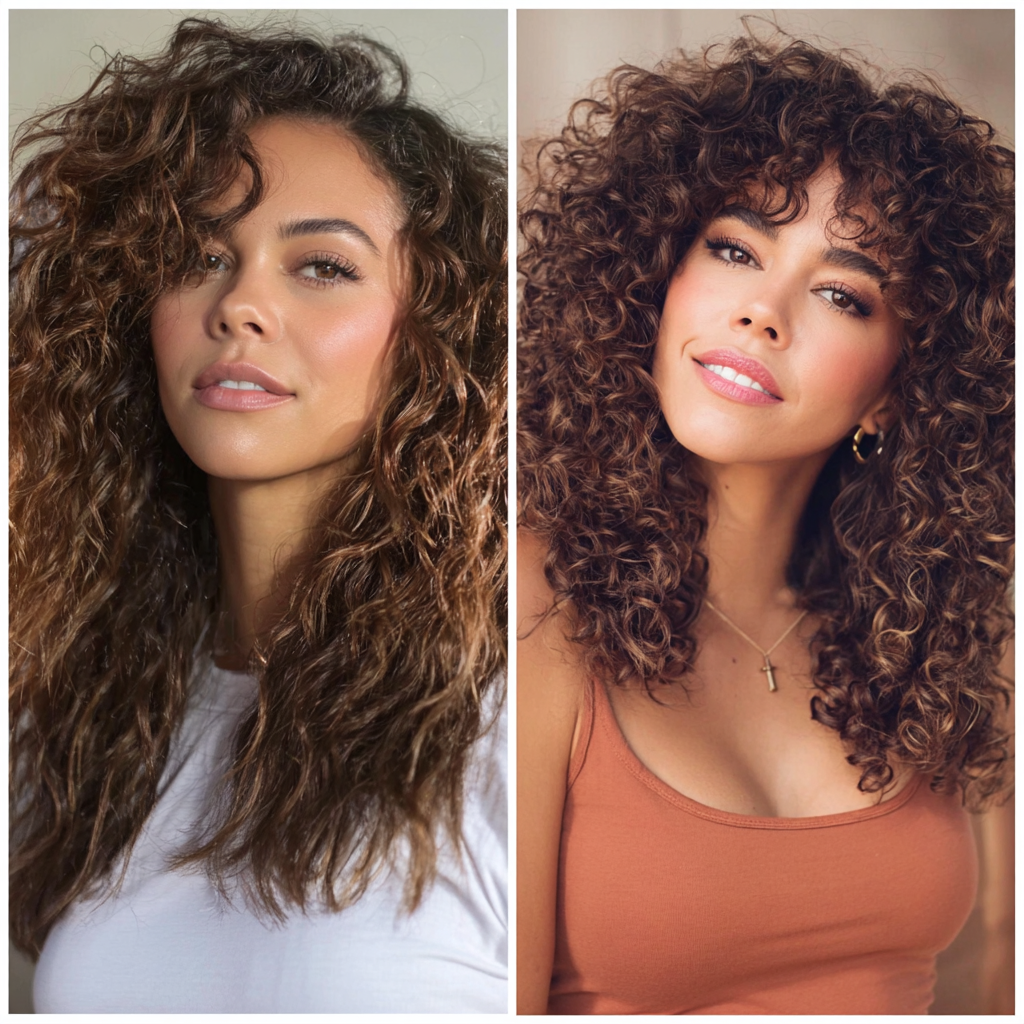
If your thick hair is also curly or wavy, a standard dry cut will ruin you. You need a curl‑specific technique that respects your natural pattern.
- Why it works: Curly thick hair shrinks up to 50% when dry. A medium cut (chin‑length when dry) gives you the perfect balance – enough weight to prevent triangle‑head but short enough to let your curls spring.
- The Ask: Find a stylist trained in DevaCurl, Rezo, or Ouidad methods. Ask for a “dry cut” – they cut each curl individually in its natural state. Request “weight removal” from the under‑layers but keep the perimeter soft.
- Styling: Use the “praying hands” method with a gel or curl cream, then diffuse upside down. Never brush dry curls. Pineapple your hair (loose ponytail on top of your head) at night.
read more; 15 Stunning Long Wolf Cut Ideas That Are Taking Over in 2026
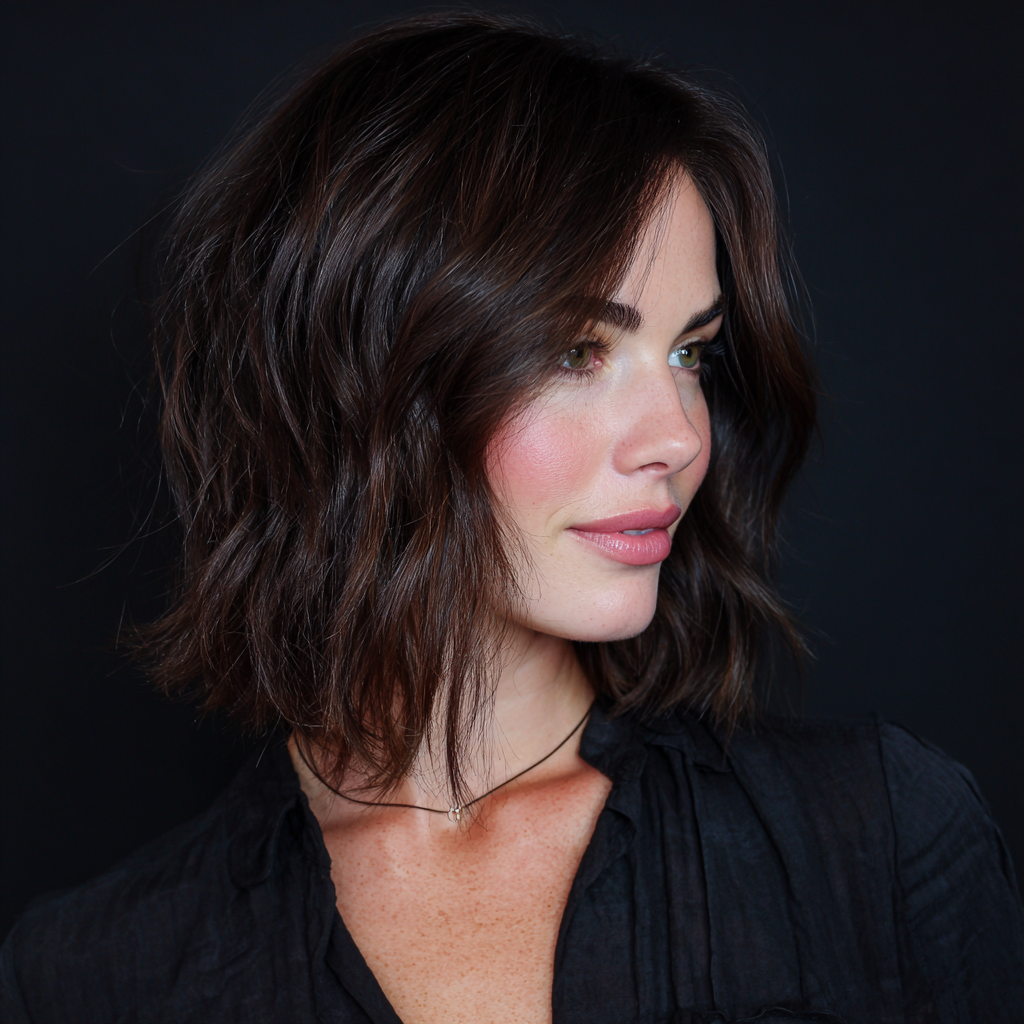
9. The Asymmetrical Lob
One side shorter than the other – a bold, architectural choice that works surprisingly well on very dense hair because it breaks up the visual weight.
- Why it works: Symmetry emphasizes bulk. Asymmetry distracts the eye and creates a diagonal line that slims and elongates. The shorter side (usually chin‑length) also makes the longer side (collarbone‑length) feel lighter.
- The Ask: Be precise: “I want a one‑inch difference between the left and right sides. The shorter side should hit my chin; the longer side at my collarbone.” Make sure the back is blended so it doesn’t look like two separate haircuts.
- Styling: Straighten with a flat iron for a graphic, modern look. Or add loose waves – the asymmetry becomes even more interesting with texture. Tuck the shorter side behind your ear for extra drama.
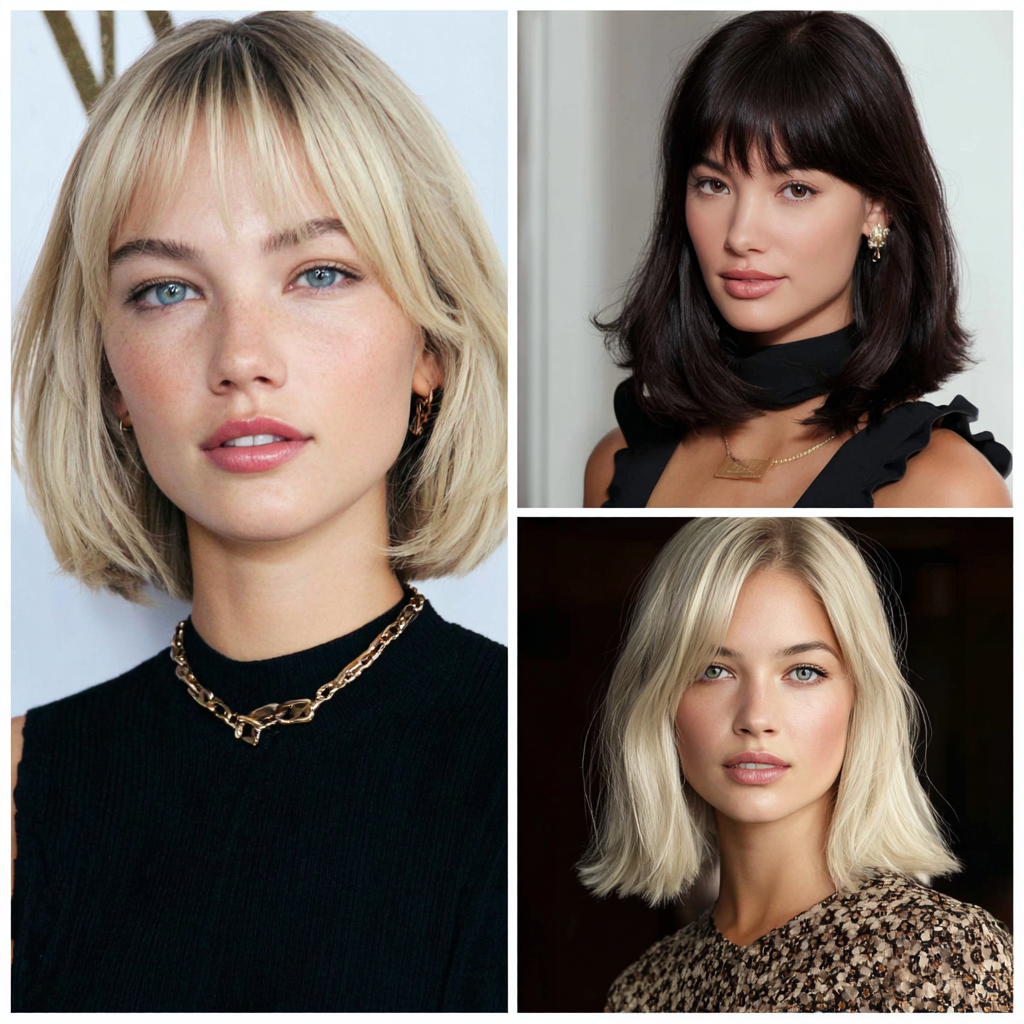
10. The Low‑Maintenance “One‑Length” with Face‑Framing
This is for the thick‑haired woman who hates styling. It’s a single length all around (no layers), but with delicate, wispy pieces cut around the face only.
- Why it works: One‑length cuts usually create the pyramid shape on thick hair – but the face‑framing pieces break the outline just enough to trick the eye. The back remains heavy and flat, which actually helps control bulk.
- The Ask: Tell your stylist: “Cut the back and sides to one length at the shoulders. Then, take a very small triangle of hair from the front hairline and cut soft, face‑framing layers that start at my cheekbones.”
- Styling: Honestly, you can wash and go. A dab of leave‑in conditioner, comb through, and air‑dry. The face‑framing pieces will dry faster and give you a “styled” look with zero effort.
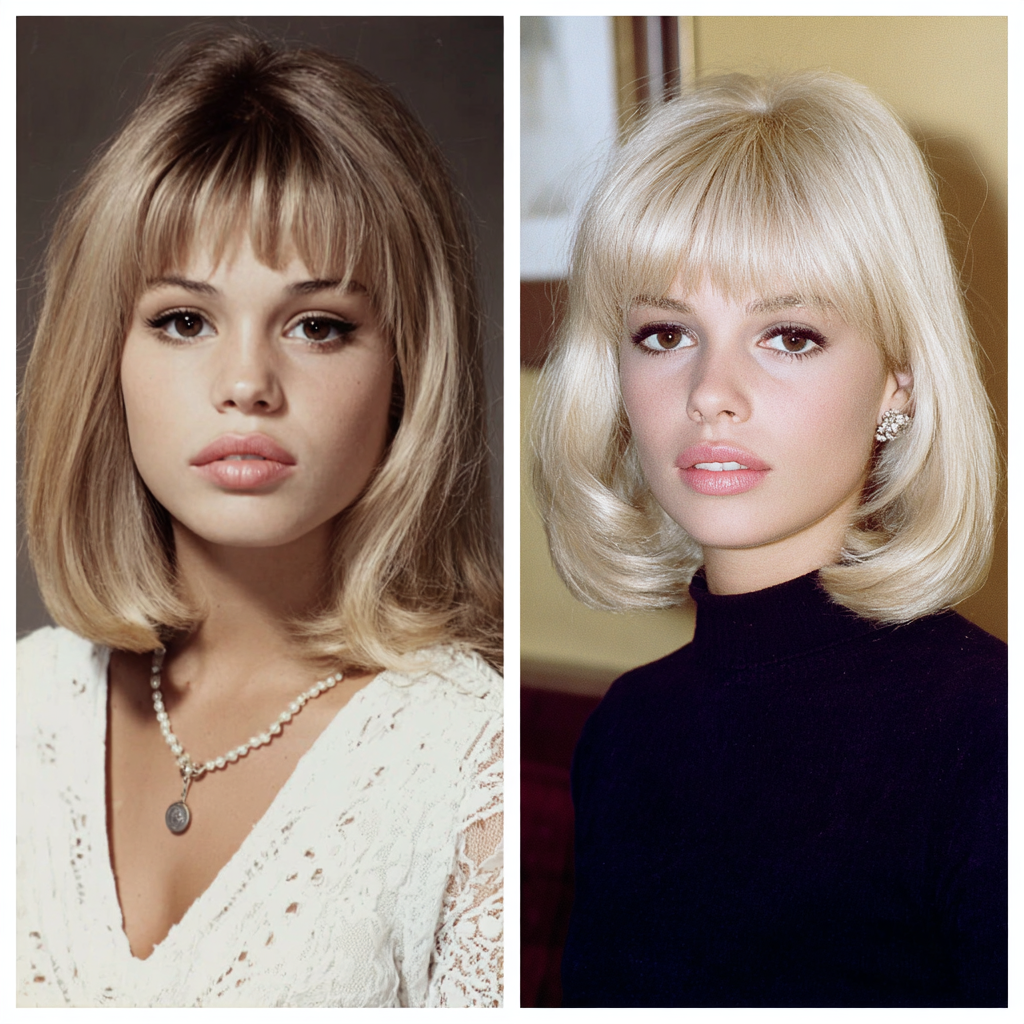
11. The French “Jacqueline” (Bardot Bob)
Inspired by Brigitte Bardot – a slightly tousled, chin‑length bob with a deep side part and a heavy, rolled undercurve. It’s the ultimate Parisian style.
- Why it works: Thick hair holds the “roll” beautifully. Where thin hair would fall flat, your dense strands maintain that curved-under shape all day. It also works perfectly with curtain bangs or a long fringe.
- The Ask: Request a “classic French bob – chin length, with a slight undercurve in the cut itself.” The cut should be slightly shorter in the back (stacked) and longer at the front corners. Add a soft, wispy fringe that skims the eyebrows.
- Styling: The key is to blow‑dry with a round brush under the ends while rolling the brush away from your face at the roots. Finish with a texturizing spray for that “I just woke up like this” feel.
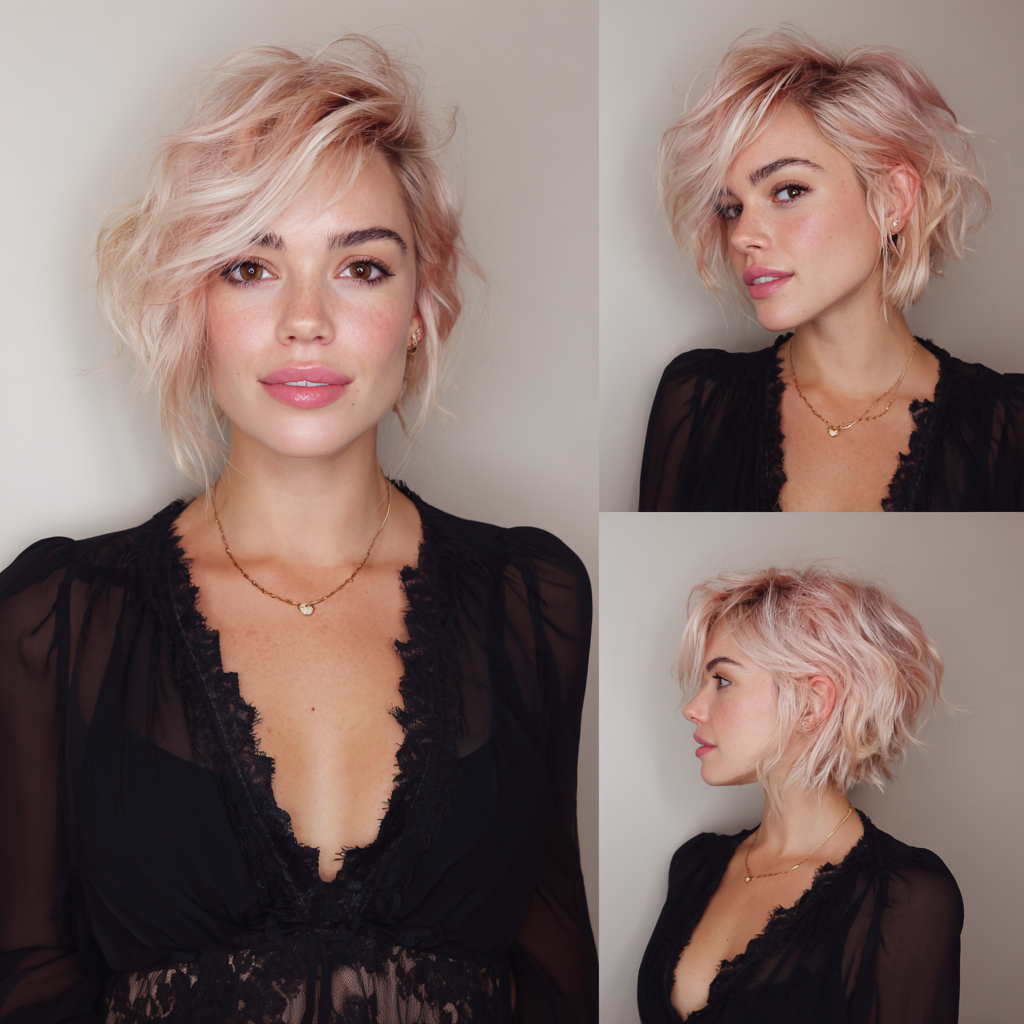
12. The “Bixie” (Bob + Pixie Hybrid)
The bixie is a bob that is extremely short at the nape and ears, but retains length at the crown and front. It’s for the truly bold thick‑haired woman who wants minimal bulk.
- Why it works: By keeping length only on top and in the front, you remove 60% of your hair’s weight. The result is feather‑light, edgy, and incredibly easy to style. Thick hair gives the bixie structure that fine hair cannot achieve.
- The Ask: “Give me a bixie – short and tapered at the nape (like a pixie), but with the front pieces reaching my chin (like a bob).” Ask for point‑cutting on the top layers to avoid a helmet effect.
- Styling: Use a small amount of matte paste or clay to piece out the top. Rough‑dry forward. You can also slick it back with gel for a high‑fashion look. This cut requires trims every 4‑6 weeks.
Golden Rules for Styling Thick Medium Hair (Expanded)
No matter which of the 12 styles you choose, these five rules will keep your thick hair looking intentional, not overwhelming.
1. Thin Strategically, Never Aggressively
Avoid the “thinning shears” that leave you with fuzzy, broken ends. Instead, ask your stylist to use a straight razor (for straight/wavy hair) or slide cutting (for curly hair). Thinning shears create weak points; razors remove weight while keeping the cuticle intact.
2. Embrace Your Natural Texture
Thick hair is rarely stick‑straight. If you have wave, use a gel or mousse (not cream) to define it. Creams are too heavy; they sit on top of thick strands and cause buildup. Look for products with “flexible hold” or “weightless volume.”
3. The “Doughnut” Rule
If your hair looks like a perfect triangle (wide at the bottom, flat on top), you need more layers near the occipital bone (the back bump of your skull). That’s where the weight needs to be released. Tell your stylist: “Please remove bulk from the occipital area.”
4. Invest in a Quality Hairdryer
Thick hair takes forever to dry, and a cheap dryer will leave you with frizz and arm fatigue. Look for a dryer with at least 1875 watts, ionic technology, and a concentrator nozzle. The Dyson Supersonic or Shark HyperAir are worth the splurge – they cut drying time by half.
5. Sleep on Silk (or Satin)
Cotton pillowcases absorb moisture and create friction, leading to frizz and breakage. A silk or satin pillowcase (or a silk bonnet) preserves your style for 2‑3 extra days. For curly or wavy thick hair, try “pineappling” (loose ponytail on top of your head) inside a silk scarf.
Product Recommendations for Thick Medium Hair
- Shampoo & Conditioner: Look for “weightless moisture” or “balancing” formulas. Avoid anything with “smoothing” or “anti‑frizz” as those often contain heavy silicones. Try Pureology Hydrate Sheer or Living Proof Full Shampoo.
- Leave‑in Conditioner: Use a spray, not a cream. It’s a 10 Miracle Leave‑In (lite version) or Ouai Leave‑In Conditioner.
- Heat Protectant: Non‑negotiable. Chi 44 Iron Guard or Bumble & Bumble Bb. Heat Shield.
- Texture Spray: For shags and butterfly cuts – Oribe Dry Texturizing Spray (pricey but worth it) or Not Your Mother’s Beach Babe (drugstore hero).
- Mousse/Gel for Curls: Innersense I Create Hold (gel) or Herbal Essences Totally Twisted Mousse.
- Finishing Oil: Just a drop – Verb Ghost Oil or Moroccanoil Treatment Light.
Face Shape Guide for These 12 Hairstyles
| Face Shape | Best Matches from Above |
|---|---|
| Round | #1 Textured Lob, #5 Deep Side‑Part, #9 Asymmetrical Lob, #11 French Jacqueline |
| Oval | Literally all 12 – you’re lucky |
| Square | #2 Modern Shag, #4 Butterfly Cut, #6 Italian Bob, #10 One‑Length with Face‑Framing |
| Heart | #3 Blunt Cut (secret weight removal), #7 Hush Cut, #8 Curly Deva Cut, #12 Bixie |
| Long/Oblong | #6 Italian Bob, #11 French Jacqueline, #5 Deep Side‑Part (adds width) |
Maintenance Schedule for Thick Medium Hair
- Trims: Every 8‑12 weeks to prevent the ends from becoming too heavy and pulling the shape down.
- Deep conditioning: Once a week. Thick hair can handle it. Use a protein‑free mask if your hair is low‑porosity (e.g., SheaMoisture Manuka Honey).
- Clarifying wash: Every 2‑3 weeks. Thick hair accumulates buildup invisibly. Use Ouai Detox Shampoo or apple cider vinegar rinse.
The Verdict
Don’t fight your thickness – sculpt it. The medium‑length cut is a partnership with your genetics. Whether you choose the rock‑and‑roll shag (#2), the sophisticated lob (#1), the viral butterfly cut (#4), or the bold bixie (#12), you stop trying to hide your volume and start using it as your primary accessory.
Thick hair is a privilege disguised as a problem. With the right cut, you go from “I have too much hair” to “Look at all this glorious hair.”
Good morning, indeed. Now go call your stylist – and take this article with you.