Category: skin care

  • The Complete Skincare Routine Guide: Steps, Order, and What Actually Works.

    The Complete Skincare Routine Guide: Steps, Order, and What Actually Works.

    If you have ever felt confused by skincare advice, you are not alone. With so many products, trends, and conflicting tips online, it becomes difficult to know what actually works and what is just hype.

    The truth is that a good skincare routine does not need to be complicated. What matters most is consistency, understanding your skin, and using the right steps in the correct order.

    This guide breaks everything down into simple, practical steps. You will learn how to build a routine that fits your skin type, what each step does, and how to avoid common mistakes that slow down results.


    Why a Skincare Routine Matters

    Your skin is your body’s first line of protection. Every day, it is exposed to dirt, oil buildup, sun exposure, and environmental stress. Without proper care, these factors can lead to dryness, breakouts, irritation, or premature aging.

    A structured routine helps to:

    • keep the skin clean and balanced
    • support hydration and smooth texture
    • improve the appearance of fine lines and uneven tone
    • protect the skin from daily damage

    The goal is not perfection. It is maintaining healthy, stable skin over time.

    explore;Morning vs Night Skincare Routines for Beginners: A Simple Guide That Actually Works


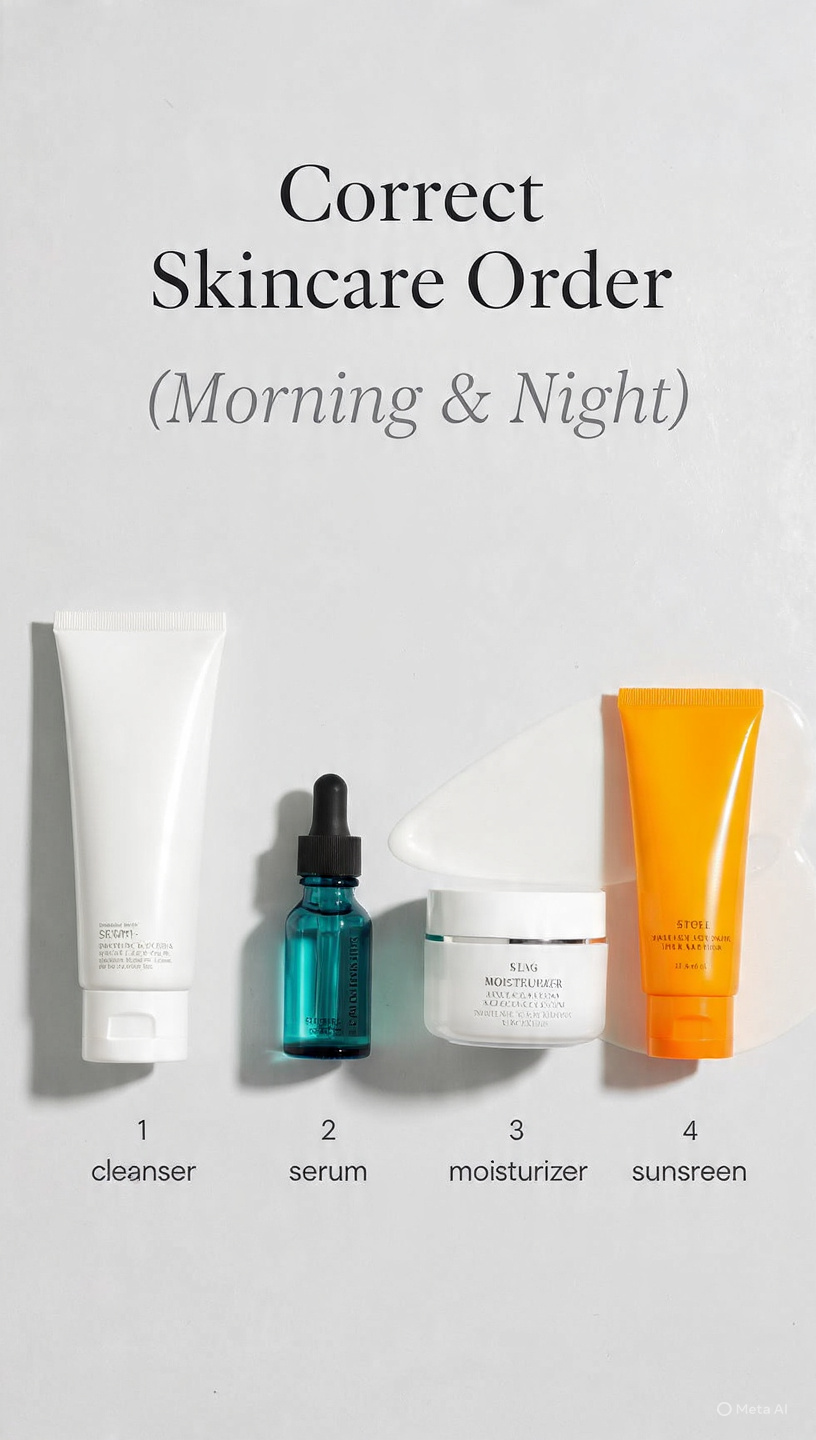
    The Correct Order of a Skincare Routine

    Applying products in the right order ensures that each one works effectively. A simple rule to follow is to go from lightweight to heavier products.

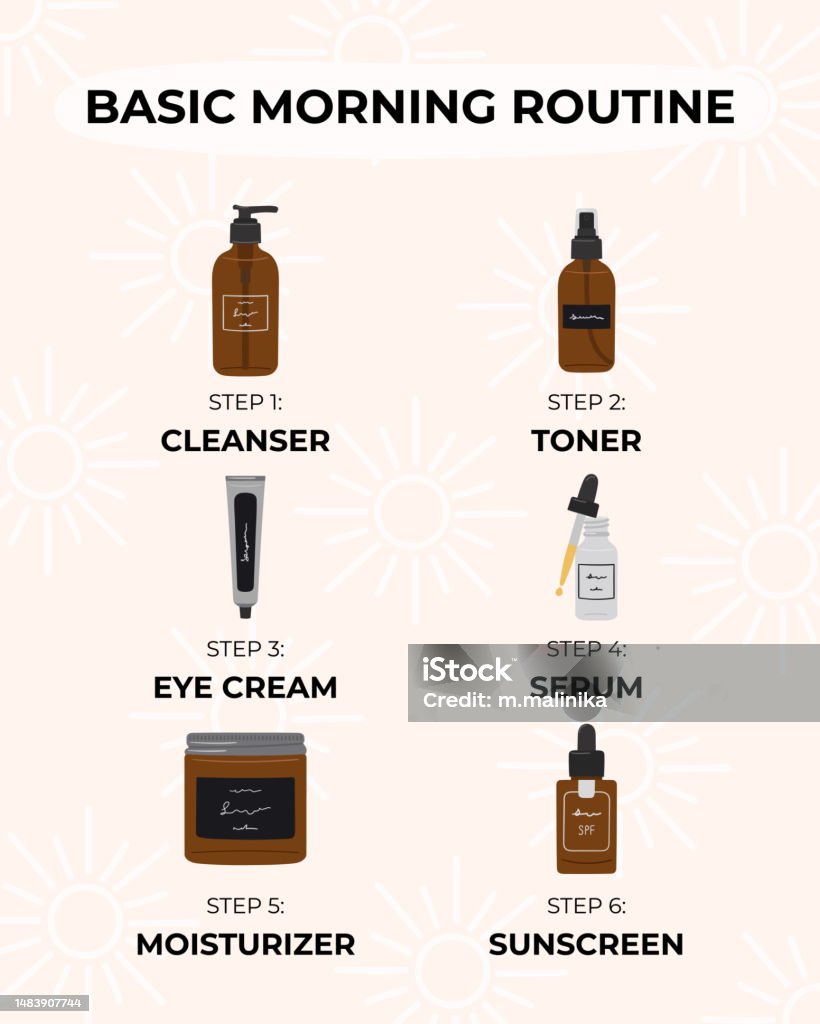
    Morning Routine Order

    1. Cleanser
    2. Toner (optional)
    3. Serum
    4. Moisturizer
    5. Sunscreen

    Night Routine Order

    1. Cleanser
    2. Toner (optional)
    3. Serum or treatment
    4. Moisturizer

    Night routines focus more on repair, while morning routines focus on protection.


    Step-by-Step Skincare Routine Explained

    1. Cleanser

    Cleansing removes dirt, oil, and impurities that build up on your skin.

    In the morning, a gentle cleanse refreshes the skin. At night, cleansing is essential to remove sunscreen, sweat, and daily buildup.

    Tip: Avoid harsh cleansers that leave your skin feeling tight. That is often a sign of over-stripping.


    2. Toner (Optional)

    Toners help prepare your skin for the next steps. Some add hydration, while others help balance oil.

    Not everyone needs a toner. If your routine is simple, you can skip this step without any problem.


    3. Serum

    Serums are lightweight products designed to target specific concerns such as dryness, dullness, or uneven texture.

    For beginners, a simple hydrating serum is enough. You do not need multiple serums to see results.


    4. Moisturizer

    Moisturizers help lock in hydration and support the skin barrier. This step is essential for all skin types, including oily skin.

    Skipping moisturizer can actually make your skin produce more oil to compensate.


    5. Sunscreen (Morning Only)

    Sunscreen is one of the most important steps in any skincare routine. It helps protect your skin from sun damage, which can lead to premature aging and uneven tone.

    Use sunscreen every morning, even on cloudy days.


    How to Build a Routine Based on Your Skin Type

    Not all skin is the same. Adjusting your routine to your skin type helps you get better results.

    Oily Skin

    Focus on lightweight products that help balance oil without stripping the skin. Gel-based moisturizers often work well.

    Dry Skin

    Choose richer, hydrating products that support moisture retention. Cream-based moisturizers are usually more suitable.

    Combination Skin

    Balance is key. Use lightweight hydration and focus on different areas of the face as needed.

    Sensitive Skin

    Keep your routine simple. Avoid strong or heavily fragranced products and stick to gentle formulas.


    Common Skincare Mistakes to Avoid

    Many people do not see results because of simple mistakes.

    Using too many products at once can overwhelm your skin and lead to irritation. Keeping your routine simple often works better.

    Another common issue is expecting quick results. Skincare takes time, and consistency matters more than trying new products every week.

    Over-cleansing is also a problem. Washing your face too often can disrupt your skin’s natural balance.


    How Long It Takes to See Results

    Skincare is not instant. Most products need time to show visible improvements.

    In general, you may start noticing small changes within a few weeks, but more visible improvements can take longer depending on your skin and routine.

    The key is consistency. Changing products too frequently makes it harder to see what is actually working.


    Simple Skincare Routine for Beginners

    If you are just starting, keep things minimal:

    Morning:

    • Cleanser
    • Moisturizer
    • Sunscreen

    Night:

    • Cleanser
    • Moisturizer

    You can slowly add more steps if needed, but this simple routine is enough for most people.


    Final Thoughts

    A good skincare routine does not need to be complicated or expensive. What matters most is understanding your skin, following the correct steps, and staying consistent.

    Start simple, pay attention to how your skin responds, and adjust over time. With the right approach, you can build a routine that supports healthy, balanced skin without unnecessary stress.


  • Morning vs Night Skincare Routines for Beginners: A Simple Guide That Actually Works

    Morning vs Night Skincare Routines for Beginners: A Simple Guide That Actually Works


    Starting a skincare routine can feel confusing, especially with so much advice online telling you to use dozens of products. Many beginners assume that skincare should look the same in the morning and at night, but this is one of the biggest mistakes people make early on. Understanding morning vs night skincare routines for beginners helps you avoid unnecessary products, save money, and get better results faster.

    Your skin behaves differently during the day and at night. Because of this, the purpose of your routine should change depending on the time of day. Morning skincare focuses on protection, while night skincare focuses on repair. Beginners do not need complicated routines to see results. What matters most is using the right steps, at the right time, consistently.

    This guide breaks everything down simply, so you can build a routine that works without feeling overwhelmed.


    Why Beginners Need Different Morning and Night Routines

    Skin follows a natural daily cycle. During the day, it is exposed to sunlight, pollution, sweat, and environmental stress. At night, the skin shifts into recovery mode. Cell renewal increases, moisture loss happens faster, and the skin becomes more receptive to treatment products.

    When beginners use the same routine morning and night, they often overload their skin or miss key steps like sun protection. Understanding morning vs night skincare routines for beginners allows you to work with your skin instead of fighting against it.

    The good news is that beginner routines can be simple and effective with just a few well-chosen steps.


    Morning Skincare Routine for Beginners

    A morning routine prepares your skin for the day ahead. The goal is to cleanse gently, hydrate lightly, and protect the skin from damage.

    Step 1: Gentle Cleanser

    In the morning, your skin does not need aggressive cleansing. Overnight, the skin releases oil and sweat, but this does not require harsh products. A gentle cleanser helps refresh the skin without stripping away natural moisture.

    Beginners should avoid cleansers with strong exfoliating acids or heavy fragrances in the morning. A mild, hydrating formula is enough to start the day with clean, balanced skin.

    Step 2: Light Hydration

    After cleansing, the skin needs hydration to stay comfortable throughout the day. This can be a light moisturizer or a hydrating lotion. The purpose is to prevent dryness and support the skin barrier.

    For beginners, this step should feel comfortable and absorb quickly. Heavy creams can feel greasy and are not necessary during the day unless your skin is very dry.

    Step 3: Sunscreen

    Sunscreen is the most important part of a beginner morning routine and the main difference between morning and night care. Sun exposure is the leading cause of premature aging, dark spots, and skin damage.

    Even beginners with short routines should never skip sunscreen. It protects the skin from daily UV exposure and helps preserve the results of your skincare over time.

    For those learning morning vs night skincare routines for beginners, sunscreen is what clearly defines the morning routine. It is not optional, even on cloudy days or when staying indoors near windows.


     look into Morning vs Night Skincare Routines by Age: How Your Skin’s Needs Change Over Time

    Night Skincare Routine for Beginners

    Nighttime is when skincare becomes more restorative. This is the time to cleanse thoroughly and nourish the skin so it can recover while you sleep.

    Step 1: Cleanse Properly

    At night, cleansing is more important than in the morning. Throughout the day, your skin collects dirt, sweat, oil, sunscreen, and makeup. Removing these impurities prevents clogged pores and breakouts.

    Beginners do not need complicated double cleansing routines unless they wear heavy makeup. A single gentle cleanser is enough as long as it removes everything properly.

    Step 2: Simple Treatment or Serum (Optional)

    For beginners, this step is optional. If you are just starting out, you can skip treatment products and focus on consistency first. Once your skin feels comfortable with cleansing and moisturizing, you can introduce a basic serum.

    Hydrating serums are the safest place to start. They help replenish moisture lost during the day and support skin repair overnight.

    Step 3: Moisturizer or Night Cream

    Night moisturizers are usually richer than daytime ones. This is because the skin loses more water while you sleep. A nourishing cream helps seal in moisture and support the skin’s natural repair process.

    For beginners, this step should feel comforting, not heavy. The goal is to wake up with skin that feels soft and calm, not irritated or greasy.


    What Beginners Should Skip at First

    One of the biggest mistakes beginners make is adding too many products too quickly. When learning morning vs night skincare routines for beginners, simplicity is key.

    Beginners should avoid strong exfoliants, multiple active ingredients, and frequent product changes in the early stages. These can irritate the skin and make it hard to tell what is actually working.

    Starting with a cleanser, moisturizer, and sunscreen in the morning, and a cleanser and moisturizer at night, is enough to build a solid foundation.


    How Long It Takes to See Results

    Skincare does not work overnight, especially for beginners. Most people start noticing improvements in hydration and texture within two to four weeks. More visible changes like brighter skin or fewer breakouts take longer.

    Consistency matters more than perfection. Following simple morning vs night skincare routines for beginners every day is more effective than using advanced products inconsistently.


    Common Beginner Mistakes with Morning and Night Routines

    Many beginners skip the morning routine entirely, thinking skincare is only necessary at night. This leaves the skin unprotected during the day.

    Another common mistake is using heavy night creams in the morning, which can clog pores and interfere with sunscreen. Others use treatment products meant for nighttime during the day, which can increase sensitivity.

    Understanding the purpose behind morning and night routines helps beginners avoid these issues and build healthier habits early on.


    How to Adjust as Your Skin Learns the Routine

    Once your skin adjusts to a basic routine, you can slowly add new products if needed. This might include a serum at night or a targeted treatment for specific concerns.

    The key is to add one product at a time and observe how your skin responds. Beginners should always prioritize comfort, balance, and protection before chasing advanced results.


    Final Thoughts on Morning vs Night Skincare Routines for Beginners

    Skincare does not need to be complicated to be effective. For beginners, understanding morning vs night skincare routines is about learning when to protect and when to repair.

    A simple morning routine prepares your skin for daily exposure, while a calm nighttime routine allows it to recover and renew. By keeping routines simple and consistent, beginners can build healthy skin habits that last long term.

    Once the basics are mastered, skincare becomes less stressful and more rewarding, setting the foundation for stronger, healthier skin over time.

  • Morning vs Night Skincare Routines by Age: How Your Skin’s Needs Change Over Time

    Morning vs Night Skincare Routines by Age: How Your Skin’s Needs Change Over Time

    Skincare advice often focuses on skin type, but age plays an equally important role in how your skin behaves and what it needs at different times of day. As we grow older, skin structure, oil production, hydration levels, and cell turnover all change. This is why understanding morning vs night skincare routines by age is essential for maintaining healthy skin long term.

    A routine that works well in your twenties may feel ineffective or even irritating in your forties or fifties. Morning and night routines should evolve as your skin changes, not remain fixed. This guide breaks down skincare routines by age group and explains how to adjust morning and night care to support your skin at every stage.


    Why Age Changes Morning and Night Skincare Needs

    Skin aging is a gradual process influenced by genetics, sun exposure, lifestyle, and hormonal changes. Over time, collagen production slows, skin becomes thinner, moisture retention decreases, and repair processes take longer.

    During the day, aging skin needs stronger protection from environmental stress. At night, it needs more support to repair and regenerate. Understanding morning vs night skincare routines by age helps you focus on prevention early and repair later without overwhelming your skin.

    consider this Morning vs Night Skincare Routines by Skin Type: Oily, Dry, Sensitive, and Combination


    Skincare in Your 20s: Building Healthy Habits

    Infographic of basic steps to the best morning skincare routine, according to dermatologists. Cleanser, tonner, serum, treatments, oil, cream product. Hand draw vector illustration

    Your twenties are about prevention and habit-building. Skin is generally resilient, with strong collagen production and faster cell turnover.

    Morning Routine in Your 20s

    In the morning, the focus should be on cleansing, hydration, and sun protection. A gentle cleanser removes overnight oil and sweat. A light moisturizer keeps the skin balanced throughout the day.

    Sunscreen is the most important step in your twenties. Daily sun protection helps prevent early signs of aging and protects the skin’s natural collagen.

    Night Routine in Your 20s

    At night, cleansing removes makeup, sunscreen, and daily buildup. A simple moisturizer supports overnight repair.

    Most people in their twenties do not need strong treatments. Keeping the routine consistent and gentle is more effective than experimenting with aggressive products too early.


    Skincare in Your 30s: Supporting Early Repair

    In your thirties, early signs of aging may begin to appear. Cell turnover slows slightly, and the skin may lose moisture more easily.

    Morning Routine in Your 30s

    Morning skincare should continue to focus on protection. Cleansing remains gentle, while hydration becomes more important to maintain skin comfort.

    Antioxidants can help defend against environmental stress. Sunscreen remains non-negotiable, as cumulative sun exposure becomes more noticeable in this decade.

    Night Routine in Your 30s

    Night routines in your thirties can begin to include mild repair-focused products. Hydration and barrier support are key.

    Night creams may feel slightly richer than in your twenties, especially if your skin feels drier. Consistency matters more than intensity at this stage.


    Skincare in Your 40s: Strengthening and Restoring

    In your forties, collagen loss becomes more noticeable. Skin may feel thinner, drier, and slower to recover from stress.

    Morning Routine in Your 40s

    Morning routines should focus on hydration, comfort, and protection. Cleansing should be gentle to avoid stripping the skin.

    Moisturizers should support the skin barrier and prevent moisture loss during the day. Sunscreen becomes even more critical to protect against further collagen breakdown.

    Night Routine in Your 40s

    Nighttime is when repair becomes the priority. Cleansing should remove buildup without irritation.

    Night creams in your forties are often richer and more nourishing. The skin benefits from ingredients that support repair and reduce dryness while you sleep.


    Skincare in Your 50s and Beyond: Deep Nourishment and Repair

    As skin matures further, oil production decreases and the skin barrier weakens. Dryness and sensitivity become more common.

    Morning Routine in Your 50s

    Morning skincare should feel comforting and protective. Cleansing should be mild and non-drying.

    Moisturizers should provide long-lasting hydration and support the skin throughout the day. Sunscreen remains essential, as mature skin is more vulnerable to sun damage.

    Night Routine in Your 50s and Beyond

    Night routines play a crucial role in supporting aging skin. Cleansing should be gentle, followed by deeply nourishing creams.

    Night creams help reduce overnight moisture loss and support skin comfort. A consistent routine helps maintain skin resilience and softness over time.


    Common Age-Related Skincare Mistakes

    A common mistake is using anti-aging products too aggressively too early. Another is failing to adjust routines as skin becomes drier or more sensitive with age.

    Some people also stop using sunscreen consistently as they age, assuming damage is already done. In reality, sun protection remains one of the most effective ways to protect aging skin at any stage.

    Understanding morning vs night skincare routines by age helps prevent these mistakes and encourages smarter, more supportive care.


    How to Adjust Gradually as You Age

    Skincare routines should evolve slowly. Sudden changes can irritate the skin. When adjusting routines, it is best to introduce new products one at a time and observe how your skin responds.

    Morning routines should remain simple and protective. Night routines can gradually become more nourishing as the skin’s repair needs increase.


    The Role of Consistency at Every Age

    Regardless of age, consistency matters more than complexity. Skincare works best when routines are followed daily rather than changed frequently.

    Understanding your skin’s needs at different ages helps you make thoughtful choices instead of chasing trends.


    Final Thoughts on Morning vs Night Skincare Routines by Age

    Age changes how skin functions, but healthy skin is possible at every stage with the right approach. Morning routines should focus on protection and comfort, while night routines should support repair and nourishment.

    By understanding morning vs night skincare routines by age, you can adapt your skincare habits over time without overcomplicating your routine. Skincare is not about reversing time. It is about supporting your skin as it changes, so it stays strong, balanced, and healthy for years to come.

  • Morning vs Night Skincare Routines by Skin Type: Oily, Dry, Sensitive, and Combination

    Morning vs Night Skincare Routines by Skin Type: Oily, Dry, Sensitive, and Combination

    No two skins are exactly the same. While general skincare advice is helpful, real results come from understanding how your specific skin type behaves during the day and at night. This is why learning morning vs night skincare routines by skin type matters. Your skin’s oil production, hydration needs, and sensitivity levels change depending on both time of day and skin type.

    A routine that works perfectly for oily skin may feel uncomfortable on dry skin. Sensitive skin requires a gentler approach than combination skin. When these differences are ignored, people often experience breakouts, irritation, or dryness even while following “correct” skincare steps.

    This guide breaks down morning and night routines for oily, dry, sensitive, and combination skin so you can care for your skin in a way that actually supports it.

    look out: Morning vs Night Skincare Routines for Busy People: Effective Skincare with Less Effort


    Why Skin Type Changes How Morning and Night Routines Work

    Skin type determines how much oil your skin produces, how easily it loses moisture, and how it reacts to products. During the day, skin types respond differently to heat, humidity, makeup, and pollution. At night, skin types vary in how much hydration and repair support they need.

    Understanding morning vs night skincare routines by skin type allows you to adjust product textures, ingredients, and steps without overcomplicating your routine.


    Oily Skin: Balancing Oil Without Over-Stripping

    Oily skin produces excess sebum, especially during the day. The goal is balance, not aggressive oil removal.

    Morning Routine for Oily Skin

    In the morning, oily skin needs gentle cleansing to remove overnight oil buildup. Using harsh cleansers can actually increase oil production later in the day.

    Lightweight hydration is still necessary. Skipping moisturizer often leads to dehydration, which triggers even more oil production. Sunscreen should be non-greasy and comfortable for daily wear.

    Night Routine for Oily Skin

    At night, cleansing becomes more important to remove oil, sunscreen, and impurities. Oily skin benefits from consistent cleansing but should avoid over-washing.

    Night moisturizers for oily skin should feel light but supportive. The goal is to allow the skin to repair itself without clogging pores. Overloading oily skin with thick creams often leads to breakouts.


    Dry Skin: Restoring and Locking in Moistur

    Dry skin lacks moisture and often feels tight or rough. Both morning and night routines should focus on hydration and barrier support.

    Morning Routine for Dry Skin

    In the morning, dry skin may not need a strong cleanser. A gentle, hydrating cleanser helps refresh the skin without removing essential oils.

    Moisturizers should be richer and comforting. Sunscreen formulas that include hydrating ingredients are especially helpful for dry skin during the day.

    Night Routine for Dry Skin

    Nighttime is when dry skin benefits the most from nourishing care. Cleansing should remain gentle, followed by generous hydration.

    Night creams for dry skin help prevent overnight moisture loss and support skin repair. This is where richer textures are not only acceptable but beneficial.


    Sensitive Skin: Calming and Protecting the Skin Barrier

    Sensitive skin reacts easily to products, environmental changes, and overuse of active ingredients. Consistency and gentleness are key.

    Morning Routine for Sensitive Skin

    Morning routines for sensitive skin should be minimal. A very gentle cleanser or even a water rinse may be enough for some people.

    Hydration should focus on calming the skin rather than treating it aggressively. Sunscreen is important but should be chosen carefully to avoid irritation.

    Night Routine for Sensitive Skin

    At night, sensitive skin benefits from simple routines. Cleansing should remove the day’s buildup without friction.

    Night moisturizers should focus on barrier repair and comfort. Introducing too many treatments can lead to redness and discomfort, so keeping the routine predictable is important.


    Combination Skin: Managing Multiple Needs at Once

    Combination skin includes both oily and dry areas, usually with oiliness in the T-zone and dryness elsewhere. This makes balanced care essential.

    Morning Routine for Combination Skin

    In the morning, combination skin benefits from gentle cleansing that does not overdry the cheeks or overstimulate oil production in the T-zone.

    Moisturizers should feel lightweight but hydrating enough for dry areas. Sunscreen should sit comfortably across the entire face without feeling heavy.

    Night Routine for Combination Skin

    At night, cleansing removes buildup from all areas of the face. Some people with combination skin choose slightly different products for oily and dry areas, but this is optional.

    Night moisturizers should support hydration without overwhelming oil-prone zones. Balance is more important than intensity.


    Common Skin-Type Mistakes in Morning and Night Routines

    A common mistake is treating oily skin too harshly or dry skin too lightly. Another is copying routines designed for a different skin type.

    Sensitive skin often suffers from over-experimentation, while combination skin is frequently ignored and treated as either oily or dry instead of both.

    Understanding morning vs night skincare routines by skin type helps avoid these mistakes and encourages thoughtful product choices.


    How to Adjust Routines Seasonally

    Skin type can behave differently depending on climate and season. Oily skin may feel drier in cooler months, while dry skin may struggle more in hot or air-conditioned environments.

    Morning routines may need lighter or heavier hydration depending on weather, while night routines may need added moisture during colder seasons. Adjusting gradually helps maintain balance year-round.


    When to Introduce Treatments Based on Skin Type

    Once a consistent routine is established, treatments can be introduced carefully. Oily skin may benefit from oil-balancing treatments at night. Dry skin may focus on barrier repair. Sensitive skin should introduce products slowly, one at a time.

    Regardless of skin type, nighttime is usually the best time for treatments, as the skin is less exposed to external stress.


    Final Thoughts on Morning vs Night Skincare Routines by Skin Type

    Skincare works best when it respects both time of day and skin type. Morning routines should protect and support the skin during daily exposure, while night routines should restore and repair.

    By understanding morning vs night skincare routines by skin type, you move away from generic advice and toward routines that feel comfortable, effective, and sustainable. Healthy skin is not about doing more. It is about doing what your skin actually needs, at the right time, every day.

  • Morning vs Night Skincare Routines for Busy People: Effective Skincare with Less Effort

    Morning vs Night Skincare Routines for Busy People: Effective Skincare with Less Effort

    Modern life is busy. Between work, family, commuting, and daily responsibilities, skincare often feels like another task competing for attention. Many people skip routines entirely or rush through them inconsistently, then wonder why their skin never improves. The solution is not doing more, but doing less with intention. Understanding morning vs night skincare routines for busy people helps you maintain healthy skin without turning skincare into a time-consuming chore.

    Skincare should fit into your life, not disrupt it. Morning routines should be fast, protective, and efficient. Night routines should be calming, minimal, and supportive of repair. This guide shows how busy people can build effective routines that take minutes, not hours, while still delivering real results.

    you might like 10 Morning vs Night Skincare Routine Mistakes That Are Ruining Your Results


    Why Busy People Need a Different Skincare Approach

    Most skincare advice assumes unlimited time and energy. In reality, busy schedules demand simplicity. Complicated routines often lead to burnout, skipped steps, or abandoning skincare altogether.

    Skin still follows its natural rhythm regardless of how busy you are. During the day, it needs protection. At night, it needs repair. The goal of morning vs night skincare routines for busy people is to honor this rhythm using the fewest steps possible.

    Consistency beats complexity every time.


    The Core Principle: Fewer Steps, Clear Purpose

    Busy-friendly skincare works when every step has a clear role. There is no room for unnecessary layering or trend-driven extras.

    Morning routines should focus on:

    • Cleansing lightly
    • Hydrating enough
    • Protecting with sunscreen

    Night routines should focus on:

    • Removing the day
    • Supporting recovery
    • Locking in moisture

    When routines are purpose-driven, they become easier to maintain even on the busiest days.


    Morning Skincare Routine for Busy People

    Morning skincare for busy people should take no more than three to five minutes.

    Step 1: Quick Gentle Cleanse or Rinse

    In the morning, skin does not need deep cleansing. A gentle cleanser or even a water rinse is often enough to remove overnight oil and refresh the skin.

    Busy people benefit from non-foaming, low-effort cleansers that rinse quickly without leaving residue.

    Step 2: One Hydrating Product

    Instead of multiple layers, use one product that hydrates and supports the skin barrier. This could be a lightweight moisturizer or a hydrating lotion.

    This step prevents dryness and keeps skin comfortable throughout the day without slowing you down.

    Step 3: Sunscreen (Non-Negotiable)

    Sunscreen is the most important step in any morning routine, especially for busy people who want long-term results with minimal effort.

    Skipping sunscreen means undoing progress every day. A sunscreen that applies easily and feels comfortable makes consistency easier.

    In morning vs night skincare routines for busy people, sunscreen is the single most impactful habit you can maintain.


    Night Skincare Routine for Busy People

    Night routines can be slightly more nourishing but should still feel easy and calming.

    Step 1: Effective Cleansing

    At night, cleansing matters more than in the morning. Removing sunscreen, sweat, and buildup prevents clogged pores and irritation.

    Busy people should choose a cleanser that works quickly and removes everything in one step. Double cleansing is optional, not required.

    Step 2: Optional Treatment (Only If Consistent)

    If you choose to use a treatment, night is the best time. However, treatments should only be included if you can use them consistently.

    Using treatments occasionally does not deliver results and can increase irritation. Many busy people do better focusing on hydration and repair rather than treatments.

    Step 3: Moisturize and Rest

    A night moisturizer helps reduce overnight moisture loss and supports skin recovery. This step should feel comforting, not heavy or complicated.

    For busy people, this is often the final step before sleep and should signal relaxation, not effort.


    Multi-Tasking Products That Save Time

    Busy routines benefit from products that serve more than one purpose. This does not mean using everything in one bottle, but choosing products wisely.

    A moisturizer that layers well under sunscreen reduces steps. A cleanser that removes sunscreen and makeup eliminates the need for multiple cleansers.

    In morning vs night skincare routines for busy people, smart product choices reduce time without sacrificing results.


    Common Skincare Mistakes Busy People Make

    One common mistake is skipping the routine entirely on busy days. Another is trying to compensate by overdoing skincare on free days.

    Both approaches disrupt consistency. Skincare works best when it is simple enough to be done daily, even when tired or rushed.

    Another mistake is copying influencer routines that require time and energy most people do not have. Busy-friendly skincare should feel sustainable, not aspirational.


    How to Stay Consistent on Exhausting Days

    On long days, motivation is low. This is when routines should be at their simplest.

    If you only do one thing in the morning, apply sunscreen. If you only do one thing at night, cleanse your face. Everything else is supportive but secondary.

    This mindset removes pressure and keeps skincare from becoming another source of stress.


    Skincare for Travel, Workdays, and Late Nights

    Busy lifestyles often include travel, long work hours, or late nights. During these times, routines should shrink, not disappear.

    Morning routines can be reduced to hydration and sunscreen. Night routines can focus on cleansing and moisturizing.

    Maintaining the basics during chaotic periods protects your skin until life slows down again.


    Why Minimal Routines Still Work

    Many people believe results only come from long routines. In reality, skin responds best to consistency and balance.

    Protection during the day prevents damage. Repair at night supports long-term health. These two functions do not require many products.

    Understanding morning vs night skincare routines for busy people helps remove guilt and replace it with realistic habits.


    Building a Routine You Will Actually Follow

    The best routine is the one you can maintain. For busy people, this means:

    • Short routines
    • Easy-to-use products
    • Clear purpose for each step

    Skincare should support your life, not compete with it.


    Final Thoughts on Morning vs Night Skincare Routines for Busy People

    Busy schedules do not mean you have to give up on skincare. They simply require a smarter approach. Morning routines should protect with speed and efficiency. Night routines should restore with comfort and ease.

    By focusing on the essentials and letting go of unnecessary steps, morning vs night skincare routines for busy people become sustainable habits instead of abandoned goals. Healthy skin does not come from perfect routines. It comes from realistic ones done consistently over time.

  • Skin Care Routine Steps for Women Over 50: A Simple and Complete Guide

    Skin Care Routine Steps for Women Over 50: A Simple and Complete Guide

    Aging is a natural part of life, and skin changes are one of the most visible signs of that journey. For many women, the years after 50 bring new skin concerns such as dryness, fine lines, loss of firmness, dullness, and increased sensitivity. This does not mean your skin cannot look healthy, radiant, and well cared for. It simply means your approach needs to change. Following the right skin care routine steps for women over 50 can make a noticeable difference in how your skin feels and looks every day.

    This guide is written in simple language and focuses on practical steps you can follow at home. You do not need complicated routines or expensive products. Consistency, gentle care, and understanding your skin’s needs matter more than anything else.


    Why Skin Care Changes After 50

    As women age, the skin produces less collagen, elastin, and natural oils. Cell turnover slows down, which can make skin appear dull and uneven. Hormonal changes, especially during and after menopause, can also lead to dryness, thinning skin, and increased sensitivity. Sun damage accumulated over the years may show up as dark spots or uneven tone.

    Because of these changes, the skin care routine steps for women over 50 should focus on hydration, protection, repair, and gentle renewal rather than harsh treatments.


    Step 1: Gentle Cleansing in the Morning

    Cleansing is the foundation of any skin care routine. In the morning, your goal is to remove sweat, oil, and impurities that build up overnight without stripping the skin.

    Choose a gentle, creamy, or hydrating cleanser. Avoid harsh soaps or foaming cleansers that can dry out mature skin. Use lukewarm water instead of hot water, as heat can weaken the skin barrier.

    Massage the cleanser lightly into your skin using your fingertips. Do not scrub or use rough washcloths. Rinse well and pat your face dry with a soft towel. Never rub your skin aggressively.

    Gentle cleansing helps prepare your skin for the next steps in your routine.


    Step 2: Apply a Hydrating Toner or Essence

    Many women skip toner, but this step can be very helpful after 50. A hydrating toner or essence adds moisture back into the skin and helps balance it after cleansing.

    Look for alcohol-free formulas. Ingredients like glycerin, rose water, aloe vera, or hyaluronic acid are good options. Apply the product with clean hands or a cotton pad, pressing it gently into the skin.

    This step supports the overall skin care routine steps for women over 50 by improving hydration and making serums and moisturizers work better.


    Step 3: Use a Targeted Serum

    Serums are lightweight products designed to deliver active ingredients deep into the skin. After 50, this step becomes especially important.

    In the morning, focus on serums that hydrate and protect. Vitamin C serums can help brighten dull skin and support collagen. Hyaluronic acid serums help attract and hold moisture, making the skin look plumper and smoother.

    Use just a few drops and gently press the serum into your face and neck. Give it a minute to absorb before moving to the next step.


    Step 4: Moisturize Thoroughly

    Moisturizing is one of the most important skin care routine steps for women over 50. As natural oil production decreases, the skin needs extra support to stay soft and comfortable.

    Choose a rich but non-greasy moisturizer. Ingredients such as ceramides, shea butter, peptides, and natural oils help strengthen the skin barrier and prevent moisture loss.

    Apply moisturizer to your face, neck, and chest. These areas often show signs of aging first and should never be ignored.


    Step 5: Protect with Sunscreen Every Morning

    Sun protection is essential at any age, but it is especially critical after 50. Sun exposure is one of the main causes of wrinkles, dark spots, and loss of elasticity.

    Use a broad-spectrum sunscreen with at least SPF 30 every morning, even on cloudy days or when staying indoors near windows. Apply it as the final step of your morning routine.

    Sunscreen helps protect your skin from further damage and supports all other skin care routine steps for women over 50 by preserving results over time.


    Evening Skin Care Routine for Women Over 50

    Nighttime is when your skin repairs itself. Your evening routine should focus on cleansing, nourishment, and recovery.


    Step 6: Cleanse Gently at Night

    At night, cleansing removes makeup, sunscreen, dirt, and pollution from the day. If you wear makeup, consider using a gentle cleansing oil or balm first, followed by a mild cleanser.

    This two-step cleansing method removes impurities without drying out the skin. Again, use lukewarm water and gentle motions.

    Proper cleansing at night ensures your skin can absorb treatment products more effectively.


    Step 7: Use a Night Serum or Treatment

    Night serums often contain ingredients that support skin renewal. Retinol or retinol alternatives can help reduce the appearance of fine lines and uneven texture, but they should be introduced slowly.

    If your skin is sensitive, use retinol only a few times a week and always follow with a moisturizer. Other good nighttime ingredients include peptides, niacinamide, and nourishing oils.

    This step plays a key role in long-term results from your skin care routine steps for women over 50.


    Step 8: Apply a Rich Night Cream

    Night creams are usually thicker than daytime moisturizers. They help lock in moisture and support skin repair while you sleep.

    Apply a generous but comfortable layer to your face, neck, and chest. Massage it in gently to stimulate circulation and relaxation.

    Consistent use of a good night cream can improve skin softness and smoothness over time.


    Weekly Skin Care Steps to Support Mature Skin

    In addition to daily care, weekly treatments can enhance your routine.

    Gentle exfoliation once or twice a week helps remove dead skin cells and improves brightness. Avoid harsh scrubs. Choose mild chemical exfoliants or very fine physical exfoliants designed for mature skin.

    Hydrating face masks used once a week can provide extra moisture and comfort. Look for masks that focus on hydration and soothing rather than deep cleansing.

    These additions support the core skin care routine steps for women over 50 without overwhelming the skin.


    Don’t Forget Neck, Hands, and Eyes

    The neck, hands, and eye area often show aging faster than the face. Apply the same products you use on your face to your neck and chest.

    For the eye area, use a gentle eye cream to hydrate and smooth fine lines. Apply it using your ring finger and light tapping motions.

    Hands should also be moisturized daily and protected with sunscreen when exposed to the sun.


    Lifestyle Habits That Support Healthy Skin After 50

    Skin care products work best when combined with healthy habits. Drinking enough water helps maintain hydration from within. Eating a balanced diet rich in fruits, vegetables, and healthy fats supports skin health.

    Adequate sleep allows the skin time to repair. Managing stress and staying active also contribute to a healthier appearance.

    These habits work together with your skin care routine steps for women over 50 to support long-term results.


    Common Mistakes to Avoid

    Many women make the mistake of using products that are too harsh, hoping for faster results. Over-cleansing, excessive exfoliation, and skipping moisturizer can all damage mature skin.

    Another common mistake is neglecting sunscreen. Even the best routine cannot protect your skin without sun protection.

    Patience is key. Changes take time, and consistency matters more than perfection.


    Final Thoughts

    Creating the right skin care routine steps for women over 50 does not have to be complicated. A gentle cleanser, hydrating products, targeted treatments, rich moisturizers, and daily sun protection form the foundation of healthy mature skin.

    By understanding your skin’s changing needs and caring for it consistently, you can maintain a comfortable, radiant, and confident appearance at any age. Aging is not something to fight. It is something to support with kindness, knowledge, and good daily habits.