
There is a distinct moment in a woman’s life—often around the age of 40—when she looks in the mirror and realizes her hair just isn’t behaving the way it used to. The thick, unruly mane of her twenties has mellowed, and the “wash and go” ease of her thirties has given way to a new challenge: flatness. Thinning hair, a change in texture, and a loss of density are common hurdles as we navigate perimenopause and beyond, largely due to fluctuating hormones.
However, this shift in your hair’s chemistry is not a signal to give up on style. In fact, it’s an opportunity to evolve into a more sophisticated, polished version of yourself.
The “Goldilocks” Length
When dealing with thinning strands, length is everything. Too long, and the hair gets pulled down by its own weight, accentuating sparseness. Too short (like a pixie), and while it adds volume, it often lacks the femininity and versatility many women desire. The medium length—typically falling anywhere from the chin to the collarbone—is the sweet spot. It is long enough to pull back, short enough to boost volume, and perfectly positioned to frame the face in a flattering, youthful way.
The Golden Rules for Fine Hair
Before we dive into the styles, remember the three pillars of styling fine hair:
- Blunt Lines create Density: A straight, blunt cut across the bottom gives the illusion of thicker ends.
- Layers are your Friend (but be Strategic): Layers remove weight but should be kept within the interior of the hair to create “lift,” rather than at the ends which can make them look wispy.
- Texture is Key: Flat hair needs grit. Dry shampoo, texturizing sprays, and salt mists are essential tools to give the strands “grip” so they hold a style.
Ready to transform your locks? Here are 13 carefully curated styles tailored for your hair type.
The 13 Styles: A Breakdown
1. The “Lob” (Long Bob) with Blunt Ends
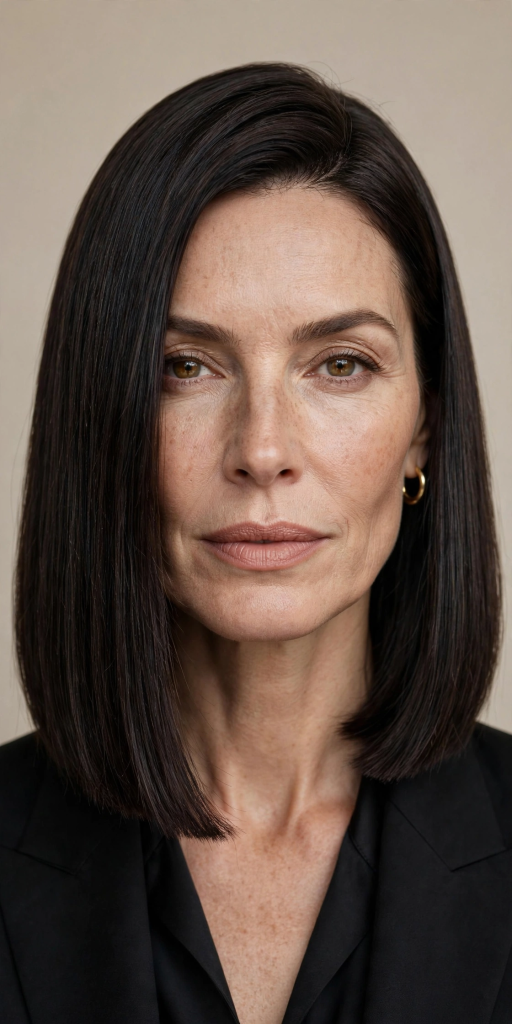
- The Style: It sits right at the collarbone. The cut is heavy and straight across the bottom, with minimal internal layering.
- Why it works: This is the Holy Grail for fine hair. The blunt line creates a solid “wall” of hair, making the ends look thick and full, rather than sparse. It exudes modern confidence.
- Styling Tip: To maintain the shape, blow-dry with a large round brush, directing the roots upward.
2. The A-Line Bob
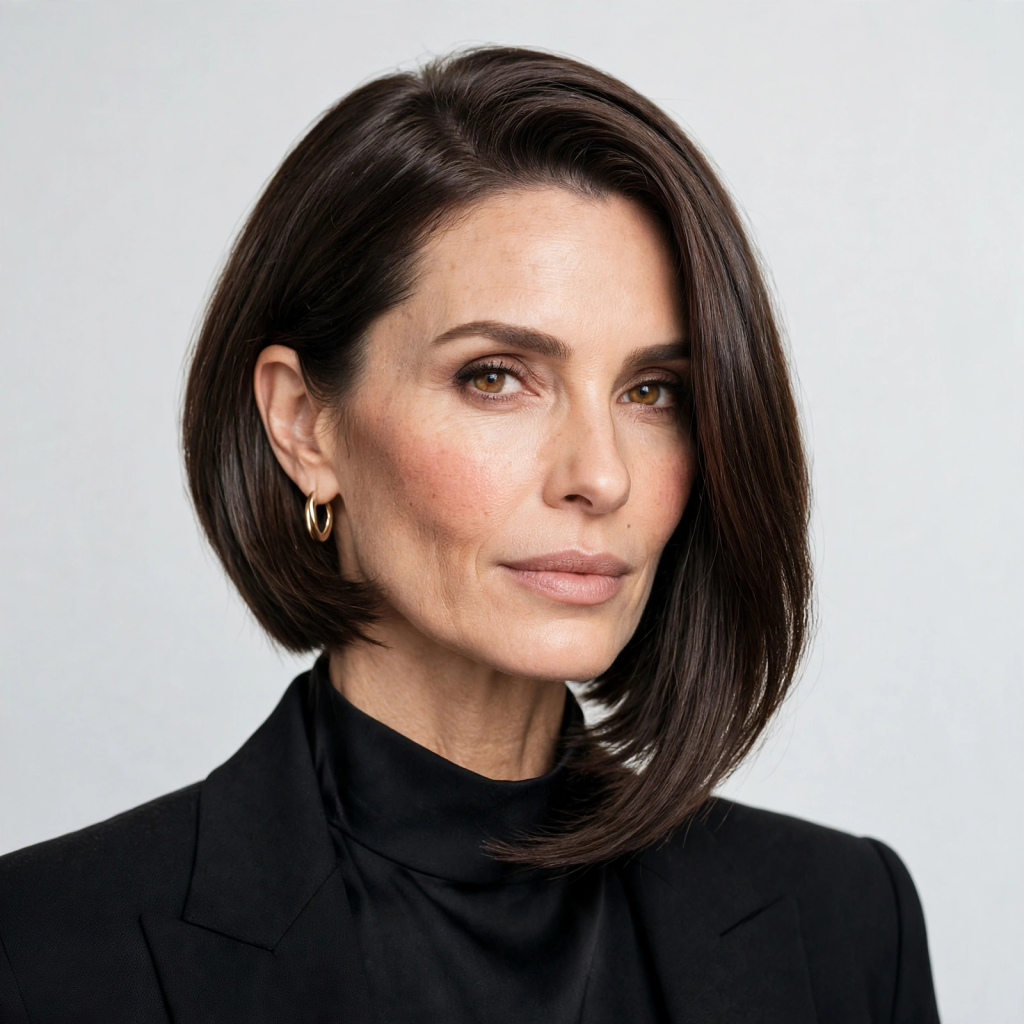
- The Style: Longer in the front (reaching the chin or collarbone) and shorter in the back (stacked at the nape).
- Why it works: The shorter back naturally creates a stacked effect, building volume at the crown. The longer front pieces add angles and slim the face.
- Styling Tip: Use your fingers to blow-dry the back forward to maximize the lift at the occipital bone.
3. The “Chin-Grazing” Bob with Side-Swept Bangs
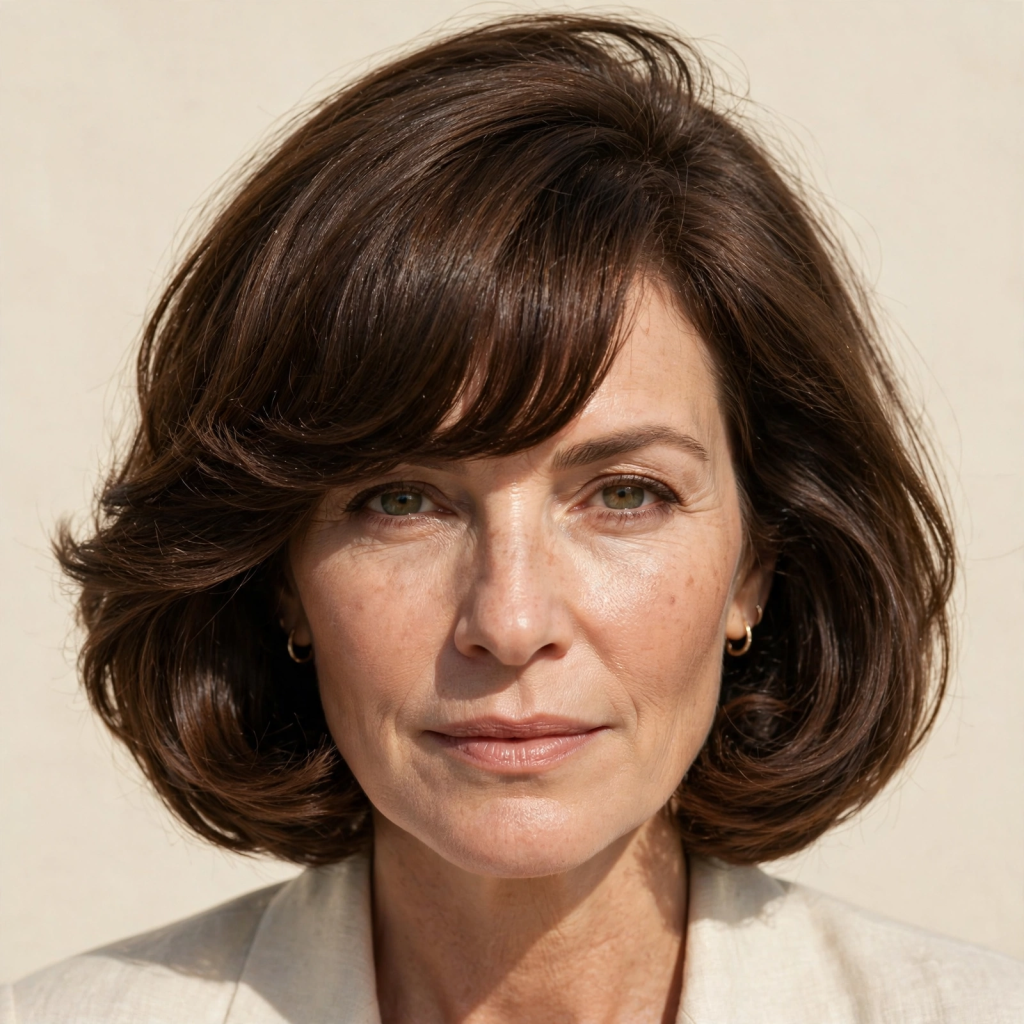
- The Style: A classic bob that hits just at the chin, paired with long, sweeping bangs that part deeply to the side.
- Why it works: The shorter length removes weight, allowing the hair to “bounce.” The side-swept bangs break up the forehead space and add volume to the top section, which tends to be the flattest area.
- Styling Tip: Dry the bangs in the opposite direction of where they will lay, then sweep them back over for maximum lift.
4. The Shag (Modernized)
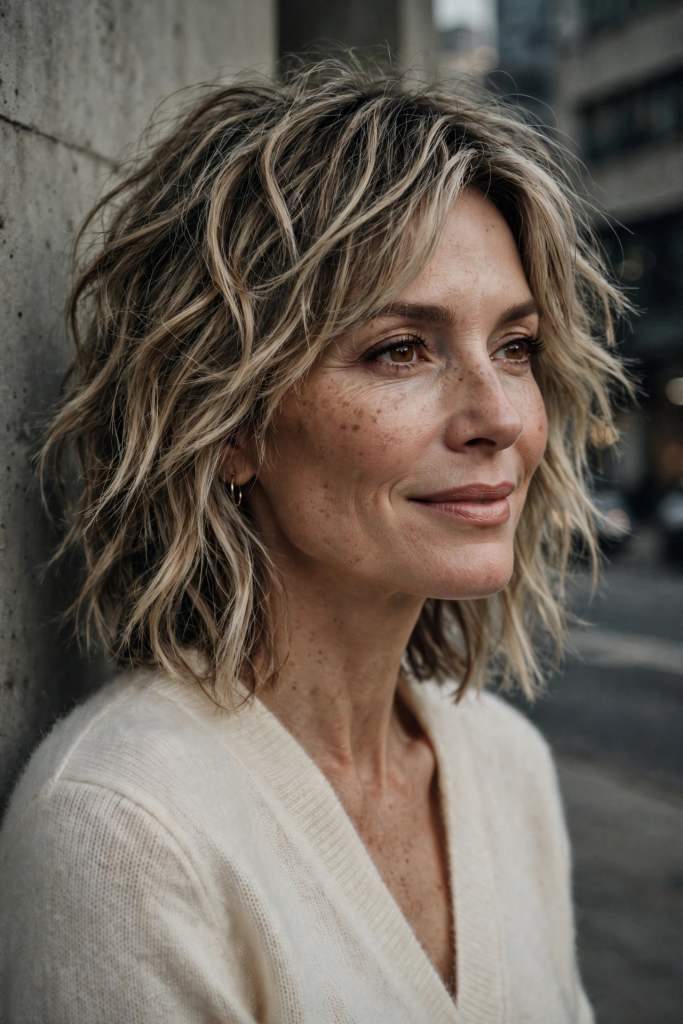
- The Style: A modern shag with choppy, heavily textured interior layers, but kept blunt at the ends.
- Why it works: For women with thin hair, a shag isn’t about removing bulk (we don’t have it), it’s about creating movement. When you have fine, straight hair, it can look like a helmet. The shag breaks up the surface, making it look edgy and full of body.
- Styling Tip: This is the one style that looks great with a “messy” finish. Apply a salt spray to damp hair and let it air dry for a carefree, beachy vibe.
5. The French Bob
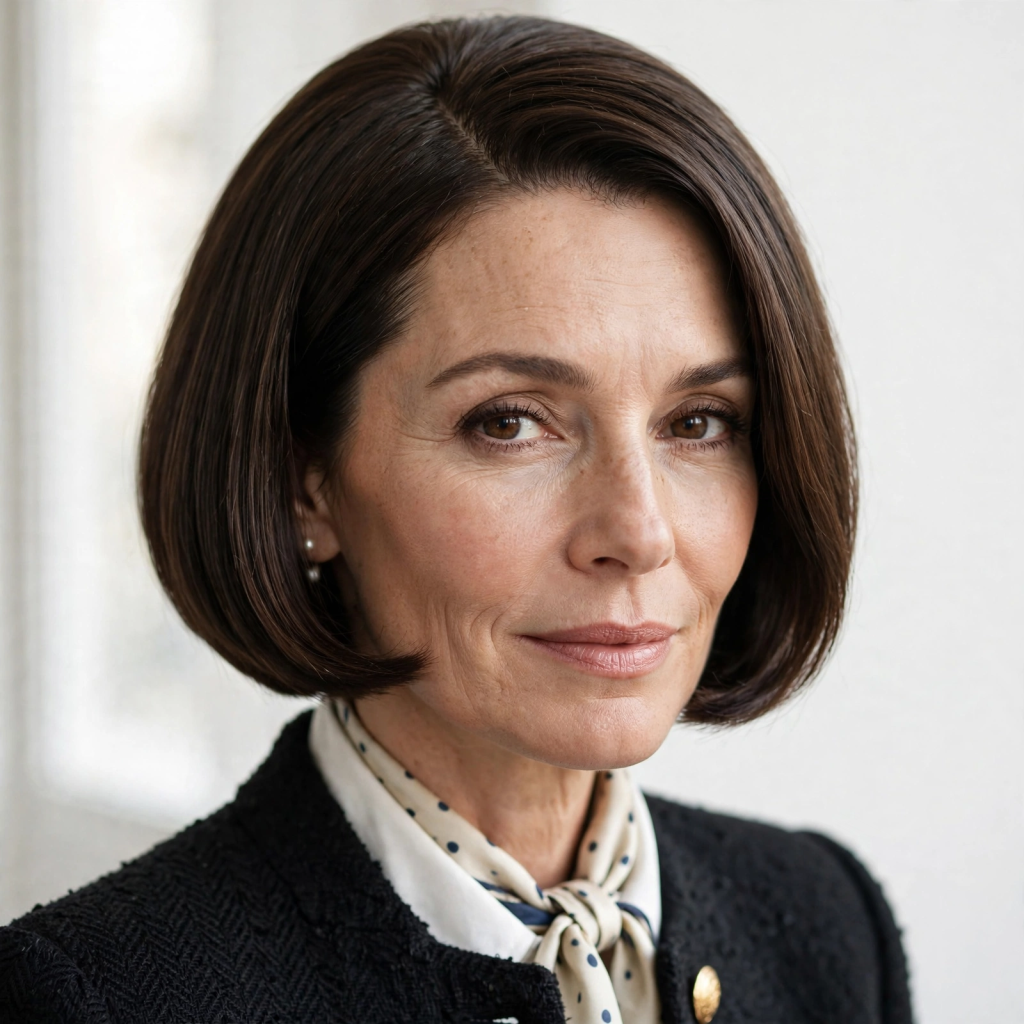
- The Style: A very short bob, cropped just below the ears or at the jawline.
- Why it works: While this is “short,” it sits in the medium family due to the styling possibilities. By taking the hair well above the shoulders, all the weight is removed, allowing the cut to create a perfectly rounded silhouette that mimics thickness.
- Styling Tip: Opt for a deep side part to add asymmetry and visual interest, which detracts from any uneven density.
6. The “Layered” Lob with Long Face-Framing Layers
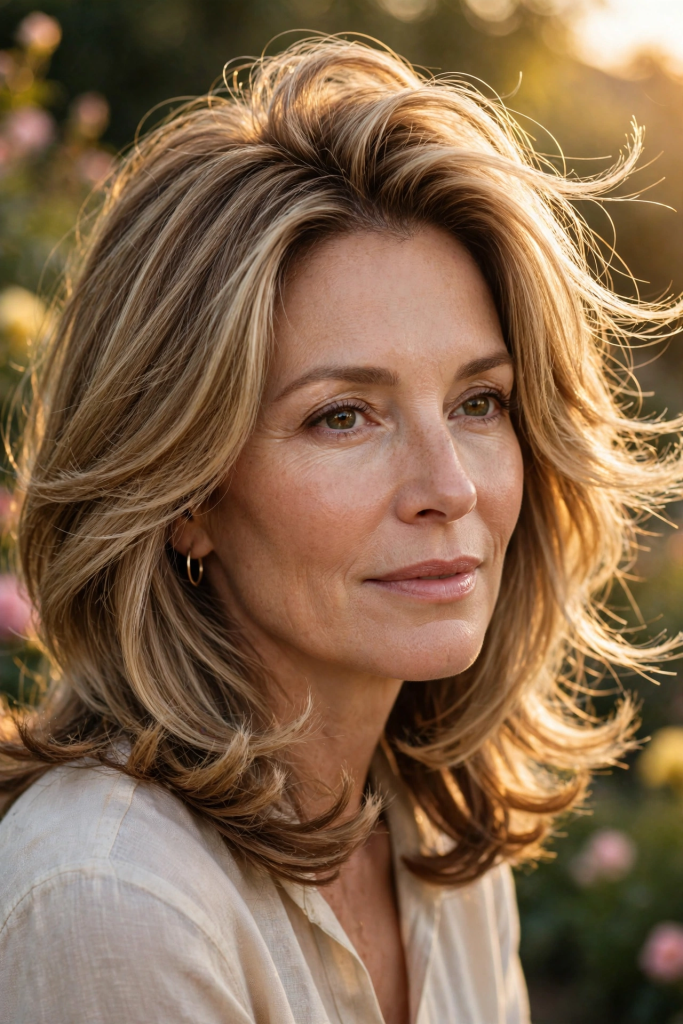
- The Style: A lob (shoulder length) with long layers that start at the chin and taper down.
- Why it works: Unlike short choppy layers, long layers remove weight from the interior of the hair without sacrificing the density of the perimeter. The face-framing pieces soften wrinkles and highlight cheekbones.
- Styling Tip: Curl the face-framing pieces away from your face to open up the eyes and cheek area.
7. The Blunt Cut with Micro-Bangs
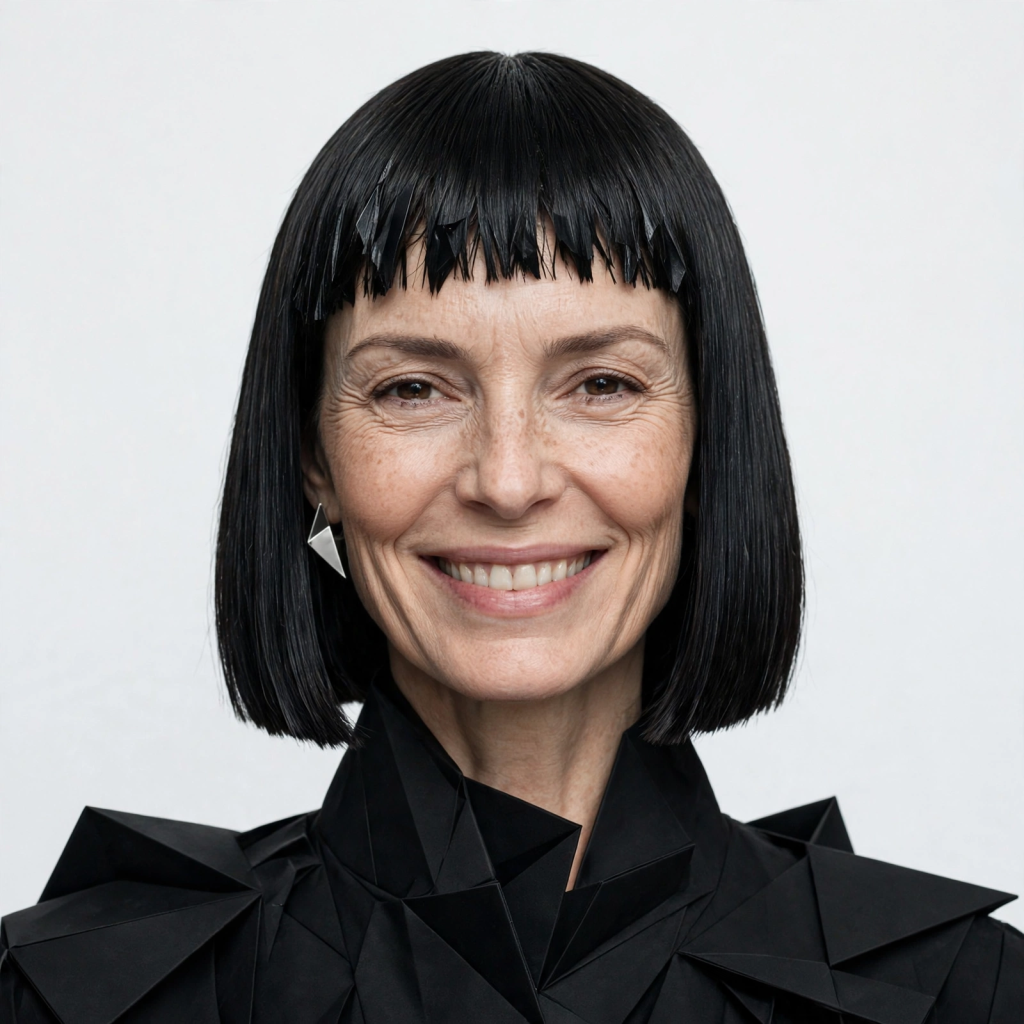
- The Style: A sharp, straight-across cut at the collarbone paired with short, straight “micro” bangs.
- Why it works: The bluntness at the bottom makes the hair appear thick and healthy. The micro-bangs draw the eye upward to the forehead, creating height on the top of the head.
- Styling Tip: Keep the micro-bangs piece-y. Use a tiny bit of pomade to separate them for a textured, modern look.
8. The Textured Shoulder-Length Cut
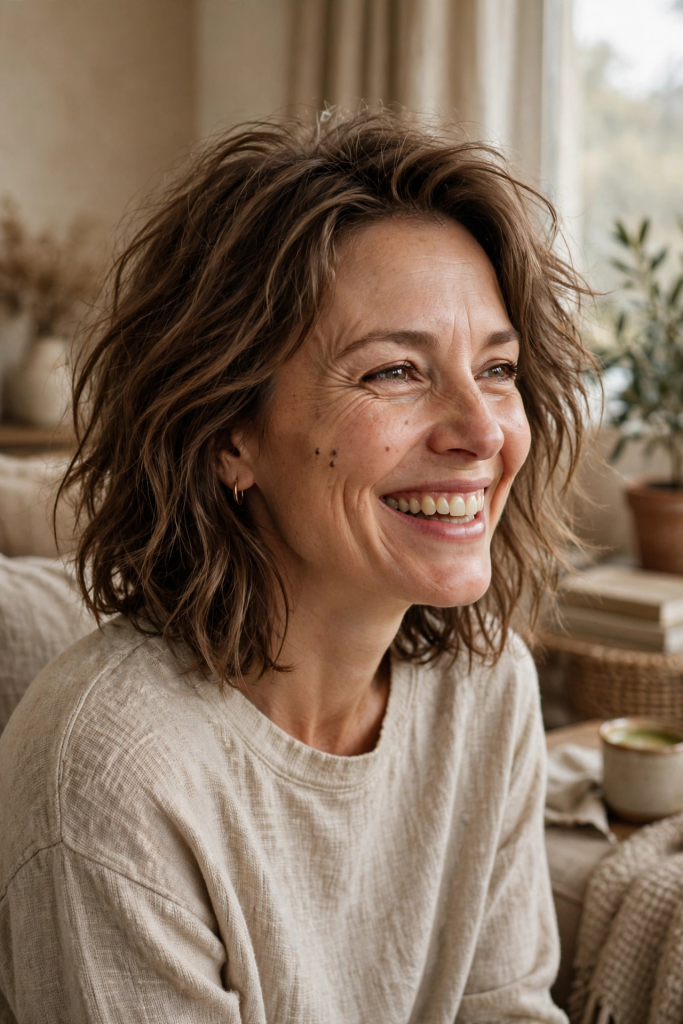
- The Style: A one-length cut at the shoulders with point-cutting (texturizing) throughout the mid-lengths.
- Why it works: The shape remains strong and filled-in. The texturizing allows the hair to “stack” on itself when tousled, creating volume.
- Styling Tip: Twist sections of hair while blow-drying to create natural, bendy waves that look fuller than straight strands.
9. The “Swoop” Bob
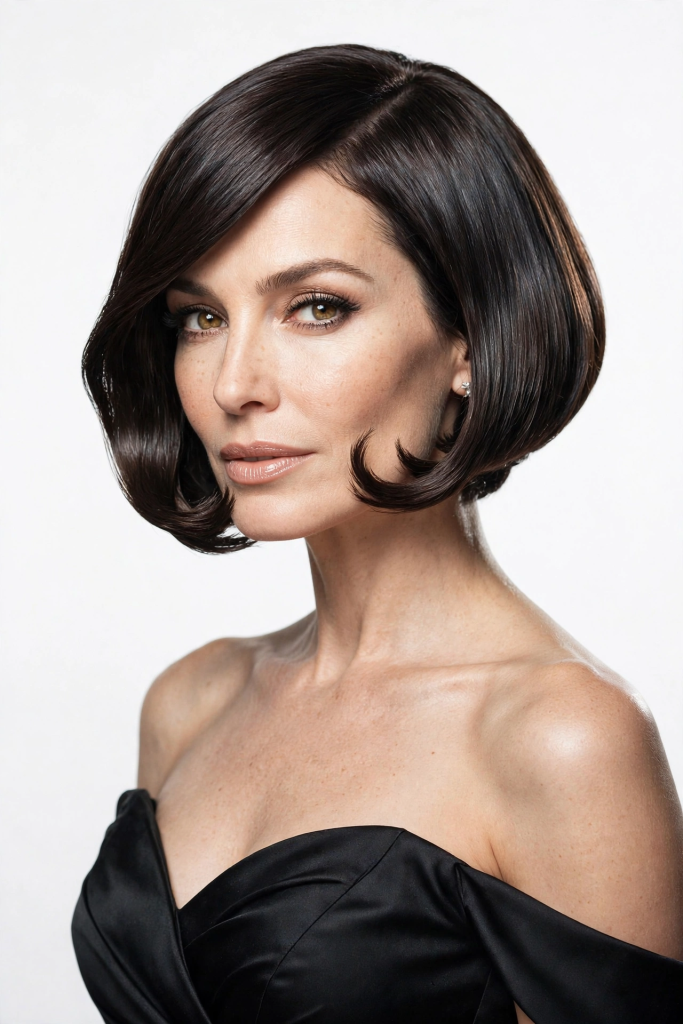
- The Style: A graduated bob with a dramatic angle. The nape is short, but the front slopes down to a long point at the collar.
- Why it works: The extreme angle of the cut creates the illusion of more hair because the weight is “pushed” forward and downward.
- Styling Tip: Use a round brush to curl the ends under toward your neck for a sleek, elegant finish.
10. Curly/Wavy Medium Cut

- The Style: Shoulder-length hair cut in a rounded shape to allow curls to spring up.
- Why it works: For women with naturally wavy or curly thin hair, the weight of long hair pulls out the curl and makes the hair look flat. Taking it to the shoulders allows the curl pattern to rebound, which instantly doubles the volume.
- Styling Tip: Use a diffuser and “scrunch” the hair upwards to encourage the curls to clump together and appear thicker.
11. The “Pixie-Lob” (The Pob)
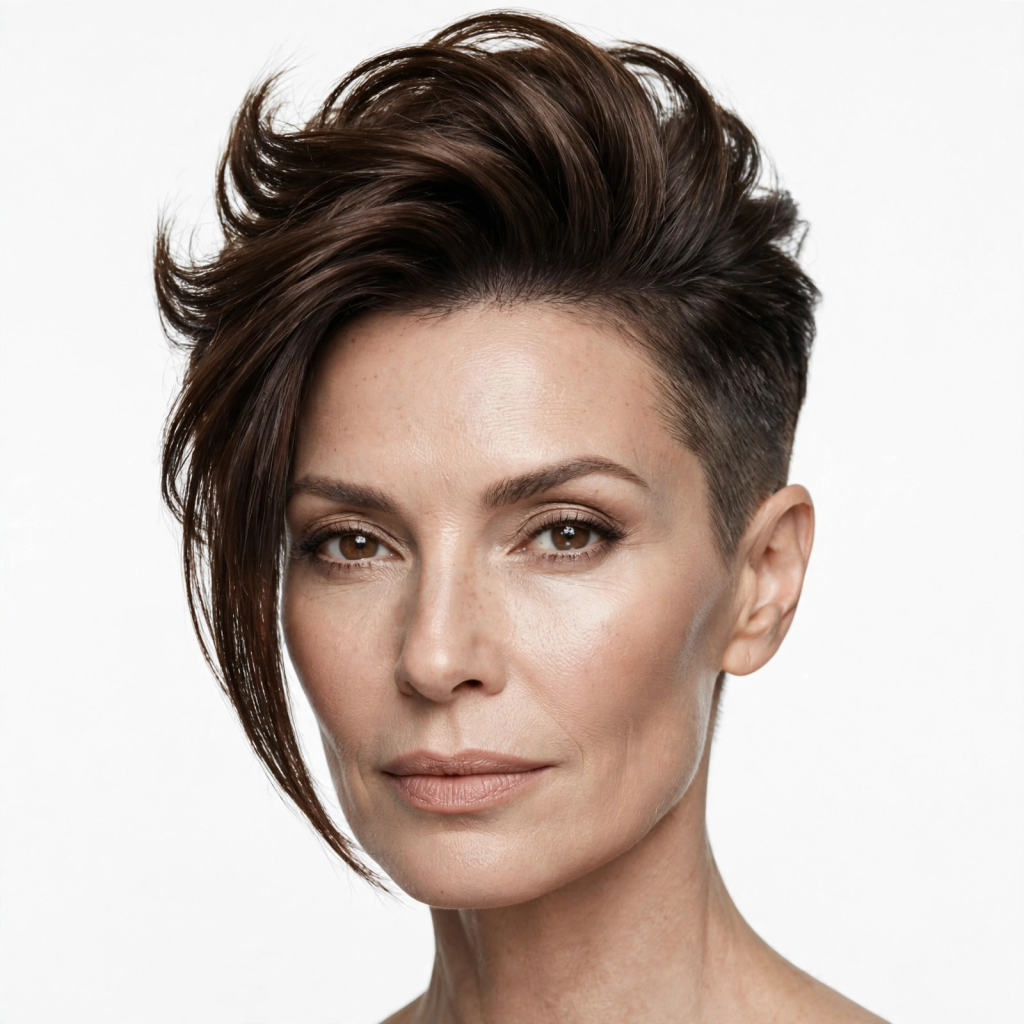
- The Style: A cross between a pixie and a bob. The back and sides are shorter, but the top and front are left longer (reaching the chin).
- Why it works: The disconnected look adds architectural height to the crown. It’s a high-fashion look that is incredibly easy to maintain and gives the illusion of massive volume on top.
- Styling Tip: Use a root-lifting spray at the crown before blow-drying to maximize the height.
12. The Tucked Bob (Asymmetrical)
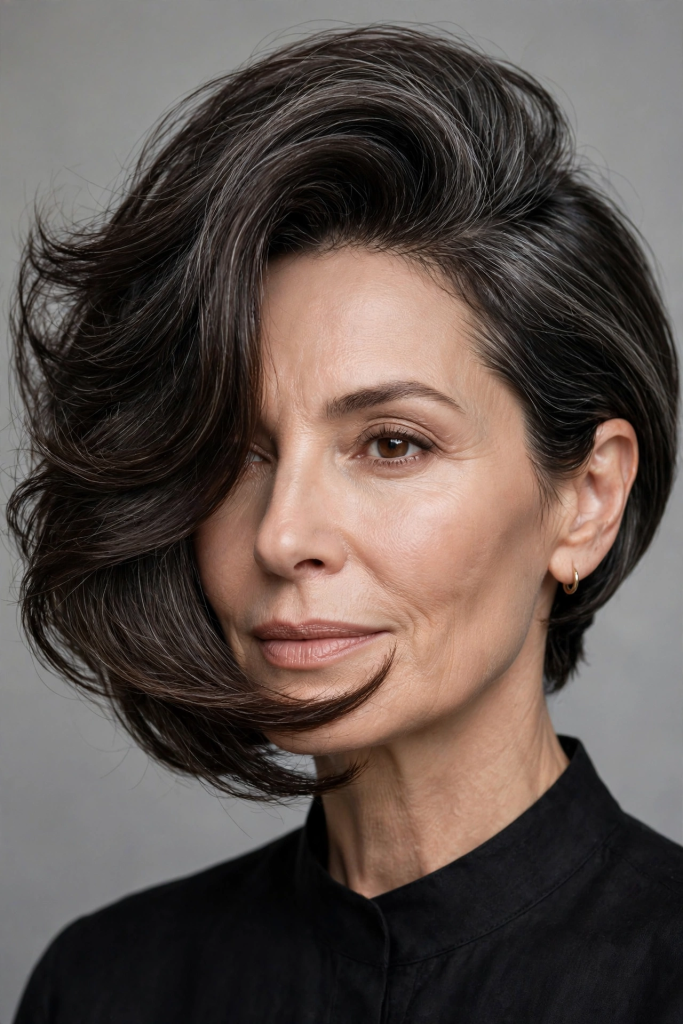
- The Style: One side is tucked behind the ear (or cut slightly shorter), while the other side swoops long over the eye/cheek.
- Why it works: Asymmetry distracts the eye. The uneven lengths and the deep side part pull hair from the thinner side to the thicker side, creating a denser silhouette.
- Styling Tip: Spray dry shampoo on the roots of the “heavy” side to ensure it stays lifted and doesn’t fall flat.
13. The Softly Layered Cut with Curtain Bangs
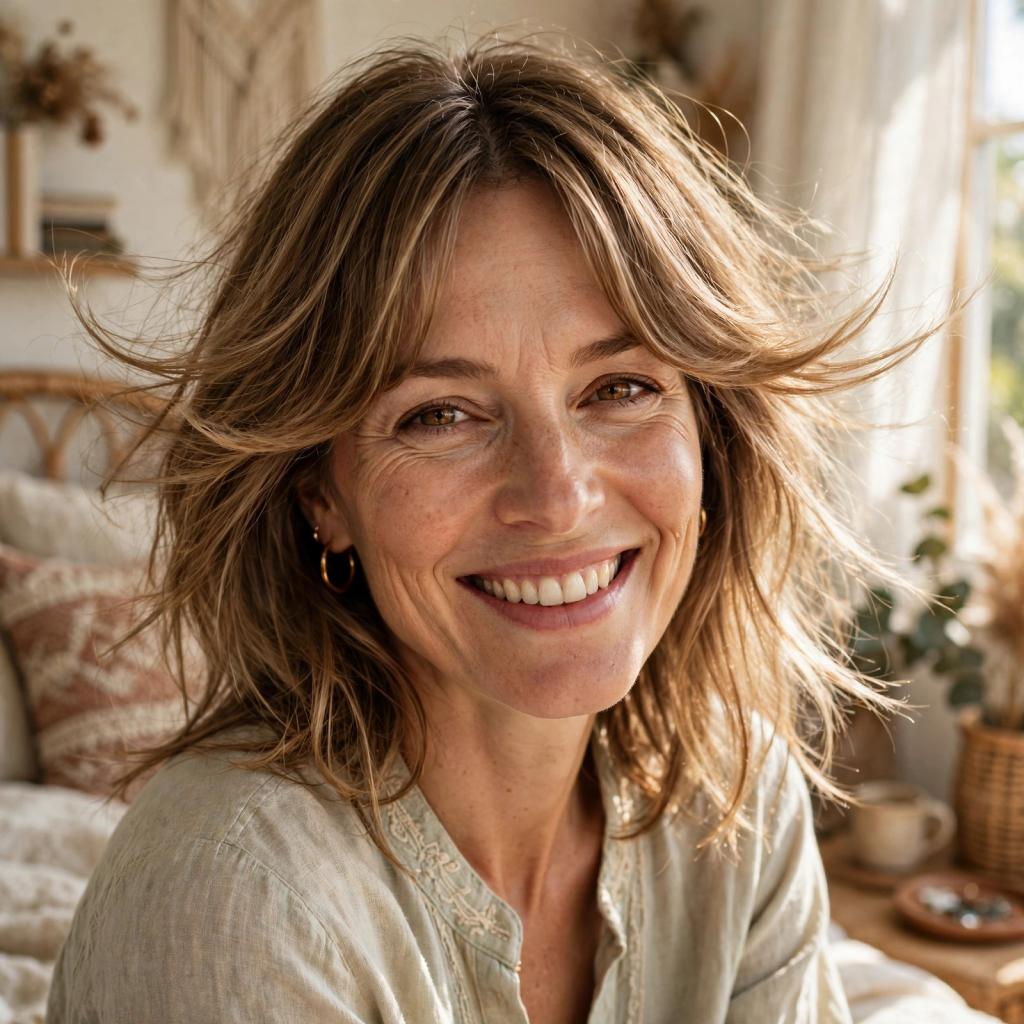
- The Style: A soft, shoulder-grazing cut with delicate layers and “curtain” bangs (bangs that part in the middle and sweep to the sides).
- Why it works: This is the most universally flattering style. Curtain bangs add a soft, feminine frame to the face and fill out the hairline, making the hair look thicker around the face.
- Styling Tip: Use a small round brush to roll the curtain bangs outwards to create a “C” shape that lifts the eyebrows.
Maintenance and Care
- The “Wash” Routine: Washing less is more. Over-washing strips natural oils that add volume. Aim for every 2-3 days.
- The Right Products: Look for “volumizing” and “thickening” shampoos. Avoid heavy conditioners on the roots; apply them only to the ends.
- Scalp Health: A healthy scalp grows healthy hair. Use a scalp scrub or massager once a week to stimulate blood flow.
- Texturizing: Stock up on dry shampoo. It doesn’t just clean oil; it creates “grip” and texture, allowing your style to hold longer.
Tools of the Trade
- The Round Brush: Invest in a high-quality thermal round brush (ceramic) to create tension and lift at the roots.
- Diffuser: If you have texture, a diffuser is mandatory for volume.
- Hot Rollers (Optional): A set of hot rollers used on the crown for 5 minutes can give you “old Hollywood” height that lasts all day.
- Hair Fiber Powder: For extreme thinning at the hairline, powders like Toppik can conceal bald spots seamlessly.
Conclusion
Turning 40, 50, or beyond is not a time to fade into the background—it is a time to refine your style, becoming more selective and intentional with your choices. Thin hair is not a limitation; it is a texture. It allows you the freedom to change your look more easily, dry your hair faster, and rock styles that women with thick hair simply cannot (ever tried to fit a thick lob into a sleek ponytail?).
As you stand in front of the mirror, look at the woman looking back. She has confidence, experience, and wisdom. Her hair should reflect that. Do not be afraid of the scissors. The right medium-length haircut can dramatically lift your features, boost your confidence, and make you feel like the most radiant version of yourself. Whether you choose the boldness of a blunt lob or the free-spirited vibe of a modern shag, embrace the change.
Medium hair for fine hair isn’t a compromise—it’s the winning strategy.

Leave a Reply